Just when you think you can’t be shocked anymore by the terrible things that go on in the world, you get a double whammy.
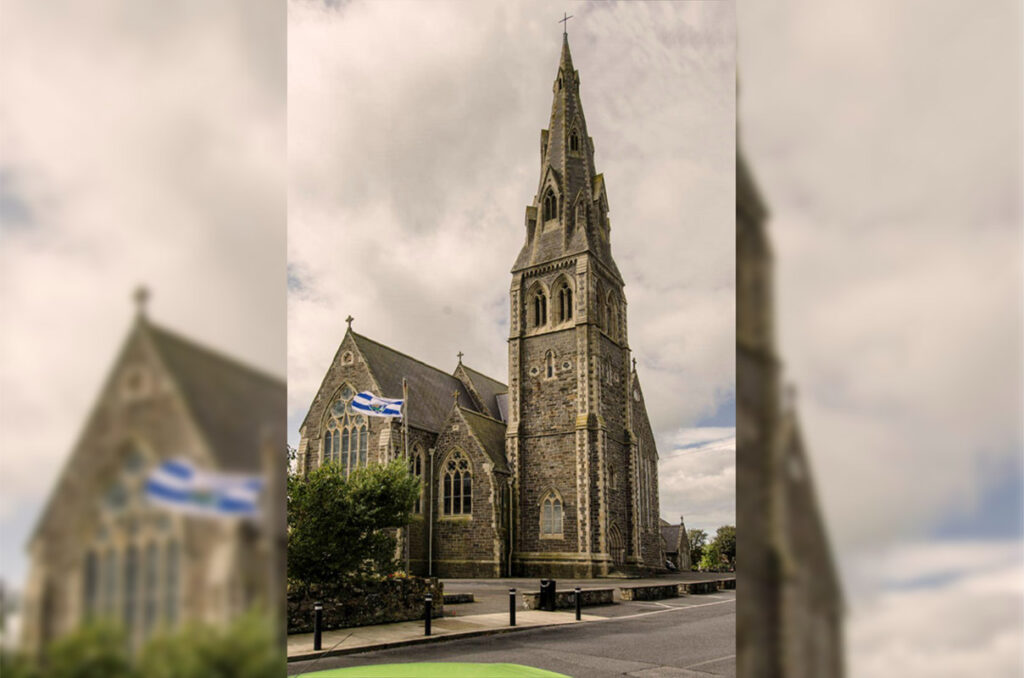
First off, on the News at One (RTÉ Radio 1, Tuesday) I heard about the awful stabbing of a woman in a church in Tramore, during the Rosary and just before Mass. It was only human to think of all possible motivations and scenarios, but rushing to judgement doesn’t help anyone. Nevertheless, it was an indication of how far we’ve sunk as a country. Later in the bulletin, official figures for 2025 were reported that showed the youngest person caught for drink driving was a 14-year-old boy. The oldest was a 95-year-old man! Again, it was evidence of a gross lack of respect for life.
But it wasn’t all gloom – for Christians it never should be. In the same programme we heard of a 9-year-old boy, Dáithí MacGabhann, whose campaign around organ donation in general had actually come to benefit himself – he was the recipient of a heart transplant. His father described how it had transformed his health and life. ‘Daithi’s Law’ (2023) was appropriately named after him. There was more good news on Morning Ireland (RTÉ Radio 1, Wednesday) when there was mention of many youngsters getting awards as ‘honorary gardaí’ from the Little Blue Heroes Foundation. If there was more of this the future would look brighter. Unfortunately, our respect for life, and for children in particular, leaves a lot to be desired.
On the Podcast What Were We Like (RTÉ), there wasn’t any sense of the humanity of living unborn children. It was once of the worst examples of the RTÉ bubble or echo chamber. Diarmaid Ferriter and Catriona Crowe discussed Ireland in the 1980’s and in particular the introduction of the 8th (Pro-Life) Amendment to the Constitution in 1983. There was so much wrong with the show, in particular the pro-choice imbalance.
We’re used to that, but it’s rarely so blatant, with clichés coming thick (mainly) and fast. Ferriter’s introduction referred to the “profound and lasting consequences” of the amendment, but there was no mention of the most profound and lasting consequence – the lives saved by the 8th, perhaps even the lives of those who went on to campaign against it. He said that his fellow podcaster Caitriona Crowe “campaigned passionately against it”. She was devastated by the result and saw it as one third of the people not being wanted by the two thirds. I wonder if she felt as sorry for the one third who were dismissed and continue to be after the amendment was repealed.
I think Ferriter was right when he said the amendment was designed to “future-proof” the existing ban on abortion, as concerned people saw abortion bans overturned by legislation in the UK and constitutional action in the USA. These life-savers were conveniently characterised by Crowe as “the Catholic right”, a handy dismissal that circumvents debate. She also used that hoariest of clichés “an Irish solution to an Irish problem”.
Ferriter said that abortion was always “an Irish reality” – hardly insightful, as you could say the same about any country, or indeed any crime. When he quoted the essential part of the amendment about the right to life of the unborn and the “equal right to life of the mother”, I was reminded of how fair it was. Curiously, the prophets of equality did not rush to defend it. Crowe referred to it as “a ludicrous proposition”. She also reminisced about the campaign, emphasising of course some extreme examples of pro-life negativity. Then she admitted worse: “we used to go to Mass in order to walk out of Mass when the priest brought up the Yes vote”.
The discussions strayed for quite a stretch into the backstreet abortions of years before, including the infamous Nurse Cadden. Crowe said that in some ways she had been recast as a feminist heroine, but did outline her unsavoury activities, for example when she “dumped” an infant on the side of the road – described as “the unwanted product of a birth”.
Though Ferriter was more in historical mode, while Crowe was more the activist, the podcast was crying out for more diverse opinions, rounded perspectives and genuine discussion, but the prophets of diversity were nowhere to be found.
‘What were we like?’ is a useful question to ask, but ‘What ARE we like?’ is more pertinent.