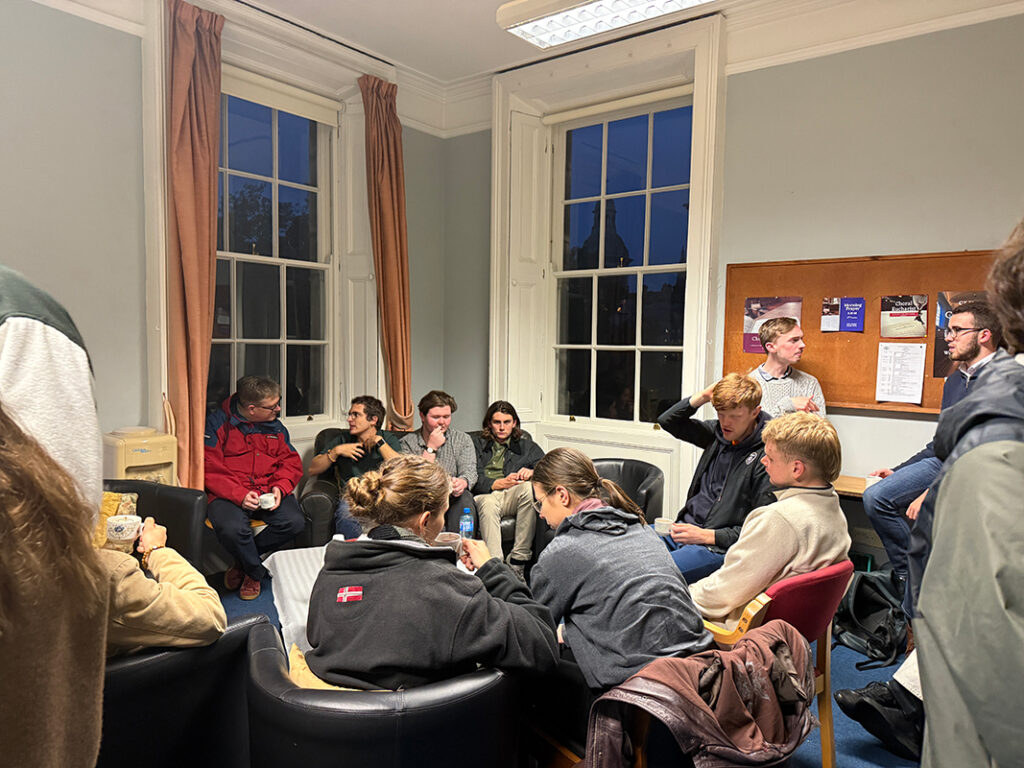
The difference of views between Bishop Niall Coll (I-Gen and Gen Z youth) and Fr Brendan Hoban (writing recently in The Western People) is about more than one bishop’s reading of youth culture or one priest’s irritation with it. It goes to the heart of the deepest question facing Irish Catholicism: where, exactly, is renewal meant to come from?
Bishop Coll’s argument is, at one level, easy to understand. He sees among some younger Catholics a hunger for clarity, coherence, tradition and reverence. After decades in which the Church often seemed embarrassed by its own inheritance, it is hardly surprising that some young adults would be drawn to seriousness and conviction rather than vagueness and accommodation. One does not have to be a traditionalist to see the force of that point, or a liturgist to know what a good mass and homily are. Young people are not always looking for a Church that mirrors the culture back to them. Sometimes they are looking for a Church that offers something deeper, stronger and more demanding than the culture can give.
Warning
Fr Hoban, however, is right to issue a warning. A small, intense cohort should not be mistaken for the future of the whole Church. It is one thing to notice that a minority of young Catholics are attracted to tradition. It is another to imagine that this minority represents a broad revival waiting to happen. Ireland is not witnessing a mass return to Catholic practice, nowhere in the West is. The centre has collapsed, confidence has drained away, and the habits that once carried faith from one generation to the next have weakened dramatically. In that sense, Hoban is correct: wishful thinking is no substitute for reality.
But here is where the argument becomes uncomfortable for his side of the debate. It is not enough to say that Coll’s hope may be exaggerated. The harder question is what hope Hoban is offering instead.
For too long, the post-Vatican II mainstream in Ireland behaved as though renewal would somehow arise from a softer tone, looser edges and a general atmosphere of openness. Some of that openness was necessary. Some of the older clerical culture did need to be challenged. But the record is hard to defend. School catechesis was too often thin and forgettable – my generation and the ones after it know only too well. Adult faith formation barely existed outside a few committed pockets. Youth ministry was sporadic, underfunded and, in some cases, quietly allowed to wither. Young people could be taken to World Youth Day, but many returned to parishes where there was little structure, or accompaniment to help the experience mature into discipleship. A generation was offered gestures, but not always formation; welcome, but not always content; activity, but not always a faith substantial enough to inhabit.
That failure matters. It means that those now dismissing Bishop Coll’s hopes as naïve cannot simply point to the emptiness on the other side and call it realism. The liberal or reformist wing of the Church has had decades to show that its instincts could generate new life among the young. The results, with honourable exceptions, are not impressive. If Coll may be guilty of overestimating a small cohort, Hoban’s camp has often seemed guilty of presiding over drift and calling it maturity.
Structure
This is where the structural question also enters. Long before current pastoral plans, theologians such as Karl Rahner foresaw a Church that would be smaller, less socially dominant and forced to consolidate around places of real vitality. In Ireland, the logic of clustering, parish partnerships and larger pastoral units already points in that direction. Strategies such as Building Hope are not accidents; they are acknowledgements that the old parochial map can no longer be sustained as it once was.
Yet structure, by itself, does not renew anything. A super-parish can become a stronger centre of mission, or it can become a more efficient machine for managing decline. Synodality can become a genuine culture of listening and shared responsibility, or it can become a substitute for the far harder work of conversion, catechesis and evangelisation. Process matters. Lay leadership matters. Reorganisation matters. But none of these, on their own, creates belief. Clustering is not a gospel. Administration is not a charism. And synodality, however valuable, is a method, not a message.
That is why the real weakness in Hoban’s critique is not that he is wrong about the scale of decline. He is not. It is that his positive vision often seems more administrative than evangelical. It tells us how the Church might be rearranged, but not why the young would give their lives to it. It proposes a style, but not a fire. And it was hearts of fire on the road to Emmaus that drove the Apostles.
At the same time, Coll’s side also needs honest framing. “Fewer but truer” may describe an emerging reality, but it cannot become an alibi for complacency. A small enclave of highly committed young Catholics, however sincere and devout, is not enough. If Catholicism in Ireland becomes merely a niche identity for the already convinced, it will have preserved a remnant but lost a people. The Church does not exist to curate a subculture. Mission and evangelisation are what every Pope since John Paul II has promoted.
So where does that leave the argument? Perhaps with an uncomfortable truth for both camps. The future will not be secured by ideology, whether progressive or traditionalist. What the Church in Ireland requires is more demanding than either slogan. It needs reverence without romanticism. It needs doctrine without harshness and synodality without vagueness. It needs parishes and parish clusters that actually form people in prayer, Scripture, sacramental life and moral seriousness. It needs priests who preach with conviction and lay leaders who know the faith well enough to hand it on. It needs adult formation that is more than a token offering, youth ministry that is more than event management, and liturgy that is beautiful enough to suggest that God is real.
The Irish Church has been diminished by both sentimentality and ideology. Its future, and it has one, will belong to communities that are spiritually serious, intellectually confident, sacramentally alive and pastorally humane. That is a harder vision than either Bishop Coll or Fr Hoban is offering on his own. But it may also be the only one worth believing in.