Challenging secular anthropology on human dignity
Dear Editor, The Irish Catholic (July 9) presents statements, possibly coincidental, by Bishop Doran and Archbishop Farrell, to wit “Human dignity is not given to us by the State, or by our parents. Neither the State, nor our parents, nor anybody else can take it away.” These statements challenge the anthropology (theory of life) of the entire secular and philosophical establishment. The bishops state that people have human dignity because they exist, but they also assert that Catholic anthropology bases human dignity on at least three things: 1) the ultimate cause of human existence – God, 2) the nature of the human person, and 3) the highest good or purpose of human life in accordance with divine will. The old Green Catechism theology nearly got it: God made human beings “to know, love and serve Him here on earth, and by this means to be happy with Him in Heaven.”
The bishops’ intended audience – the Euro-Irish establishment, cannot tolerate this anthropology. In reality the bishops should target the regular Mass-attending Catholics to explain why this anthropology underpins how Catholic faith optimally shapes daily life, moral decision-making, and social practices. This anthropology examines the role of Catholic faith in addressing contemporary ethical issues, such as family life, human rights, social justice and Catholic school experience. It provides a framework for understanding human behaviour in light of faith; that there is something in the human being that transcends the realm of things and experiences; that Catholics live in the expectation of a destiny beyond the grave and that individuals shall reap the eternal consequences of their actions.
Catholics need this theology and anthropology to grapple with today’s pervasive, secular, intimidating anthropology based on evolution or mere cultural development. The hierarchy should combine to have the catholic understanding taught to the faithful at Mass.
Yours etc,
Neil Bray
Cappamore, Co. Limerick
Those calling for less climate action are falsely optimistic
Dear Editor, David Quinn’s article on July 2 acknowledges the impact of climate change on the world’s poorest countries, but I do not think it gives that issue sufficient weight. Even if the worst-case scenarios do not come to pass, man-made climate change will still have devastating consequences for parts of the world that are least able to cope. Meanwhile, those living in the richest countries—who have historically contributed most to climate change—are likely to be far less affected.
I hope Mr Quinn’s optimistic assessment proves correct. However, history suggests that those calling for less action have repeatedly been proved wrong. In the 1990s, many climate sceptics argued that the planet was not warming. By the early years of this century, the argument had shifted to accepting that it might be warming, but that human activity was not responsible. More recently, many have come to accept that climate change is happening and that it is man-made, while arguing that its consequences will not be severe.
If that pattern continues, perhaps in a few decades the argument will become: yes, the planet is warming; yes, it is man-made; yes, the consequences have been devastating—but it is now too late to do anything about it, so we might as well continue as before.
Yours etc,
Thomas Nolan
Pollerton, Co. Carlow
Disclosing conflicts of interest to the public
Dear Editor, all candidates running for an Oireachtas seat in Ireland should be bound to disclose property they own at home and abroad, and also a list of organisations they are members of, which could amount to a ‘conflict of interest’.
At present, candidates running for an Oireachtas seat (Dáil or Seanad Éireann) are not required to disclose property they own abroad while running as a candidate. However, if a candidate is successfully elected, they must then file an annual statement disclosing any land or property they own, whether it is located in Ireland or abroad, under the Ethics in Public Office. But surely there is something wrong here, and that should be corrected.
The electorate should have the right to this information before an election, and other information that could be a conflict of interest for candidates. Any candidate winning an election under inaccurate information should forfeit their Dáil or Council seat. This is only fair and reasonable.
SIPO (Standards in Public Office) should have a duty to voters before an election, when it would count for something, not just when the election is over.
A member of the public making a report on inaccuracies when a candidate has taken up their seat has to fill in forms where their name can be disclosed to the newly elected who has taken power. This favours non-disclosures by Joe or Judy Public who are not public figures, with all its protections awarded to a Dáil or local authority member.
Yours etc,
Nuala Nolan
Bowling Green, Co. Galway
A narrow view of geopolitical conflict looks weak
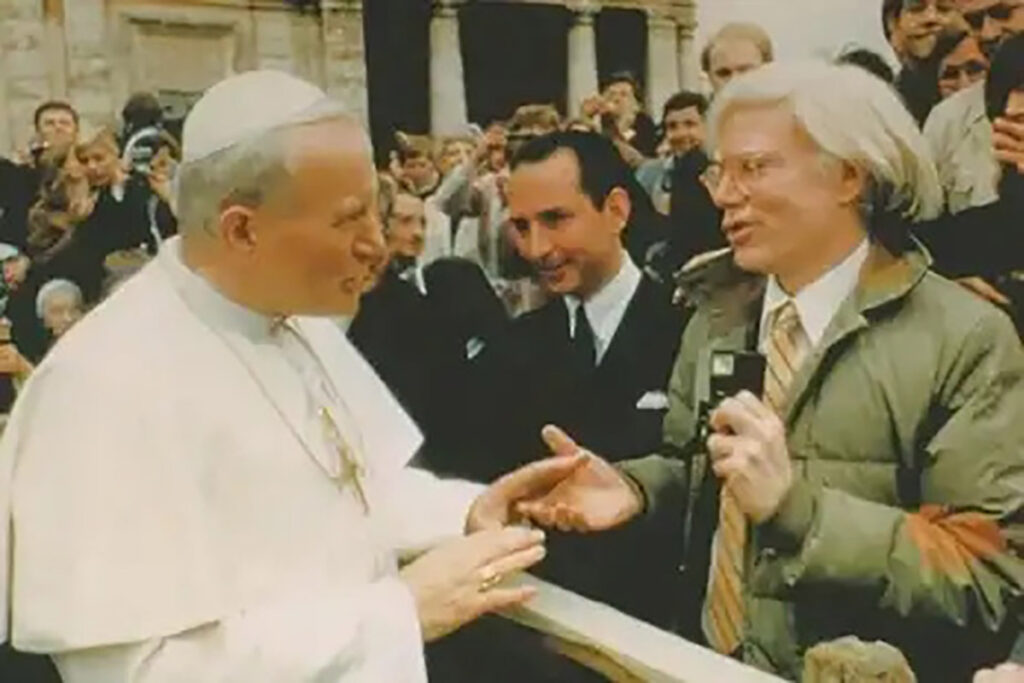
Dear Editor, the syndicated column by George Weigel in the latest issue looks weak from a number of perspectives. Weigel is a distinguished writer and noted biographer of Pope John Paul II. I’ve heard Weigel speak in person on two occasions – including at my university in Lisbon where he delivered the Tocqueville Lecture some years ago. On the other occasion at the Sheen Centre in New York City I put a question to him in the Q&A and while I don’t remember the details, he certainly seemed perfectly reasonable.
However, when in his current article he refers to ‘jaw-jaw’ one could ask to what ‘jaw-jaw’ is he referring? The EU refuses to talk to Russia. Paul Gillespie of UCD wrote about this recently.
A couple of years ago Weigel wrote a very critical piece for the Wall Street Journal about Pope Francis’s efforts to promote peace in Ukraine. More than two years on, the war is still raging.
Weigel alludes to what he sees as Russia’s “genocidal attempt to extinguish a nation” but one might ask what Weigel’s view is about Israel and the Palestinians. As far as I’m aware Weigel is a strong supporter of Israel, and he doesn’t make even a passing reference to genocide happening in Gaza or what’s taking place in the West Bank. Some more ‘whataboutery’: what about the recent bombing in Monaco of Ukrainian non-combatants, and the apparent murder back in Ukraine of the person alleged to have been the perpetrator? Supposedly the war is going much better for Ukraine – so why did President Zelensky fire the Defence Minister and replace the commander of the army? And what lies behind Zelensky’s recent interview with Laura Loomer?
The Irish Catholic is to be celebrated for publishing a wide range of opinions, but it would be good to have an eminent Catholic author like Weigel give a broader view of geopolitical conflict.
Yours etc,
Michael Sanfey
IEP – Católica University, Lisbon
‘Passing the sceptre to the Messiah’
Dear Editor, with reference to Liam de Paor’s letter in The Irish Catholic of July 16, it must be remembered that Hamas was founded by Benjamin Netanyahu whose objective was to prise Palestinian Arabs away from the Palestinian Liberation Organisation and its political affiliate, Fatah.
The present Israeli administration is committed to a “Jewish state for a Jewish people”, regardless of the Christian and Arab heritage of the Holy Land, while the rest of the world wrings its hands and sheds crocodile tears.
Meanwhile, the war against Iran (Netanyahu’s idea) is fracturing the Zionist lobby in the USA, where even prominent Jewish members of Congress including Bernie Sanders (Vermont) are advocating that Israel be treated in the same way as Rhodesia and South Africa were half a century ago. (As an aside, over thirty years ago the Rabbi Lubavitcher Rebbe 1902-1994, told Netanyahu that he would be the Prime Minister who would “pass the sceptre to the Messiah”).
Yours etc,
Fr Oliver Skelly
Coole, Co. Westmeath
Excommunications are highlighting more than we realise
Dear Editor, like most people, I have been scrolling through media about the excommunications and all the ins and outs of Canon Law (not to mention a brisk re-reading of Vatican II).
An interesting phrase that keeps appearing is “not in communion with the Church”. This means someone isn’t aligned in faith, doctrine and sacramental life of the Catholic Church. We have seen the consequences of this unfolding in (Catholic) media.
However, there is another consequence of not being “in communion with the Church”: you are not allowed to be in a lay Catholic third order and certain prayer associations. You can be in associate or friend groups, but not the main order.
So, it is not just about which church you go to. As every order stems from the Catholic Church you also have to be in communion to remain. Yes, you could go join a different church’s orders, but they would also not be in communion and you would be just straying further and further away from the one true Church of Rome.
Yours etc,
Dr John Jennings
Knocknacarra, Co. Galway
Applauding TDs’ ‘backbone’ on the matter of the three-day wait
Dear Editor, well done to The Irish Catholic for publishing a two-page spread of photos on July 2, of the 86 TDs behind the vote to remove the three-day wait before an abortion (36 Sinn Féin, 12 Fianna Fáil, 10 Fine Gael, 12 Social Democrats, 10 Labour, 3 S/PbP, 2 Independents and 1 Green). The electorate would do well to reflect on the reality that lies behind their smiling colour portraits. You quite rightly state that the ‘progress’ of this bill “rests squarely on the support of Micheal Martin and Simon Harris”. Had either withheld their support for the Sinn Féin bill, it would not have advanced. This is a gross dereliction of their promises to the electorate prior to the 2018 Referendum.
July 9, in contrast, we saw a second two-page spread of smiling portraits of the 70 TDs who voted to safeguard this same provision; as that has been shown, statistically, to have had a life-saving impact. The TDs from Aontú, Independent Ireland and most Independents are to be highly commended, and worthy of our support. Noteworthy also are the TDs from Fianna Fáil and Fine Gael who voted against the stance of their respective party leaders, Micheal Martin and Simon Harris. They are also to be highly commended for their display of ‘backbone’ on this matter. Once again, the electorate would do well to support these TDs.
It behoves all faithful Christians, but especially dyed-in-the-wool voters with historical allegiances to political parties who do not support the most basic human right of all; the right to life itself, to show their allegiance to the voiceless child in the womb. He/she has no voice but ours.
Yours etc,
Sinéad Tracey
Leitrim Village, Co. Leitrim