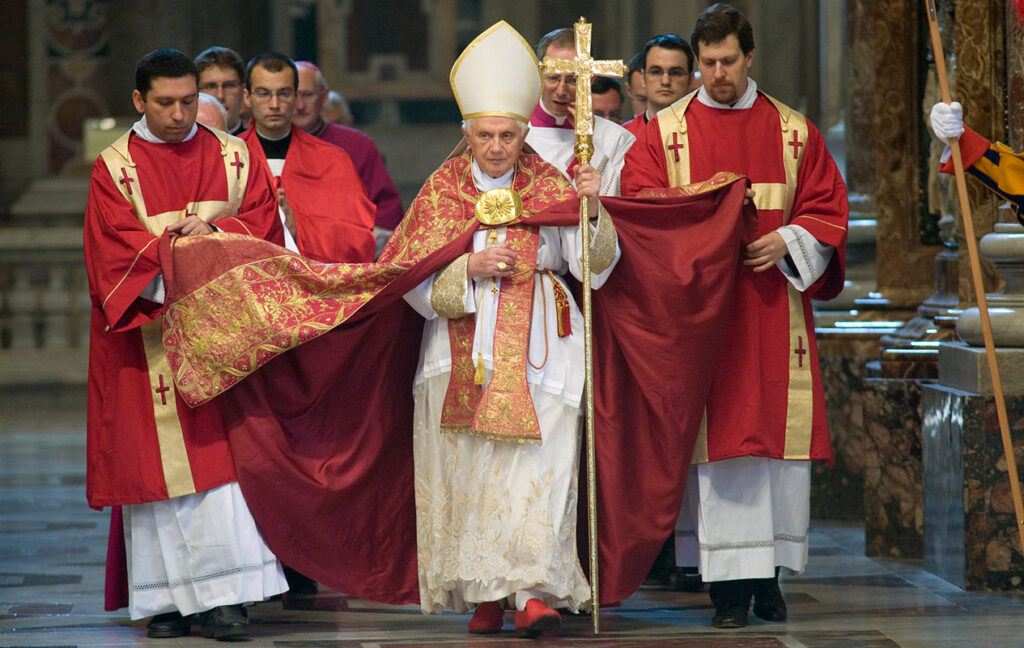
What’s the difference between a homily and a eulogy? The difference usually seems very clear-cut — until you go to a priest’s funeral (or a bishop’s). For a clergy funeral, the homilist eulogises and homilises, all at the same time. As a fictional homilist-eulogist might put it, “Fr X was a mighty priest, who was nice to everyone, good to the sick and said a Holy Mass, and deserves to be welcomed like a good and faithful servant into the joys of heaven.” Some in the congregation may disagree strongly; others may wonder why we need to pray for him, if he was such a saint.
When my time comes, I hope a priest can be found who might offer a reflection on the readings that brings out the themes of my life, without canonising me. The truth usually works best.
In the 99% of funerals that do not involve a dead priest, I like hearing a eulogy. In our diocese, these are always to take place at the start of Mass, often before the Mass has actually begun, in fact. The official (written) guidance on eulogies insists that only one eulogy is given, no more than five minutes in duration. None of us can ever insist on that, however; who wants to get into an argument with people weighed down with grief? All we can do is quote the diocesan advice, or point out the guidelines in the diocesan resource book for mourners.
Having the eulogy at the start of Mass provides a context for what follows. You might think that everyone in the church would know the deceased, but that is sometimes not the case. I might be attending the funeral as a way of sympathising with you on the death of your mother; I will need a eulogy to understand the kind of person the Mass is for, since I did not know her. A skilled eulogist will help me and many others in that way.
The homily is a different matter to the eulogy. The priest preaches at the heart of the celebration, after the readings the family have chosen. He is not concerned with the details of the person’s life, the important dates or their achievements. No, the homily is about the meaning of the person’s life; the priest or deacon reflects on the life that has ended in the light of the Gospel.
It may help if the priest knew the person whose funeral Mass he is presiding over, but that is not always possible now. The condolences on rip.ie and the local verdict on the life now complete will guide his words. He will know that people do not write untruths about the deceased; he needs to note what is not said — and be careful not to say it either!
And with the homily, less is more. It does not have to be long. But it must be true. When it is prepared, perhaps even written, it will teach, encourage, inspire.
Thursday Adoration
I read the late Pope Francis’ letter Dilexit nos this summer. I liked it, though it seems a bit long and repetitive. Dare one say it needed a good editor, maybe? I liked Pope Francis’ idea of an hour’s adoration on a Thursday as a devotion to the Sacred Heart. It’s a free gift I have been giving myself on a Thursday or Friday each week since. All it takes is a quiet and comfortable place, the silence of having left the phone elsewhere and a time of peace to spend in the company of the one “who loved us”.
‘Under the ambo’
I am assembling a book of presiders pages for Year A, called The Under The Ambo Book (a compendium not to be locked away in a press in the sacristy but accessible to all — hence, ‘under the ambo’.) Those writing bidding prayers might find it handy, as should priests or anyone who leads a weekly liturgy. I know it’s late, as we hurtle towards Advent, but parish life has distracted me, as priests in parishes will understand. If you are interested in the idea, email me on frbernard1984@gmail.com and I’ll let you know how to get a copy.