Lord, if a brother or sister sins against me, how often should I forgive?
The Gospel
Matt 18:21 Then Peter came and said to Jesus, “Lord, if another member of the church sins against me, how often should I forgive? As many as seven times?”
Matt 18:22 Jesus said to him, “Not seven times, but, I tell you, seventy-seven times.
Matt 18:23 “For this reason the kingdom of heaven may be compared to a king who wished to settle accounts with his slaves.
Matt 18:24 When he began the reckoning, one who owed him ten thousand talents was brought to him;
Matt 18:25 and, as he could not pay, his lord ordered him to be sold, together with his wife and children and all his possessions, and payment to be made.
Matt 18:26 So the slave fell on his knees before him, saying, ‘Have patience with me, and I will pay you everything.’
Matt 18:27 And out of pity for him, the lord of that slave released him and forgave him the debt.
Matt 18:28 But that same slave, as he went out, came upon one of his fellow slaves who owed him a hundred denarii; and seizing him by the throat, he said, ‘Pay what you owe.’
Matt 18:29 Then his fellow slave fell down and pleaded with him, ‘Have patience with me, and I will pay you.’
Matt 18:30 But he refused; then he went and threw him into prison until he would pay the debt.
Matt 18:31 When his fellow slaves saw what had happened, they were greatly distressed, and they went and reported to their lord all that had taken place.
Matt 18:32 Then his lord summoned him and said to him, ‘You wicked slave! I forgave you all that debt because you pleaded with me.
Matt 18:33 Should you not have had mercy on your fellow slave, as I had mercy on you?’
Matt 18:34 And in anger his lord handed him over to be tortured until he would pay his entire debt.
Matt 18:35 So my heavenly Father will also do to every one of you, if you do not forgive your brother or sister from your heart.” (NRSV)
Initial observations
This Gospel is helpful in several ways, contrasting as it does everyday human logic with the logic of God’s forgiveness. First of all, we get a window on life in the early church, with its challenges and emerging structures. Secondly, the problems raised have not gone way — conflict like this is evidently normal. Thirdly, as a result, the passage speaks to us today. Scholars do wonder who is being addressed in this discourse—all disciples or chiefly the leadership? It must be all, but the leadership is in the frame as well. The message is clear: God’s pardon is the foundation for fraternal pardon and, yes, God’s extraordinary pardon obliges extraordinary pardon in return.
For the sake of inclusive language, the NRSV translates “brother” as “member of the church”, thus introducing a later, technical vocabulary, foreign to Matthew. In this Gospel “brother” does mean someone who belongs to the faith community. In the historical context of Matthew, adelphoi includes bothers and sisters. The preceding paragraphs—18:15-20—are about seeking the repentance of another disciple (adelphos) who has sinned. The next question is logical: how often should forgiveness be given?
Kind of writing
Matthew’s Gospel is divided into five books, each containing a narrative followed by a discourse. Our excerpt comes from the Discourse on Church life in Book IV. There are six moments, each with three sub-components.
18:1ñ4 (1–2, 3, 4)
18:5ñ9 (5–6, 7, 8–9)
18:10ñ14 (10, 12–13, 14)
18:15ñ17 (15–16, 17a, 17b)
18:18ñ20 (18, 19, 20)
18:21ñ35 (21–22, 23–34, 35)
Matthew 18:21-35 comprises, therefore, three steps: the introductory question, the “parable” and the generalising conclusion at the end.
The initial exchange is found also in Luke 17:4 but the parable itself is unique to Matthew. A straight allegorical reading of the parable (king = God etc.) yields a difficult (!) understanding of God torturing and punishing to the last penny. Even the didactic parables of Matthew are not so simple. It is not the details which are compared but the processes and results.
Old Testament background
Lamech said to his wives: “Adah and Zillah, hear my voice; you wives of Lamech, listen to what I say: I have killed a man for wounding me, a young man for striking me. If Cain is avenged sevenfold, truly Lamech seventy-sevenfold.” (Gen 4:23–24)
You shall not hate in your heart anyone of your kin; you shall reprove your neighbour, or you will incur guilt yourself. You shall not take vengeance or bear a grudge against any of your people, but you shall love your neighbour as yourself: I am the Lord. (Lev 19:17–18)
Contrasting Rabbinic traditions do exist. It is likely that these traditions are a reaction to the risk of presumption in the case of “easy” forgiveness. For example,
If a human says, “I will sin and then repent,” God forgives up to three times but no more. (Avot of R. Nathan 40) If a person commits a transgression, that one is forgiven three times but not the fourth. (Talmud b. Yom 86b) If a person sins two or three times, they (others in the people of God) forgive him but not on the fourth occasion. (Tosefta t. Yom 4.13)
New Testament foreground
And forgive us our debts, as we also have forgiven our debtors. (Matt 6:12)
For if you forgive others their trespasses, your heavenly Father will also forgive you; but if you do not forgive others, neither will your Father forgive your trespasses. (Matt 6:14–15)
Do not judge, so that you may not be judged. For with the judgment you make you will be judged, and the measure you give will be the measure you get. (Matt 7:1–2)
Then he took a cup, and after giving thanks he gave it to them, saying, “Drink from it, all of you; for this is my blood of the covenant, which is poured out for many for the forgiveness of sins.” (Matt 26:27–28)
St Paul
Blessed be the God and Father of our Lord Jesus Christ, the Father of mercies and the God of all consolation, who consoles us in all our affliction, so that we may be able to console those who are in any affliction with the consolation with which we ourselves are consoled by God. (2 Cor 1:2–4)
Brief commentary
Verse 21 Peter acts as spokesman and in his mouth the community asks a practical question. Seven retains its note of perfection, perhaps ironically.
Verse 22 Jesus’ reply builds on the number seven and exaggerates it to suggest limitless forgiveness. The allusion to Lamech turns that story on its head.
Verse 23 The king is evidently a Gentile and his “slaves” are high officials of the court. If a Gentile can be so magnanimous…
Verse 24 10,000 was the highest number used in accounting at the time. A talent was the equivalent of 10,000 denarii. According to Josephus, a denarius was a day’s wages. The sum is thus astronomical, impossible and hyperbolic. Even Herod took in “only” 200 talents in annual taxation from Galilee. So, the amount is, by definition, beyond repayment.
Verse 25 The sale would not have come near the amount owed because the highest going rate for a “slave” was about 2,000 denarii (one fifth of a talent). NB the king has become “his lord.”
Verse 26 The plea is completely unrealistic but persuasively abject. As the parable evolves, the servant will get “time”!
Verse 27 Two words are important here. Seized with pity is splagchnistheis, meaning profound compassion from within. Forgave is the same word used for forgiveness of sins at the start. The expression “The lord of that slave” comes up again in Matt 24:50; 25:19, 21, 23, permitting a Messianic reading of the role of lord.
Verse 28 The social inequalities no longer have a role here. The debt is between fellow servants, a word from the early church (Matt 18:28–29, 31, 33; 24:49; Col 1:7; 4:7; Rev 6:11; 19:10; 22:9). The violence foreshadows the later violence of his lord’s reaction.
Verse 29 This time, the amount is not small but in practice realisable, with mercy and patience. Echoing the earlier plea, the fellow servant too asks for time.
Verse 30 In Greek it says simply, “he did not wish.” A debtor in prison would depend on family and friends to raise the amount required for release. NB cf. Come to terms quickly with your accuser while you are on the way to court with him, or your accuser may hand you over to the judge, and the judge to the guard, and you will be thrown into prison. Truly I tell you, you will never get out until you have paid the last penny. (Matt 5:25–26)
Verse 31 This perfectly natural reaction is also that of the hearers of the parable.
Verses 32-33 The lord first retells the main story and then draws the obvious conclusion. The phrase “should you not” conceals the Greek dei or “it is necessary.” It echoes both Gospel “must” of Jesus’ destiny and the “must” of discipleship. The central vision of mercy and forgiveness, so important in this Gospel, comes to the fore. It all started with the first Beatitude: “Blessed are the merciful, for they will receive mercy. (Matt 5:7; cf. Matt 9:27; 15:22; 17:15; 18:33; 20:30-31; for the noun mercy, see Matt 9:13; 12:7; 23:23).
Verse 34 The opening word in Greek —orgistheis, seized with anger—consciously echoes the earlier seized with compassion in v. 27. Once again, the amount to be raised is impossible—but at least the servant got the time he asked for earlier on!!
Verse 35 The teaching is generalised and anticipates the judgment parables in Matthew 23-25. It is initially a warning. But there is something deeper. God’s grace is a gift which we can never, ever earn. We can, however, lose it. Matthew teaches that if forgiveness does not become part of who we are, we become in a way incapable of receiving it even from God.
Pointers for prayer
- Jesus surprised Peter by telling him he needed to forgive seventy-seven times. Perhaps you have known the truth of this when something reminds you of a past hurt and you find your need in your heart to forgive again the person who hurt you. What was this like for you? How has a capacity to have a forgiving heart helped you?
- Sometimes we need to forgive ourselves for things we regret about past behaviour. What happens to you when you cannot do this? How has your ability to forgive yourself for past mistakes influenced your attitude towards yourself now?
- Are there people whose ability to forgive has inspired you? Recall them and the forgiveness they showed and give thanks for their example.
Prayer
O God most high, you are slow to anger and rich in compassion.
Keep alive in us the memory of your mercy, that our angers may be calmed and our resentments dispelled. May we discover the forgiveness promised to those who forgive and become a people rich in mercy. Through Christ our Lord. Amen.
Thought for the day
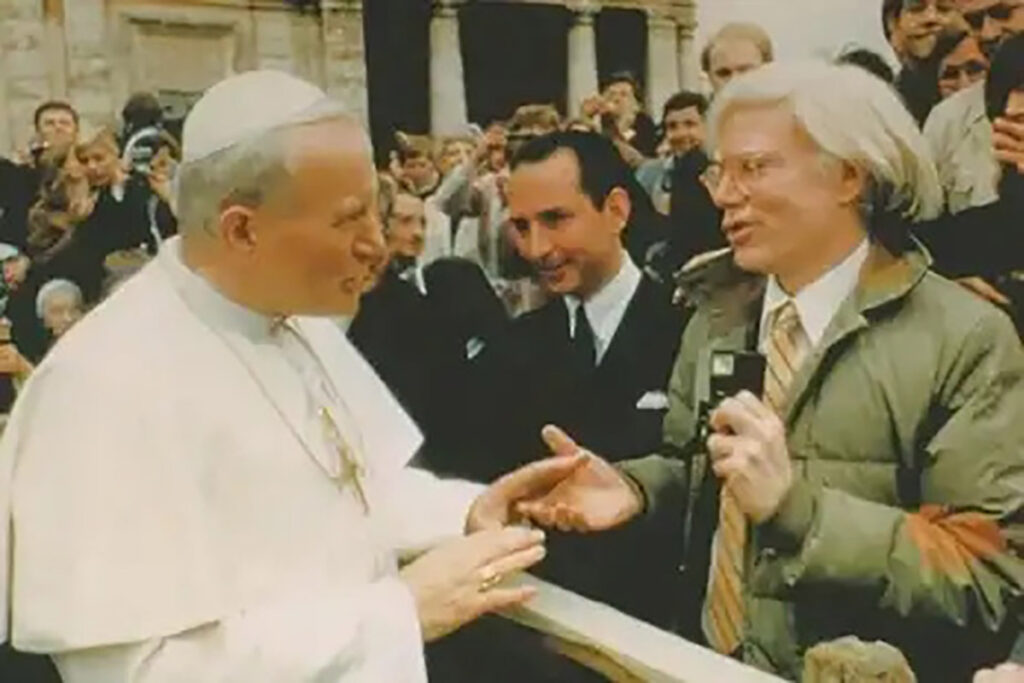
“The world needs forgiveness; too many people are caught up in resentment and harbour hatred because they are incapable of forgiving. They ruin their own lives and the lives of those around them rather than finding the joy of serenity and peace.” (Pope Francis in Assisi in 2016) His point is that those who do not forgive, who hold on to resentment, hurt themselves almost as much, even if they are unaware of it for a while.
Prayer
God, always ready to forgive, we thank you for your forgiving love. Give us the grace to show the same love and forgiveness to all. Amen.
For none of us lives for himself and none dies for himself
The first reading
Rom 14:7 For (gar) none of us lives for himself and none dies for himself.
Rom 14:8 If we live, we live for the Lord; if we die, we die for the Lord. Therefore, whether we live or die, we are the Lord’s.
Rom 14:9 For (gar) this reason Christ died and returned to life, so that he may be the Lord of both the dead and the living.
(The Jerusalem Bible translation of v. 7 does not reflect the Greek accurately: The life and death of each of us has its influence on others. A more precise version is that given above from the NET version.)
Initial observations
Today, we have our last Sunday excerpt from Romans. It comes from the point in the letter where Paul is finally being quite practical. This may not be so evident from the short reading given and, as a consequence, the context matters somewhat more than usual.
Kind of writing
Our short excerpt is part of the third section of Rom 12:1-15:6.
12:1-2 Christian life as reasonable worship
12:3-13:14 Christian living in the Empire
14:1-15:6 Living inclusively and tolerantly
Within 14:1-15:6, devoted to inclusivity and tolerance, several moments may be recognised.
14:1-12 Tolerance is the call of everyone
14:13-23 The strong must be tolerant
15:1-6 The example of Jesus himself
Origin of the reading
The context in the community was conflict over two aspects of being Christian. The first touched on how much of the Jewish tradition to hold on to as essential. The second had to do with how to act within the surrounding pagan culture. Such issues of tradition and inculturation are always current and very much so in our day. So, even if the particular issues at stake may seem remote, the general issue and the resolution promoted by Paul are relevant today.
In the eyes of “the weak,” the strong are sinning. In the eyes of “the strong,” the week are not sinning but failing to exercise freedom. Nevertheless, it looks as if the problem lies with the strong despising the weak rather than vice versa.
Related passages
The immediately preceding verses are vital:
Now receive the one who is weak (not a self-designation!) in the faith, and do not have disputes (quarrels) over differing opinions (reasonings or grumblings). One person believes in eating everything, but the weak person eats only vegetables (keeping kosher and/or avoiding meat sacrificed to idols). The one who eats everything (a new freedom in Christ) must not despise the one who does not, and the one who abstains must not judge the one who eats everything, for God has accepted him (notice the balance; this core teaching is found in Rom 3:21–5:11). Who are you to pass judgment on another’s servant? (Forbidden socially and a fortiori theologically.) Before his own master he stands or falls. And he will stand, for (gar) the Lord is able (God’s power—dynamis) to make him stand.
One person regards one day holier than other days, (e.g. observing the Sabbath and the feasts) and another regards them all alike. Each must be fully convinced in his own mind. The one who observes the day does it for the Lord. The one who eats, eats for the Lord because he gives thanks to God, and the one who abstains from eating abstains for the Lord, and he gives thanks to God. (Rom 14:1–6)
Paul then goes on to our reading to give a theological foundation for tolerance.
Brief commentary
Verse 7 The connecting word “for” (gar) is a key here. Paul is going to ground the practical advice in the previous two verses. The foundation lies not in human rights or respect, but in the Christ event. In this context, to live for yourself (the very opposite of living for the Gospel) means to order one’s life in relation to one’s own background, culture, desires, and wishes. This may not be bad in itself but fails to notice the new outlook gained in Christ. Cf. For the love of Christ controls us, since we have concluded this, that Christ died for all; therefore all have died. And he died for all so that those who live should no longer live for themselves but for him who died for them and was raised. (2 Cor 5:14–15; also Gal 2:19-20)
“Living and dying” are basic and include everything in between. The JB version in the lectionary thus reduces the range intended and just misses the point. Paul is speaking in the singular—it is a matter of individual conscience and outlook, within the community of faith.
Verse 8 This verses states positively the teaching of the preceding verse with the addition of “we are the Lord’s.” Paul’s sense of belonging to Christ is very strong: Rom 8:9; 1 Cor 3:23; 6:19–20; 15:23; 2 Cor 10:7; Gal 5:24. Cf. And if you belong to Christ, then you are Abraham’s descendants, heirs according to the promise. (Gal 3:29)
Verse 9 Note the resumptive “for” (gar) at the start of the verse. Paul gets to the heart of the matter, Jesus’ death and resurrection. Believers belong to the Lord precisely because of the events that gave us new life in Christ. Thus, believers’ belonging is grounded in the Lord’s “ruling” through his death and resurrection. This post-Easter worldwide rule of the Lord relativises all barriers and customs. Cf. For he is our peace, the one who made both groups into one and who destroyed the middle wall of partition, the hostility, when he nullified in his flesh the law of commandments in decrees. He did this to create in himself one new man out of two, thus making peace, and to reconcile them both in one body to God through the cross, by which the hostility has been killed. (Eph 2:14–16)
The logic is clear: if Christ has died for all, both living and dead, then Christ-believers must find a way of living together. Cf. Now receive the one who is weak in the faith, and do not have disputes over differing opinions. (Rom 14:1) But we who are strong ought to bear with the failings of the weak, and not just please ourselves. (Rom 15:1) Because the Lord, who accepts us all, is ruler of the living and the dead, judgement is his, not ours, as the next verses go on to illustrate.
Pointers for prayer
- It is easy to feel superior to fellow Christians who differ from me/us. Can I identify that within myself in today’s Church?
- We are all, without distinction, receivers of God’s astonishing grace in Christ—that must relativise the significance of some of our disputes…within and between the churches.
Prayer
God, your love for us in Christ is the very ground of our being. Help us to find ways to live tolerantly and inclusively with fellow believers so that our distinctions and disputes may not cause both insiders and outsiders to stumble.

Forgive your neighbour the wrong he has done, and then your sins will be pardoned when you pray
Sir 27:30 Anger and wrath, these also are abominations,
yet a sinner holds on to them.
Sir 28:1 The vengeful will face the Lord’s vengeance,
for he keeps a strict account of their sins.
Sir 28:2 Forgive your neighbour the wrong he has done,
and then your sins will be pardoned when you
pray.
Sir 28:3 Does anyone harbour anger against another,
and expect healing from the Lord?
Sir 28:4 If one has no mercy toward another like himself,
can he then seek pardon for his own sins?
Sir 28:5 If a mere mortal harbours wrath,
who will make an atoning sacrifice for his sins?
Sir 28:6 Remember the end of your life, and set enmity
aside;
remember corruption and death,
and be true to the commandments.
Sir 28:7 Remember the commandments, and do not be
angry with your neighbour;
remember the covenant of the Most High, and
overlook faults.
The second reading
Initial observations
This stunning reading is a perfect match for today’s Gospel. It might even be a good idea to read the Gospel first and then Sirach. The directness is unmissable and the message unavoidable.
Kind of writing
This is wisdom literature, so it is based on observation of life—seeing what works and drawing the necessary conclusions. Cf. Jealousy and anger shorten life, and anxiety brings on premature old age. (Sir 30:24) A little exceptionally, this wisdom book owes a great deal to the Pentateuch, the historical books, the three major prophets and the twelve minor ones. Although very much a religious book, it also shows the influence of Greek culture and, in particular, it responds to Hellenistic philosophy with a special interest in panentheism (God in creation) and theodicy (God is good in spite of evil).
Origin of the reading
Towards the end of this long book, the author reveals who he is: Instruction in understanding and knowledge I have written in this book, Jesus son of Eleazar son of Sirach of Jerusalem, whose mind poured forth wisdom. (Sir 50:27) The book survives in Greek, though substantial Hebrews portions—about two thirds—were found in the Cairo Genizah, Qumran and Masada. It is very likely that Sira wrote about 195-175 bc in Alexandria (Egypt) and that Ben Sira translated his grandfather’s writings some time around 132 bc.
This sprawling production does have a pattern across it and the reader is guided by eight poems on the search for wisdom (1:1–10; 4:11–19; 6:18–37; 14:20–15:10; 24:1–34; 32:14–33:18; 38:24–39:11; 44:1–15). These poems seem to introduce the major sections of the book (1:1–50:24). The book ends with postscripts (50:25–29) and appendices (51:1–30). Our reflection is taken from Part 5 (24:1–32:13), showing this sequence:
24:1ñ34: The Torah is our wisdom
25:1ñ11: Fear of the Lord is essential
25:13ñ26:27: Benefits of good wife
26:28ñ27:15: Wise and foolish talk
27:16ñ21: Disloyalty ruins friendship
27:22ñ29: Harm rebounds on the doer
27:30ñ28:7: Forgiving your neighbour
28:8ñ26: Avoiding the quarrelsome
29:1ñ20: Kindness and caution
29:21ñ28: Living moderately
30:1ñ13: Bringing up children
30:14ñ25: Health and cheerfulness
31:1ñ11: Wealth as an obstacle
31:12ñ32:13: Good manners
Related passages
For judgment is merciless for the one who has shown no mercy. But mercy triumphs over judgment. (Jas 2:13)
Have mercy in your inner being, my children, because whatever anyone does to his neighbour, the Lord will do to him. (Testament of the Twelve Patriarchs, Zebul 5:3)
Love one another from the heart, therefore, and if anyone sins against you, speak to him in peace. Expel the venom of hatred, and do not harbour deceit in your heart. If anyone confesses and repents, forgive him. (Testament of the Twelve Patriarchs Gad 6:3)
Brief commentary
Verse 30 “Abominations” is a very strong negative, so the shock is evident.
Verse 1 This rather traditional teaching is found across all of Sira. God records both bad and good deeds. Cf. Dt 32:35; Rom 12:19.
Verse 2 The linking of forgiveness and prayer anticipates much in the New Testament. Cf. Mt 6:14. Ben Sira is especially devoted to prayer and liturgy.
Verses 3-4 The teaching is in the form of two questions both expecting the answer no. To receive healing and forgiveness, we must be ready to give forgiveness and healing. The argument in v. 4 is “from the greater to the lesser”: if you can’t show mercy to your equal how can you expect it from above?
Verse 5 Again, the verse is in the form of a question. External sacrifice is not efficacious on its own; its value comes from within the person praying.
Verse 6 An argument from the certainty of death. Cf. In all you do, remember the end of your life, and then you will never sin. (Sir 7:36) Do not give your heart to grief; drive it away, and remember your own end. (Sir 38:20) Ben Sira quite traditional, even old-fashioned in denying life after death. This is, therefore, the only chance to be good.
Verse 7 The implied argument is that God, in his graciousness (expressed in the covenant) has overlooked all faults and therefore so should we. Cf. You shall not take vengeance or bear a grudge against any of your people, but you shall love your neighbour as yourself: I am the Lord. (Lev 19:18)
Pointers for prayer
- What is my own experience of being forgiven by others and by God?
- Have I known from my own experience the intimate link between the practice of forgiveness and prayer?
Prayer
Give us, O Lord, a heart ready to forgive so that we have have a heart ready to receive forgiveness from you. Through Christ our Lord. Amen.

The Liturgy
Readings 1 and 3
The choice of first reading from Sirach is brilliant—it puts plainly what is implied in Gospel parable.
The responsorial Psalm
Psalm 103 (102) offers a rich response to the first reading. As often, the response says it all: The Lord is compassion and love, slow to anger and rich in mercy.
Sunday introductions
First reading
Sirach 27:30-28:7
Our first reading is a fascinating reflection, both realistic and logical. Realistic: we all find ourselves in situations where forgiveness is called for. Logical: the reasoning anticipates the teaching of Jesus: And forgive us our debts, as we also have forgiven our debtors. (Matt 6:12)
Second reading
Romans 14:7-9
Out of context, this short reading risks being unclear. The historic setting is conflict over two things: how much of Jewish tradition to hold on to and how to live in the surrounding pagan society. In these practical matters, members of the community are condemning each other, whereas Paul insists that what unites the whole body in Christ is deeper than the differences.
Gospel
Matthew 18:21-35
If you’ve ever asked yourself how often should I forgive someone, then this Gospel is for you! The parable is disturbing in its details and challenging in its message.
Weekday introductions
Monday 14 September
Exaltation of the Holy Cross
Numbers 21:4-9
This strange, magical story has several layers. One layer is symbolic: snakes stand for life and death; another layer is therapeutic: when we face what harms us we diminish its hold over us. The imagery is taken up explicitly in the Gospel for the feast.
Philippians 2:6-11
You may have wondered where did Paul get all his knowledge and understanding. Partly from already existing traditions. In our reading, he quotes at length an early Christian hymn celebrating Jesus’ death and resurrection, the “great events that gave us new life in Christ.”
John 3:13-17
In our reading, the notion of “lifting up” looks backwards and forwards. Backwards: to the story we had in the first reading. Forwards, to Jesus’ own lifting up in death and into resurrection, so that we might have life in him. By his facing death, we are healed of its power and even of the fear of death itself.
Tuesday 15 September
Our Lady of Sorrows
1 Corinthians 12:12-14, 27-31
Divisions and factions are “normal” in the Christian community; this does not mean we should accept them as normative! All the gifts are needed, to make the community a living body.
Luke 7:11-17
You will notice the echoes of Elijah raising the widow’s son — all part of Luke’s portrait of Jesus as prophet par excellence.
Wednesday 16 September
Sts Cornelius and Cyprian, bishops and martyrs
1 Corinthians 12:31-13:1
Our reading today is a Pauline tour-de-force in praise of love. It is often called a hymn to love and it is poetry. At the same time, we know that the core is profoundly true, reflecting what we know in our heart of hearts.
Luke 7:31-35
The tone of irritation may irritate (!) but it is perfectly understandable that Jesus might occasionally be just fed up with unstable expectations. It happens to us all!
Thursday 17 September
St Robert Bellarmine, bishop, religious, doctor
1 Corinthians 15:1-11
Every Christian in Corinth believed Jesus was raised from the dead. Some of them, however, did not believe the dead would rise in Christ. Paul sets about persuading them, by first reminding them of the tradition they received, in which they stand.
Luke 7:36-50
Telling a story within a story can be very powerful. Jesus little “parable” of the debtor is hardly rocket science but in the context is immensely powerful. (It may be useful to repeat that the woman is question is not Mary Magdalen, contrary to popular tradition and writing.)
Friday 18 September
1 Corinthians 15:12-20
Paul’s argument calls for careful listening. In effect he is saying, if you say there is not resurrection at all, be careful because that will include Jesus! The arguments here are all logical and powerful.
Luke 8:1-3
Today’s very short reading is immensely significant. It is rare to see the women who accompanied Jesus given a profile. Mary Magdalene we know, of course, but the other figures remain a bit of mystery.
Saturday 22 September
St Januarius, bishop and martyr
1 Corinthians 15:35-37, 42-49
Paul affirms that Jesus is risen—so there has been at least one resurrection. He goes on to tackle the block experienced by some Corinthians who cannot picture the transformed and resurrected body. By series of images, he shows that “body” can mean a wide variety of things. By the comparison with Adam, he shows how Jesus’ resurrection is God’s future for us all as “descendants” of the one progenitor. Amen.
Luke 8:4-15
Today we hear the original parable of the sower and a later, church interpretation. They have different focuses. The original parable is about surprising, even astonishing abundance. The interpretation resembles a moral personality test: we all wonder which one is “me”?