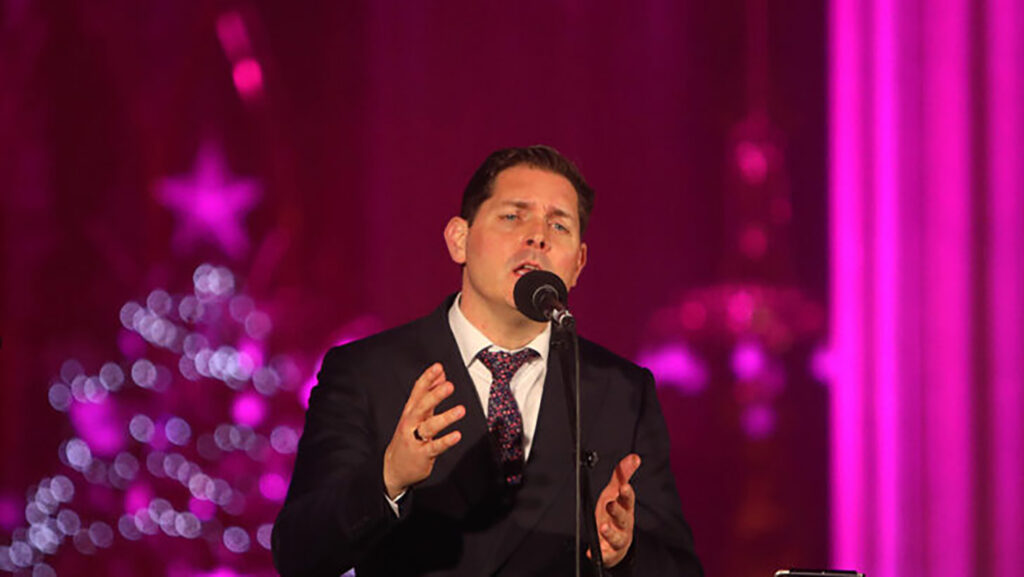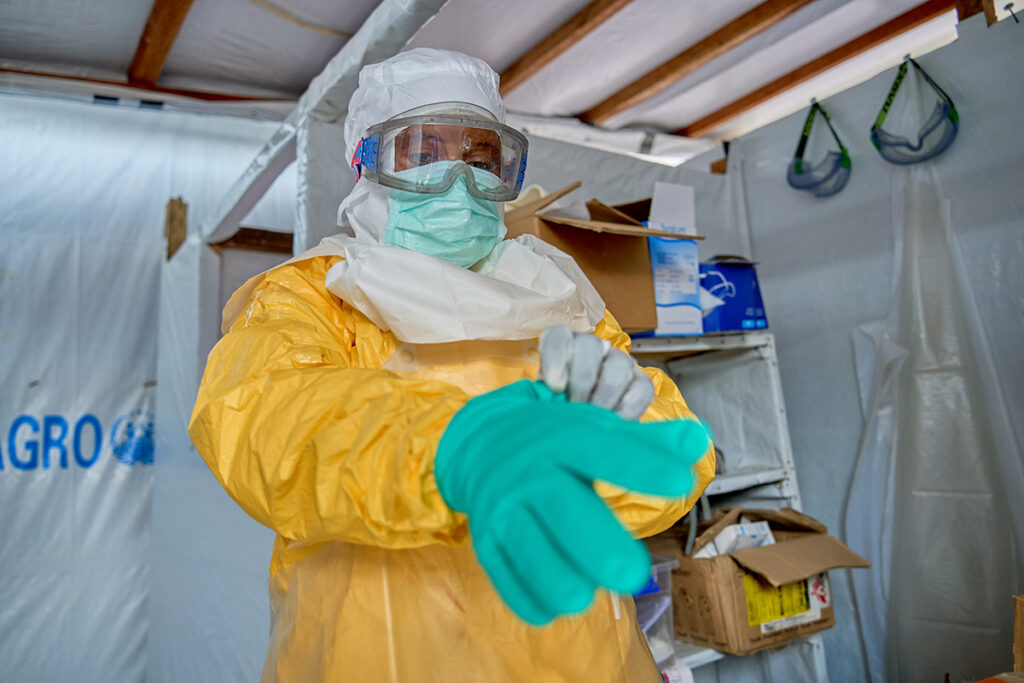
Though Seán Farrell has worked in war zones, it is Ebola which still frightens him in a different way. In 2014, the Trócaire CEO led the organisation’s response to the outbreak in Sierra Leone, spending weeks in communities where despite households under quarantine, the virus was rapidly spreading.
“It was one of the scariest things I ever did because you couldn’t see it,” he told The Irish Catholic. “In conflict zones, you can see a lot of the dangers. I think the thing about Ebola, going to quarantined households, it is really a quiet, silent killer. People couldn’t see it. You can’t smell it, but it was in those communities and it was spreading rapidly in those communities.”
Urgency
More than a decade later, those memories have taken on a new sense of urgency. Currently, The Democratic Republic of Congo is facing the worst Ebola outbreak in its history. Government figures reported on September 11 showed 7,022 confirmed cases with the virus having spread to a seventh province, South Ubangi, in the northwest of the country.
The World Health Organisation said earlier in September that more than 3,000 people had died, while shortages of trained staff, operational partners, and funding were hampering an effective response. Along with this lack of access to healthcare, conflict and displacement are making contact tracing more difficult.
For Mr Farrell who has seen the effects of Ebola first hand, these are not just abstract figures. Likewise, Trócaire has worked in Ituri, the centre of the outbreak, for around 25 years.
Of course my wife is like, ‘Why do you have to be the one to go?’ Like, it’s normal, right? ‘What if you bring it back?’”
“I think about our team now. I speak to them regularly in Congo and I had a call with all of them a couple of weeks ago and I feel for them because they’re on the front line with our local partners and responding.
“But they’ve all got families, they’ve all got kids. I know what that feeling was like for myself. I had two young kids and I went to Sierra Leone. Of course my wife is like, ‘Why do you have to be the one to go?’ Like, it’s normal, right? ‘What if you bring it back?’
“So they’re in that situation now. They’ve got families, they’ve got loved ones, they’re living and working in those communities, and they’re still on the front lines of a response.”
Despite being at the epicentre, what Mr Farrell is hearing from staff is a mix of fear and determination. “The first one is obviously concern for – it’s not even for their own safety – it’s the safety of their families, their friends, their communities. They’re out there working in communities where Ebola is spreading. But I also sense a real determination to stop this and a real sense of commitment that we will play our part.”
Trócaire’s presence in Ituri has mainly been as a support to displaced communities, agriculture, livelihoods and women’s groups. These partners are now carrying out that same work while responding to Ebola.
“A lot of the work that we’re doing now is that if we do not get the community education piece right and the systems right at community level, this will continue to spread,” Mr Farrell said. “It’s around safe burials, it’s around the no-touch policies, it’s around no community gatherings, it’s around communities protecting themselves. The first thing that has to stop is the spread. And that gives your health systems a chance to catch up with treatment.”
Lessons
One of the hardest lessons from Sierra Leone was around burial practices. “The unfortunate thing about Ebola is that it’s even more virulent after the person dies. So the virus does not die with the body and therefore touching the body after death, traditional burial practices where there’s a laying of hands on bodies, is lethal. At the time some of the large outbreaks in Sierra Leone were linked to burial practices. There might have been three or four cases in a community and suddenly there were 50.”
However, as he made clear, these restrictions only work if communities understand why. “You have to have the education piece right. People have to understand the context and why, for example, safe burials are being done.”
Likewise, clear communication is also essential in countering rumours that can put health workers at risk. “A rumour like that can be lethal for the safety of health workers,” Mr Farrell said, recalling claims that responders themselves were bringing Ebola into communities. “That’s why the education piece is so important.”
If people are being displaced, they’re coming into towns and they’ve nothing”
The situation in Ituri is further complicated by continuing armed conflict and displacement. “The fighting is still going on. So in the midst of an Ebola outbreak, we still have displaced people coming into some of the areas where we work.”
“How do you do distance? How do you do proper sanitation?” said Mr Farrell, “If people are being displaced, they’re coming into towns and they’ve nothing.”
Acting
If there is one lesson he carries most strongly from Sierra Leone, it is the importance of acting early. “The lesson of Sierra Leone is contain, contain, contain, and use all of the systems of government along with the international organisations to restrict and contain the spread in a geographical location. From an outbreak of Ebola you will always have death, but the level of death will depend on how quickly it spreads but also on how far it spreads.”
There is, however, one source of encouragement. Mr Farrell said coordination between local government, health authorities, international organisations and aid groups remains strong.
“What solved Ebola in Sierra Leone was good coordination and good programmes to stop the spread. That is what would stop it in DR Congo. Despite the challenges they face around displaced populations, their coordination will be absolutely essential.”