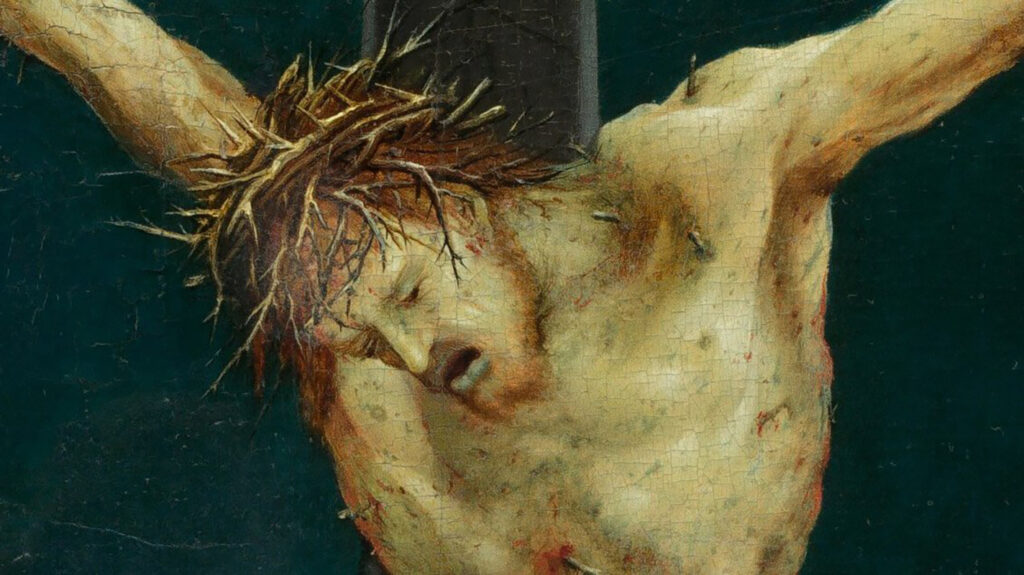
According to the Gospel of John, in his final moment on the cross, Jesus declared: “It is finished” (Jn 19:30). The words might also be translated: “It is fulfilled” or “It is accomplished.”
Like the declaration of his thirst, the saying is brief but contains many layers of meaning. We can begin by asking a simple question: Exactly, what was fulfilled, accomplished or completed on the cross?
The cross of Jesus Christ is the greatest work of love the world has ever known. It was generous for God to create the world and give life to humanity made in his image and likeness, but in his love he willed to give us something still greater: salvation through the cross.
Eternity
Knowing full well from all eternity that the first human beings would transgress the law, eat the forbidden fruit and bring down the penalty of Death upon all humanity, the good God who loves us had already devised a plan to save us – a most astonishing plan.
Knowing the first humans would transgress, God planned to send his eternal Son to become a man The eternal Son, incarnate as Jesus of Nazareth, would go to the cross to bear in himself the penalty of death brought by sin. His intention would be to bear in himself, yet on behalf of all, the penalty of Death coming to all on account of sin.
In this way God himself would bear the penalty of death on behalf of humanity. Thus God revealed a love willing not only to create us but also to die for us.
The plan of God to die for us comes to light over the whole course of Scripture The Old Testament repeatedly foretells the suffering servant who would give his life for the salvation of many. From the beginning of the New Testament as well, signs and prophecies pointed toward the saving death Christ would accomplish.
Jesus even prophesied his own passion and death more than once. To make clear that his Passion and death were not going to be something that simply happened to him, the Lord tells us explicitly he would freely lay down his life: “No one takes it (my life) from me, but I lay it down of my own accord. I have power to lay it down and power to take it up again; this charge I have received from my Father” (Jn 10:17-18, RSV).
Many times in his public ministry Jesus escaped from crowds that wanted to kill him. In the Garden of Gethsemane, however, he chose not to escape. He freely chose to endure the cross according to the eternal plan of love.
Accomplished
Returning to the main question, when the Lord Jesus said, “It is finished,” exactly what was fulfilled, accomplished or completed? What was fulfilled was the eternal plan of God to send his Son to die on the cross on behalf of us all. What was fulfilled was the eternal plan of God to send his Son to die for us.
Christ fulfilled his saving mission by offering himself in love for humanity. Hence, immediately after saying, “It is finished,” he bowed his head, gave up his spirit and died.
His purpose in entering into the state of Death was precisely to destroy it. On Easter Sunday, when Jesus Christ rose from the dead, he lives now to die no more (cf. Rv 1:18). By his resurrection he broke the power of Death and removed its sting. Because of Christ’s victory, death is no longer the final word. At the end of time this victory will be fully revealed when God judges humanity according to their deeds (cf. Rom 2:6; Rv 22:12).
In the meantime, how then shall we live? How shall we prepare?
Christ died for us and God has raised him from the dead. Now Jesus lives and calls us to turn to him for forgiveness and new life.
As St John of the Cross reminds us: “At the evening of life, we will be judged on our love” (Catechism of the Catholic Church, No. 1022). With that truth in mind, let us examine our consciences: how have I loved God and how have I loved my neighbour?
Sin
When we find ourselves weighed down with sin, let us turn to the sacrament of penance, where the blood of Christ washes away our sins once more. From there we renew our lives through prayer, fasting and charity.
In this way we prepare ourselves for the last day, when we shall finally understand the meaning of Christ’s words from the cross: “It is finished.”
Dominican Fr James Dominic Brent is the author of The Father’s House: Discovering Our Home in the Trinity.