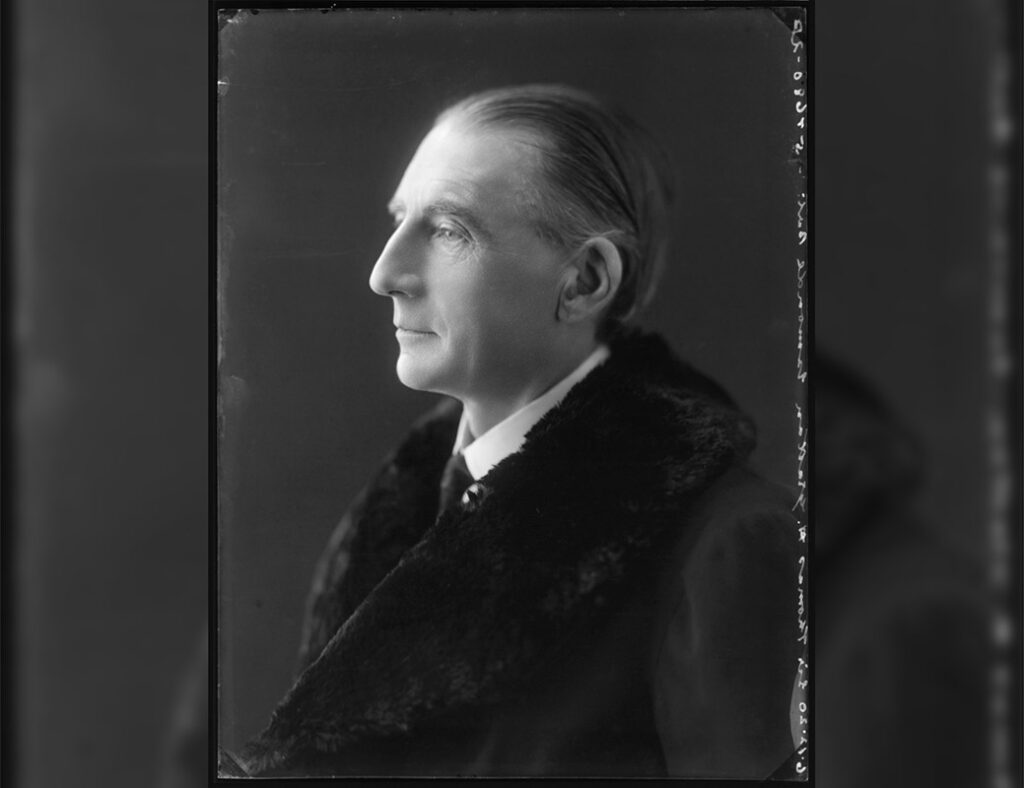
The Political world of Sir Thomas Henry Grattan Esmonde of Ballynastragh, Co. Wexford, 1862-1935,
by Brian Fennell
(Four Courts Press, €12.95)
The Catholic Church in Ireland that attained a position of dominance in many spheres of Irish life in the nineteenth and twentieth century has always been slow to acknowledge the debt owed for its survival to the landowning Catholics, who had braved the Penal Laws imposed in the early 1700s.
These laws had excluded them from many careers, including public office, and made it difficult for them to inherit or retain their property. Few lasted the course and in 1780 only 6%of the land of Ireland was in Catholic ownership.
Survivors
Foremost among the survivors were the Esmonde family in Wexford, descended from the sister of one of the last O’Flaherty clan chieftains in Connacht, and created baronets in the early 1600s.
Sir John Esmonde, the tenth baronet, was elected to parliament in 1852 and supported the Whigs or Liberals who, in government, were supportive of the Catholic interest. They disestablished the Protestant Church as the State religion in Ireland and repealed surviving penal laws that still affected marriages. They also appointed Catholics to lead positions in the administration and the judiciary.
Sir John married the granddaughter of Henry Grattan, a Protestant who had championed the removal of Catholic disabilities in the pre-Union Irish Parliament and later in the House of Commons at Westminster.
Sir John died in 1876. His heir Thomas, the subject of this book, inherited 6000 acres of freehold land. By the time he had come of age in 1883, Irish politics had been transformed by the tenant agitation against landlords, known to history as the Land War, and the emergence of the pro-tenant Home Rule Party. It displaced the Whig Catholics as the political spokesmen of Catholic Ireland, enjoying the support of the bishops and priests.
It was a local priest, Canon McManus, who influenced Sir Thomas to throw in his lot with the Home Rule Party deserting, as some saw it, his own landlord class from whose Kildare Street Club he resigned. He was elected to the House of Commons as a home ruler to represent South Co. Dublin in the landmark General Election of 1885.
Sir Thomas remained an active member of the Home Rule Party, becoming Chief Whip and moving to represent his local constituency”
Five years later, in 1890, he sided with the bishops supporting the majority of the party who deposed Parnell after he had been found guilty of adultery in a divorce suit taken by the husband of his future wife Katherine O’Shea.
Sir Thomas remained an active member of the Home Rule Party, becoming Chief Whip and moving to represent his local constituency of North Wexford from 1900 until 1918. He was also active in local politics, chairing the Wexford County Council elected on a household franchise under the Local Government Act, 1898.
For a short period in 1907 when the Liberal government was dragging its feet on Home Rule, he defected from the Irish Parliamentary Party (as the home rulers were now described) to join Sinn Féin, an organisation that wanted nationalist members of the House of Commons to withdraw from it.
Politics
Sinn Féin were not then apologists for revolutionary violence, as they were to become by the time of the 1918 General Election, when their candidate in Wexford Roger Sweetman unseated Sir Thomas; it was one of the of the most slender Sinn Féin majorities over the Parliamentary Party in that election. Sir Thomas’s son and heir Osmond canvassed for Sweetman and later became a diplomat for the Sinn Féin government elected by the Dáil set up in the wake of that election.
Meanwhile, Sir Thomas remained active in politics at a local level. He was involved in efforts to broker a compromise to bring to an end the guerrilla warfare being waged to bring about the all-Ireland Republic proclaimed in 1916.
He resigned as a Justice of the Peace and Deputy Lieutenant of the County in protest against the treatment of the Sinn Fein Lord Mayor of Cork Terence MacSwiney, who died on hunger strike in Brixton Prison in October 1921.
When an independent Free State came into existence in 1922, Sir Thomas was nominated by its Government to the Senate, the only survivor of the old Parliamentary Party in that assembly. He said the creation of the Free State realised the policy of his ancestor Henry Grattan and suggested that its Senate should meet at the seat of Grattan’s parliament at College Green.
Sir Thomas himself soldiered on, serving dutifully in the Senate until the year before his death in 1935”
The Republicans, who opposed the Treaty in arms, embarked on a campaign of burning down the houses of Senators; in March 1923 they burned down Ballynastragh, the Esmonde ancestral home. In so doing, they destroyed some of the most important records of the old Catholic Ireland that had survived the Penal Laws and the chapel where Mass had gone on being celebrated.
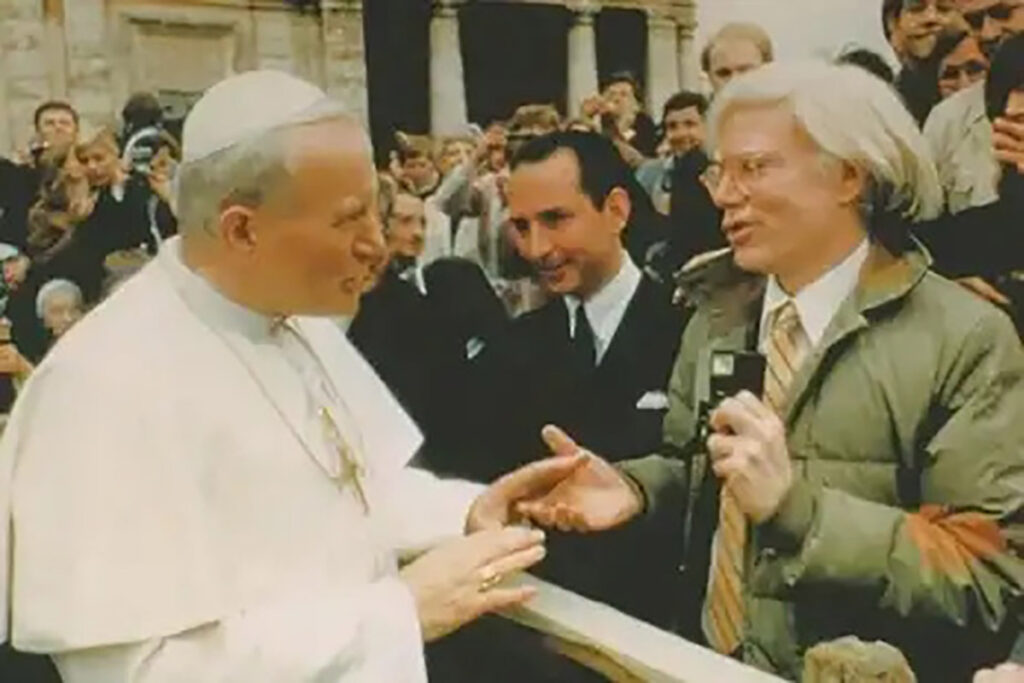
Sir Thomas himself soldiered on, serving dutifully in the Senate until the year before his death in 1935. He had been appointed a Papal Chamberlain by Pope Leo XIII in 1895; as such, he had an important role in the Eucharistic Congress in 1932.
This study of Sir Thomas’s world by Brian Fennell is based on his Master’s thesis and is published as one of the valuable series of Maynooth Studies in Local History.
Although the local newspapers have not yielded as much material as might have been expected, and important sources would have perished with old Ballynastragh, the author has been able to do a useful service to history reminding us of a man who was a significant political figure over a long period and also had an interesting life outside politics. He deserves a full biography.
Succession
Sir Thomas’s only surviving son Osmond, who was a Fine Gael TD, died without issue in 1936. Sir Thomas’s youngest daughter, Eithne, married her second cousin Tony, a medical doctor, who succeeded to the baronetcy as Sir Anthony in the 1950s and was Fine Gael TD for Wexford from 1951 until 1973.
Their barrister son John Grattan Esmonde (later a circuit court judge) succeeded to the seat in 1973. As such, he voted for a Bill proposed by the Minister for Justice that was defeated, which would have legalised the sale of contraceptives in limited circumstances.
That, indeed, was their story: putting their religion before all else, whatever it cost”
“John should not have done that,” Sir Anthony told me; “the Esmondes were always on the side of the Church.”
That, indeed, was their story: putting their religion before all else, whatever it cost. The parish church of St Michael’s in Gorey, designed by Pugin, whose erection around 1840 was financed by the family, is a memorial to their steadfast loyalty.
The present baronet Sir Shane, a grandson of Judge John Grattan Esmonde, is a consultant cardiologist in Northern Ireland. Ballynastragh, on which a new house was built after Sir Thomas’s death, remains in the possession of the family.