Remember the Children,
a novel by Lucy Beckett
(Gracewing, £20.00 / €23.50)
This novel is the final part of a trilogy, the two earlier parts of which, entitled In the Grieving of Her Days and A Late Finding, were much admired on their publication also by Gracewing. This latest book deals with the experiences and impressions of a widow, Clare Wilson, whose husband died years ago and whose son was killed by a roadside bomb during the invasion of Afghanistan – experiences which were dealt with in those earlier novels.
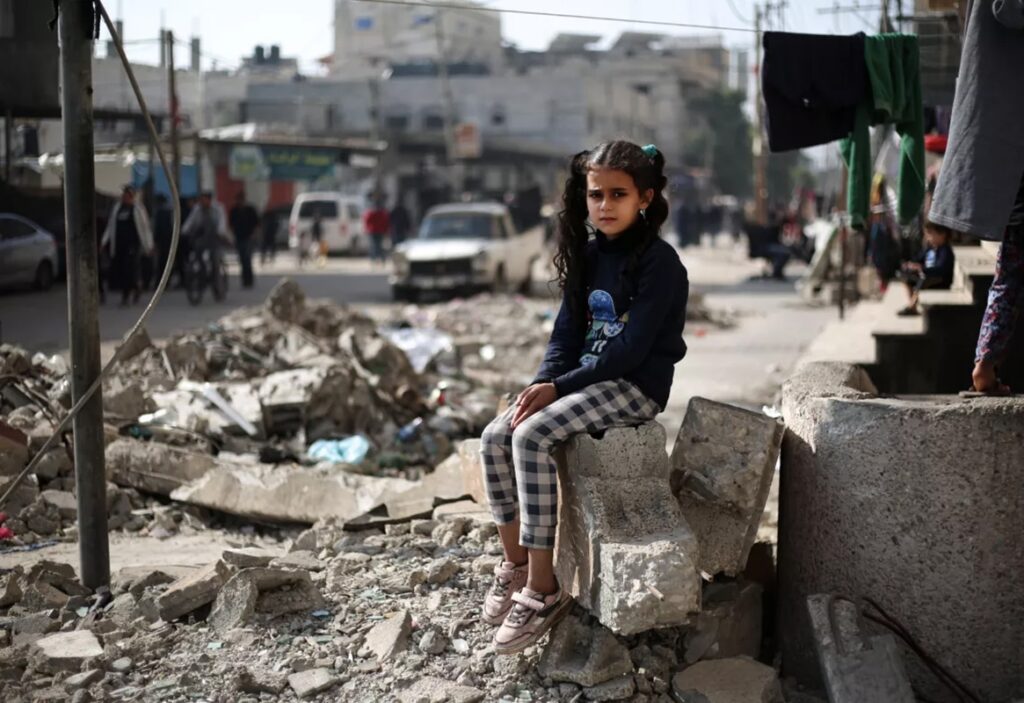
This book opens, however, only three years ago, on October 15, 2023, just after the Hamas attack on Israel that opened the present agonies of the Gazan people. The celebrant of the Mass which the protagonist of the novel, Clare Wilson attends invokes the words of the psalmist; for peace in Jerusalem, adding three thousand years have gone, and still we must pray for peace in Jerusalem. This sets the long theme of the novel: Clare’s search for real peace in the world, in her own community, and also peace of mind among ourselves.
The real world
It is a novel very unlike so many that we read, or merely read about, these days, which seem to be in so many ways cut off from “the real world”. Those novels do not contain the sorts of things written about here. I was reminded in some ways by much earlier novels, of how Dos Passos and Uwe Johnson handled the individual and the passage of history.
The book is haunted by the struggle in Ukraine, and in what she still thinks of as the Holy Land, and over all the blunderings around the world”
The long cavalcade of cruelty that constitutes our daily news bears down on the soul of Clare, now in her eighties, as it must also do on so many of her readers, for we none of us seem to be able to live in peace, either with the world or with our neighbours, though she tries as best she can through her closest friends and associates, who are mixed group.
The book is haunted by the struggle in Ukraine, and in what she still thinks of as the Holy Land, and over all the blunderings around the world the current occupant of the White House, cause her real fear. All of these impose themselves on Clare in the safety of her flat of long standing in London’s Kensington.
In the last pages the saintly Pope Francis passes away; followed by the quick and efficient election of the new pope in whom Clare sets so much hope. Her Muslim friend Hakim, however, is reading for the first time the works of Herodotus and wonders about the ancient confrontations of east and west, all so long before there were Christians and Muslims, a subtle reminder of the deep roots which some conflicts have: the self-styled heirs of the Greeks are still in conflict with Persia.
Feat
This is a book which manages the feat of being at once both sad and happy. Reading I suspect that many of those who take it up will be encouraged to go back and read the earlier two, and so see the last generation through the eyes of a good and kind lady, seeking everywhere for both peace and community. If there were enough readers to like them, they might be made into bestsellers to provide a challenge to us all.
Clare’s last hope at the time of writing is that things will possibly get better in the coming year 2026: the reader will know how to absorb that. It ends, as it began, with the injunction “for the peace of Jerusalem, pray”.