September often sees the return of old shows.
Sunday Morning Live (BBC One) returned recently for a new season, and among the issues discussed on last Sunday’s show was the thorny one of accountability for crimes committed by soldiers. This has a particular relevance for legacy issues in Northern Ireland. As is often the case, everybody wants justice and accountability, but have differences on implementation in various contexts. Former British soldier Col. Tim Collins wasn’t arguing for military immunity but was against “politically motivated witch hunts” where soldiers were hounded for years over the same events. Prof. Hilary Merideth-Beckham thought account had to be taken of ‘heat of the moment’, ‘split-second’ decisions made by soldiers. Dr Iain Overton was concerned by military offences that were more premeditated, while human rights lawyer Claire McKeegan stressed that serious crimes were involved.
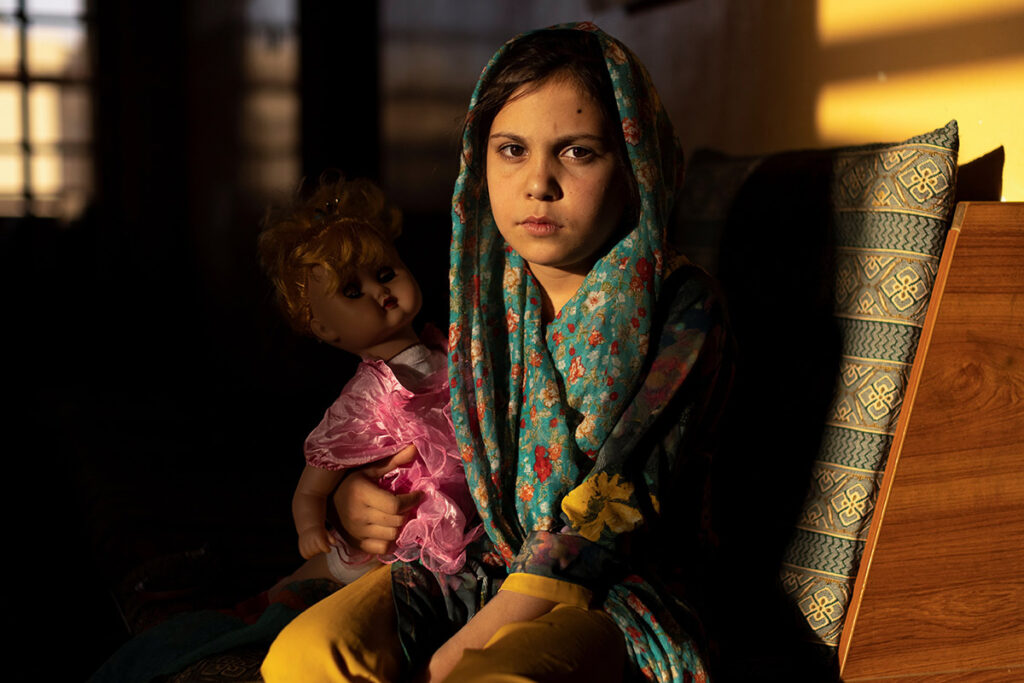
Last week I wrote about the drama Kabul – detailing oppression by the Taliban in Afghanistan. There were real-life examples on The Claire Byrne Show (Newstalk, Tuesday) – we heard from journalist Zahra Joya, author of The Vanishing Girl of Kabul and founder of Rukhshana Media, a group dedicated to giving voice to the women oppressed and deprived of rights by the current Taliban regime. She had grown up under the original Taliban rule and had to be disguised as a boy to get an education. She fled the country during that evacuation of Kabul in 2021, a “horrible moment” she said, and studied journalism in the UK. There had been much more freedom after the Americans invaded, but now women and girls are oppressed again – she was surprised things changed for the worst so quickly. For example, girls are not allowed to attend secondary school or university, and arrangements are made for child marriage. She described the system as “gender apartheid”, referencing 100 edicts against the rights of women.
Such issues also featured in Alex Crawfor’s special location reports last week for Sky News. In one, ‘Afghanistan’s lost generation of female students’, she visited a rural primary school, where poverty also posed a challenge to education. She saw that the young girls of primary school age were enthusiastic about learning, with “big ambitions” to be doctors and teachers, engineers and architects, but unlike the boys, this was their last year in education as they were not allowed to attend secondary school. The UN had described Afghanistan as “the most repressive country in the world for women and girls”.
Into the Breach: the Mission of the Family: The Catholic Family in a Post-Christian World (EWTN, Saturday) – says it all in the awkward title. The premise was that the breakdown of family leads to the breakdown of society, and it’s hard to argue with that. The approach was a bit bleaker than I would have liked – intentional Catholic families were seen as a small minority in a pagan society. Many nominal Catholics just had ‘Catholic patches’ in their lives. Society now was self-consciously secular, so it was important to protect Catholic family values and pass them on to the young. ‘Going with the flow’ would not get us to a good place as it might have done in the past. But there was hope – the show featured some young families following the faith, some were American sports figures, and some were enthusiastic about taking part in the Rite of Christian Initiation for Adults (RCIA). One commentator stressed it was never too late – instancing the Apostles, all of whom came to the faith as adults. Intentional Catholic families were encouraged to seek out people of like mind as community support was so effective. I found the bland background music irritating, and I don’t think it added any extra value.
And speaking of sports people of faith, I watched some of Katie Taylor Live at Croke Park (RTÉ 2, Saturday). I have reservations about boxing as a sport – violent, however controlled – but it was good to see the Taylor win, and to see her finishing her victory speech from the ring with a mighty prayer of thanksgiving for victory from Psalm 18.
Finally, I can see great potential in Little Big Questions (Radio Maria, Saturday) – with Fr Darren Brennan sensitively answering questions sent in by children. I’d like to have heard more questions, not just one (this week it was a biggie – the problem of suffering), and I’d like to have heard them in the children’s own voices.
Pick of the week
Hope After 9/11: Stories of Faith and Courage
EWTN, Saturday, September 12, 11am and 8pm
On the 25th anniversary of 9/11, EWTN News’ Colm Flynn meets the priests and religious who responded immediately at the crash sites, exploring the vital role faith played in the aftermath of the attacks.
Vox Nostra with Vlad Smishkewych
RTÉ Lyric FM, Sunday, September 13, 7am
This week on Vox Nostra, Vlad explores composers with unmistakable musical voices, including the visionary Hildegard von Bingen.
EVERYBODY LOVES RAYMOND
Channel 4, Sunday, September 13, 7.35am
The Sister: Debra’s hippy sister shows up unexpectedly and announces that she’s decided to become a nun. Funny and moving. (S4 Ep6)