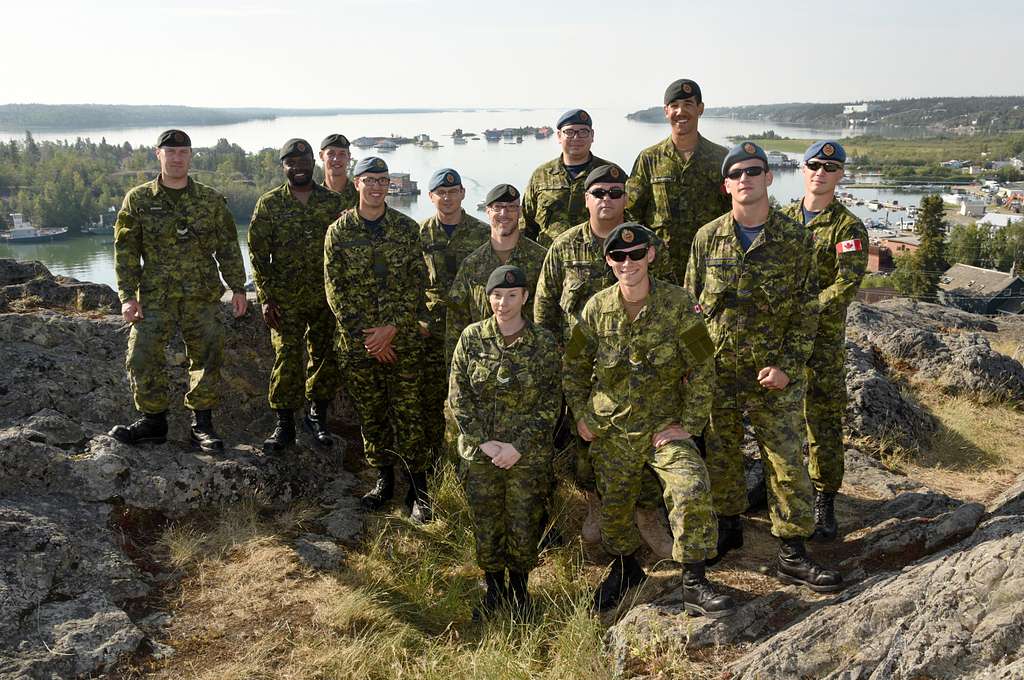
The Canadian Armed Forces (CAF) recently issued a new policy called Military Personnel Instructions on Spiritual Reflections in Military Settings in which they outlaw God. At what point did Canada turn into Albania? Not the new Albania, but the old Communist one with its crazed leader for life, Enver Hoxha.
What the new military missive says is quite clear in its expression, if muddled in its conception: “In military settings, spiritual reflections are inclusive public addresses to a group of individuals that nurture resilience by fostering meaning, purpose, and spiritual well-being. . . . Spiritual reflections do not use religious specific language, including references to God.”
The seasoned correspondent and columnist Rosie Dimanno of The Toronto Star sharply unveils the mangled logic of the military’s thinking when she writes in her August 8 column, with her customary candour, “I’ve seen enough of death and dying on the battlefield to know that soldiers breathing their last, if they’re able to form words at all, will most often call out for their mothers. Or for God. Or Allah.”
But for the military brass who have fashioned the new legislation, invoking or referring to God has now become the latest addition to the list of words or concepts that may cause offense, violate professed standards of inclusion and even induce trauma.
This is a wonky and disproportionate analysis. As the statement of the Military Ordinary of Canada, Scott McCaig, makes clear in a rational response to this CAF outrage, “This instruction is based on a false premise: simply because some belief systems do not profess the existence of God, or some other divine source, does not make them neutral. Atheistic systems of belief require as much assent of intellect and will (faith) as any theistic system of belief. They too profess particular beliefs about God (existence or non-existence, nature, etc.), the world and its existence, values, as well as meaning and purpose. That is why Secular Humanists rightly have chaplains in the Canadian Armed Forces. They are one of many ‘Spiritual Faith Traditions,’ and are recognised as such by the government. There is no such thing as reflections on meaning, purpose and spiritual well being without philosophical and religious presuppositions. It is not the place of the government to adjudicate between them. That is the opposite of state neutrality.”
Dimanno is right when she observes in her tart and acidic tone: “In my experience, soldiers are inherently strong, stoic and resilient people. If the odd few are so easily triggered that they’re traumatised by the name of God, maybe they don’t have the right stuff to serve under arms anyway.”
If the authors of the CAF missive think their reasoning embodies enlightened multiculturalism, a sensitive response to the country’s rich mosaic of beliefs, they should think again. Imposed neutrality, wholesale erasure of differences and colourless semantic reductionism serve no one in the end, including those who serve.
With kind permission of the author. Read more work by Michael W Higgins, leading scholar on the papacy and contemporary Catholicism, at https://pontifex-minimus.mailchimpsites.com