Q: Could you clarify the Church’s current stance on Freemasonry? Some seem to think that these days it’s “no different than belonging to Rotary” or any other service club. The local church has parishioners that belong to the local Masonic lodge.
A: Despite what you might be hearing from your fellow parishioners, it is still the Church’s official position that Freemasonry is incompatible with the Catholic faith.
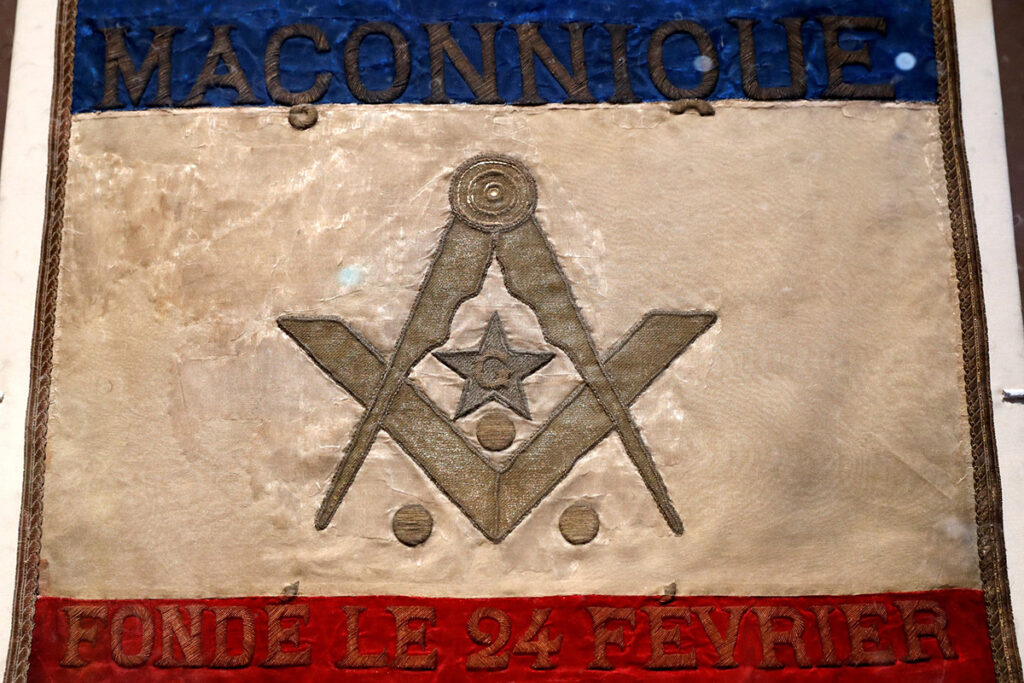
For background, Freemasonry is a men’s fraternal organisation that is sometimes said to have roots in the Medieval guild system for literal stone masons, although modern Freemasonry as we know it today developed in the early 18th century.
Contemporary American Freemasonry tends to present itself as an organisation dedicated to brotherhood, self-improvement and community service. But Freemasonry is also known to involve secretive initiations and rituals along with a commitment to a “supreme being.”
Historically, Catholics were first explicitly forbidden from involvement with Freemasonry in 1738 when Pope Clement XII issued the document: In Eminenti Apostolatus Specula. In Canon 2335 of the old pre-Vatican II 1917 Code of Canon Law, Catholics who joined “masonic sects” were punished with an excommunication that could only be lifted by the Holy See.
In the current 1983 Code of Canon Law, which replaced the 1917 Code, Canon 1374 provides a parallel contemporary law: “A person who joins an association which plots against the Church is to be punished with a just penalty; one who promotes or takes office in such an association is to be punished with an interdict.”
While the new canon does not mention Freemasonry by name, in November of 1983 – less than a year after the new code was published – Cardinal Joseph Ratzinger (the future Pope Benedict XVI), then-prefect of the Church’s highest doctrinal office, the Congregation of the Doctrine of the Faith, issued a clarifying declaration indicating that the new Canon 1374 was indeed meant to apply to Freemasonry.
As he wrote: “the Church’s negative judgment in regard to Masonic association remains unchanged since their principles have always been considered irreconcilable with the doctrine of the Church and therefore membership in them remains forbidden. The faithful who enrol in Masonic associations are in a state of grave sin and may not receive Holy Communion.”
The Church has reiterated its opposition to Freemasonry even in more recent years. For example, in November 2023, in response to a formal question from a bishop in the Philippines, the Vatican once again clarified that Freemasonry is incompatible with Catholicism.
And in August 2026, two Italian bishops cancelled the previously scheduled Catholic funerals of prominent freemasons in their respective dioceses. These bishops noted that they were acting in accord with Canon 1184 of the current Code of Canon Law, a canon which forbids Catholic funerals for those notoriously guilty of unrepented public sin. Or in other words, the Masonic involvement of the deceased was judged to have made them “manifest sinners to whom a Church funeral could not be granted without public scandal to the faithful.”
The Church’s opposition to Freemasonry might at first glance seem unusually intense, especially since the Church is generally in favour of organisations promoting natural virtue, fraternity and charitable service. However, the issue boils down to the spiritual and quasi-religious principles of Freemasonry, which are different from the truths of the faith revealed to us by God through his Church on earth.
Additionally, the various Masonic rituals imply a certain non-Catholic mysticism (i.e., spirituality with a direct supernatural component). Participating in such things is akin to dabbling in the occult, which violates the first commandment and can open the door to dark forces in our lives.
For Catholic men who might be tempted by Freemasonry, it’s good to keep in mind that there are fully Catholic alternatives available. Most notably, Blessed Fr Michael McGivney founded the Knights of Columbus in 1882 as a way to provide Catholic men with a holy and wholesome organisation dedicated to brotherhood, service and mutual support.
Jenna Marie Cooper, who holds a licentiate in canon law, is a consecrated virgin and a canonist whose column appears weekly at OSV News.