The plan was simple: invite some other men to discuss a book chosen beforehand. The invitation turned into hundreds of monthly meetings over more than a decade.
In hindsight, it is a minor miracle it worked.
G.K. Chesterton wrote in a 1904 essay on Shakespeare’s A Midsummer Night’s Dream: “The sincere love of books has nothing to do with cleverness or stupidity any more than any other sincere love. It is a quality of character, a freshness, a power of pleasure, a power of faith.”
Love of books is obviously necessary for a book club, but so are good character, a love of truth and commitment to faith. A group that lasts for years requires purpose, devotion, honesty, patience and sometimes forgiveness.
This fall, consider starting a group of your own to explore some of the great books by Catholic authors. Here are seven characteristics that have been essential to our group.
- Clear purpose
I have known groups formed simply “to talk about books” that did not last long. While that sounds appealing, it can be too vague to sustain commitment.
Our aim was specific: Catholic men discussing good Catholic books, with an emphasis on belief, practice, spirituality and history.
The men-only approach has also mattered. Many Catholic men rarely have regular opportunities to spend quality time with other Catholic men discussing and debating their faith freely. One longtime member describes the appeal as “the camaraderie of Catholic men unabashedly discussing, learning about and living out their faith.”
- Stability and structure
Our first meeting was in a noisy Oregon pub. For several years we moved between homes, but eventually settled in the home of a longtime member.
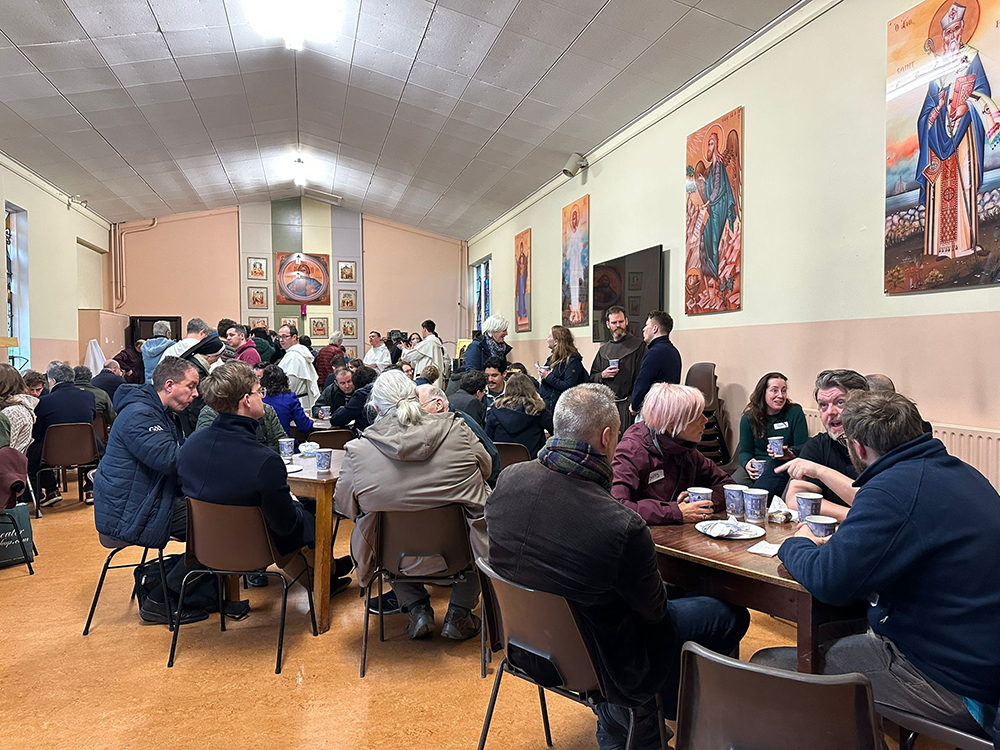
Having a regular meeting place with a “home” feel establishes comfort, routine and familiarity. Our meetings also follow a simple structure: about 30 minutes for greetings and informal conversation, followed by prayer and roughly 90 minutes discussing the book.
That informal time is important for building rapport.
- Good men of common mind
Chesterton mentions “quality of character,” and any lasting reading group needs members of good character.
They respect the purpose of the group and participate for the right reasons — not to dominate discussion, promote a pet project or contradict every opinion expressed.
Some men have attended once or twice and not returned. Sometimes they were simply looking for something different; others seemed to want to reshape the group for their own purposes.
- Excellent — but mostly inexpensive — books
Choosing good books is obvious, but not always easy.
Over the years we have read Joseph Ratzinger/Pope Benedict XVI, Chesterton, Peter Kreeft, Hilaire Belloc, St John Henry Newman and others. Topics have ranged from Church history and Scripture to philosophy, Western culture and modernity, alongside occasional fiction such as Flannery O’Connor’s Wise Blood and Msgr Robert Hugh Benson’s Lord of the World.
Cost matters. Most members prefer physical books, so we generally try to choose titles available for $20 or less.
Length matters too. We rarely tackle books longer than 300 pages, and longer works may be discussed over two or three months.
- Leadership
A book group should not become a class or lecture, but someone still needs to be at the wheel.
After our first leader moved away, I became what I jokingly call the “benevolent dictator”. Much of the job is simply communicating clearly: when we are meeting, what we are reading and what comes next.
I seek suggestions from members, particularly longtime participants, while often making the final decision. Good leadership means being consistent, charitable and willing to listen.
- Communication and discussion
A dozen men, some beers and religion usually produce vigorous conversation. Opinions can be strong and disagreements occasionally heated, but personal attacks are non-existent because members respect one another.
The group should not be an echo chamber, but it should provide mutual support.
When discussion wanders, the easiest solution is to return to the text: What does the author mean? Does the argument hold up? The book itself can take the brunt of criticism rather than the people around the table.
Most of the books we have read have informed, challenged and edified us.
- Good beer!
“Drink because you are happy,” Chesterton wrote, “but never because you are miserable.”
Not everyone in our group drinks, but a good beer or other adult beverage shared among friends adds something to the evening.
And, yes, because we are in Oregon, we are beer snobs.
A solid pint, a good book and worthwhile conversation have proved a remarkably durable combination.
Carl E. Olson is the editor of Catholic World Report.