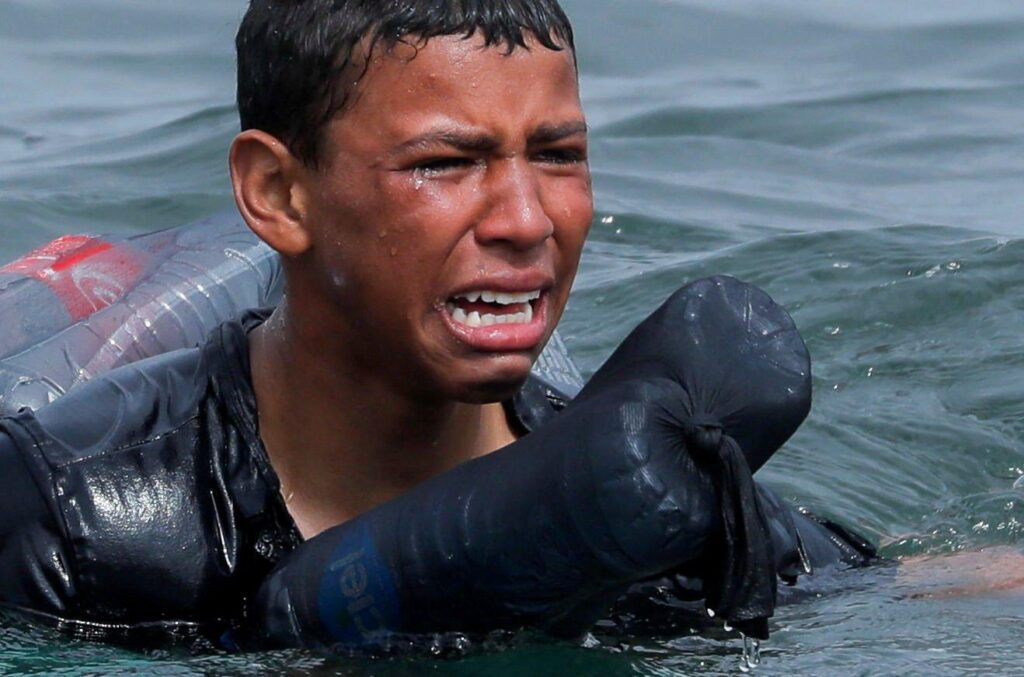
The Diocese of Cádiz and Ceuta offered emergency resources to civil authorities July 31 as more than 60,000 migrants crossed from Morocco into the Spanish exclave of Ceuta, straining local infrastructure.
In a statement published July 30, the diocese said it was deeply concerned “over the severity of events and the particular vulnerability of so many people who are affected by this reality.”
“As a Diocesan Church, we reiterate our full readiness to collaborate with civil institutions and competent bodies, placing at their disposal the human and material resources available to us in order to contribute—through coordination and respect for the competencies of each administration—to attending to any needs that may arise,” the statement read.
According to a July 31 report by Spanish newspaper El País, at least 41 migrants died in their attempt to swim the El Tarajal border crossing and expected to rise as rescue operations continue in the waters near the border.
Located 11 miles from the Spanish mainland, Ceuta is an autonomous exclave on the North African coast that shares its only land border with Morocco across the Strait of Gibraltar.
The crisis unfolded July 30 when tens of thousands of migrants, the majority of Moroccan origin, entered the Spanish city by swimming or walking along a breakwater near the border.
Police officials said that at times, the flow of people entering Ceuta reached up to 300 illegal entries per hour, El País reported.