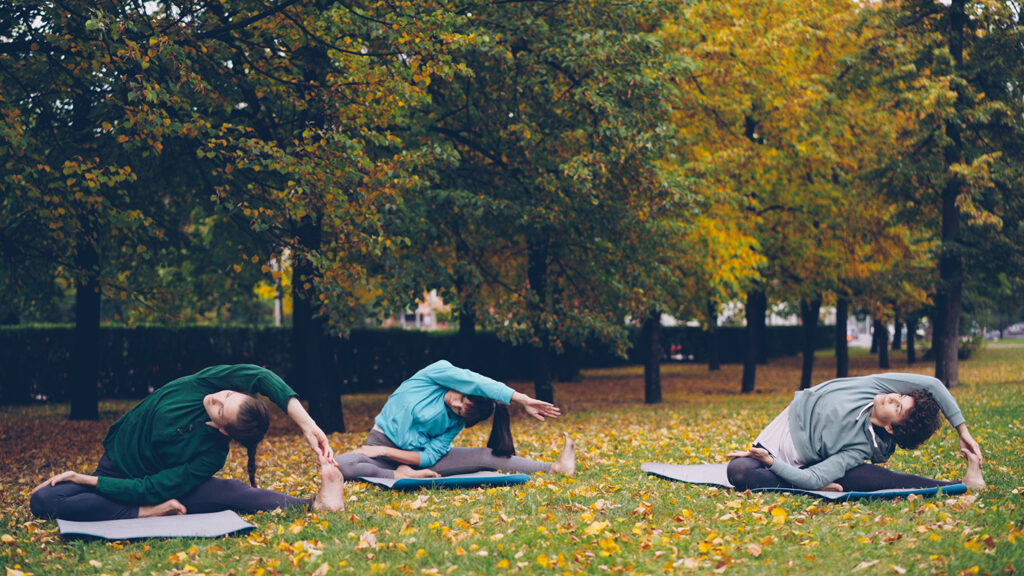
One time, on a flight to Mostar ultimately bound for Medjugorje, a ‘first-timer’ was spotted with a yoga mat attached to her backpack. This caused a flutter of consternation among some, with the hope quietly expressed that she would have lost the yoga mat by the time we returned home.
Were they judgmental or extreme? A Google search will tell you that ‘yoga’ is originally a Sanskrit word meaning “to yoke or harness”, in this case, to control the senses, using specific body postures. A basic AI search will tell you that yoga is a Hindu spiritual discipline to induce health and relaxation, where a person “yokes” their individual being to the universal consciousness.
While the Church does not pronounce on yoga per se, the Magisterium (teaching authority) of the Church is most insightful in this area. In a 1989 Letter to the Bishops of the Catholic Church on some aspects of Christian Meditation, from the Congregation for the Doctrine of the Faith, it is wisely advised that “some physical exercises automatically produce a feeling of quiet and relaxation, even of light and warmth, which resemble spiritual well-being.
Consolations
But to take such feelings for the authentic consolations of the Holy Spirit would be a totally erroneous way of conceiving the spiritual life.” While some Catholics think that prayer is enhanced by techniques borrowed from other religions, such practices can degenerate into a cult of the body, leading to thinking that all bodily sensations are spiritual experiences. The sole object of Christian contemplation, concludes the letter, is the love of God, a reality which cannot be “mastered” by any technique; “prayer without faith becomes blind, faith without prayer disintegrates.”
The wheat of genuine prayer can be subtly replaced by the darnel of self-indulgence. No wonder that Scripture describes the serpent as the most subtle of all the creatures”
There is so much wisdom here. For a start, we are being warned about our fallen nature’s avid capacity for self-delusion and ego, where the wheat of genuine prayer can be subtly replaced by the darnel of self-indulgence. No wonder that Scripture describes the serpent as the most subtle of all the creatures (Gen. 3:1), and Our Lord calls the evil one the “father of lies” (John 8:44).
In another much-underrated Vatican document, Jesus Christ, the bearer of the water of life-a Christian reflection on the “new age”, holy mother Church teaches us again, saying that many Catholics think that there’s no harm in borrowing from the wisdom of the east, but the example of transcendental meditation should make Christians cautious about committing themselves unknowingly to another religion, in this case, Hinduism.
We could say the same of yoga. There’s no problem with meditation, says the document, but the key question is its purpose and destination: does it lead me outwards, to the heart of the God revealed by Jesus Christ, or inwards, simply to the hidden depths of the self? The document adds that “a great deal of what is proposed by the more radical elements of the ecological movement is difficult to reconcile with Catholic faith.” Care for the earth should not veer into pantheism (the worship of nature itself; the belief that nature and the Divine are identical).
Liturgy
The liturgy affirms all who seek the Lord with a sincere heart. But could it be that yoga and similar systems are the new ‘spiritual’ undergirding and even legitimisation of our new, post-modern way of thinking and acting? This new, post-modern consensus dictating much of the world’s discourse is all the more insidious because we are largely unaware of it. It is characterised by relativism (where tolerance is all, what’s true for you is true for you, what’s true for me is true for me, but there’s no absolute Truth), the prioritising of my personal rights over the common good, and the primacy of personal autonomy (“I am CEO of my own life, I have nothing to learn, who are you to tell me anything?”).
I now see a generation of cheerfully pagan Irish men and women, comfortable and untroubled, living in a state of unconscious rebellion against the ways of God”
This mentality has stealthily corroded our faith-lives too. Over 30 years of priestly ministry, I have observed with sadness that many people today, rather than yearning for the infinite for which they are ultimately destined, have settled instead for the trivial and the immediate. Where once there was a hunger for stillness, for the transcendent, for the quiet encounter with God in prayer, I now see a generation of cheerfully pagan Irish men and women, comfortable and untroubled, living in a state of unconscious rebellion against the ways of God and His plan for their lives. It is the same rebellion, in miniature, that turned Lucifer from angel of light into prince of darkness- not defiance shouted from the rooftops, but the far more deadening “quiet indifference,” described by the late Pope Benedict. It can be summed up in a single, unspoken creed: “Lord, don’t call me – I’ll call you.”
And the danger with yoga, it seems to me, is that it legitimises this walking-away, stressing as it does one’s personal autonomy in the spiritual realm as well, the notion of the inner journey. But this is not the inner journey to the core where the Spirit of God dwells and impels me outward on mission, a journey which will entail conversion and repentance along the way, but the sterile inner journey to my “deepest self,” which can only end in a cul de sac, because the Christian, like the Church, is missionary by his or her very nature (Ad Gentes-Vatican document on the missionary nature of the Church.) We are a community of missionary disciples (Pope Francis, message for World Mission Day 2025). In all justice, it must also be acknowledged that this temptation to remain in a spiritual bubble exists for practising Christians too, where people can be so focused on Jesus in the Blessed Sacrament that they cannot see His face in their brother or sister.
Saintly
I once lived with a very saintly old priest, Fr John Hoey, who had spent many years in India. He used to very seriously warn that the poses involved in yoga imitate those of the Hindu gods, the yoga chants invoke those gods, so that people are actually worshipping false gods and welcoming their dangerous energy into their lives. It was a great source of sadness and concern to Fr John that people did not realise this and were constantly breaking the first commandment. As someone said once, it’s a pity that a Church trying to be ‘cool’ can’t see idolatry when it’s staring them in the face.
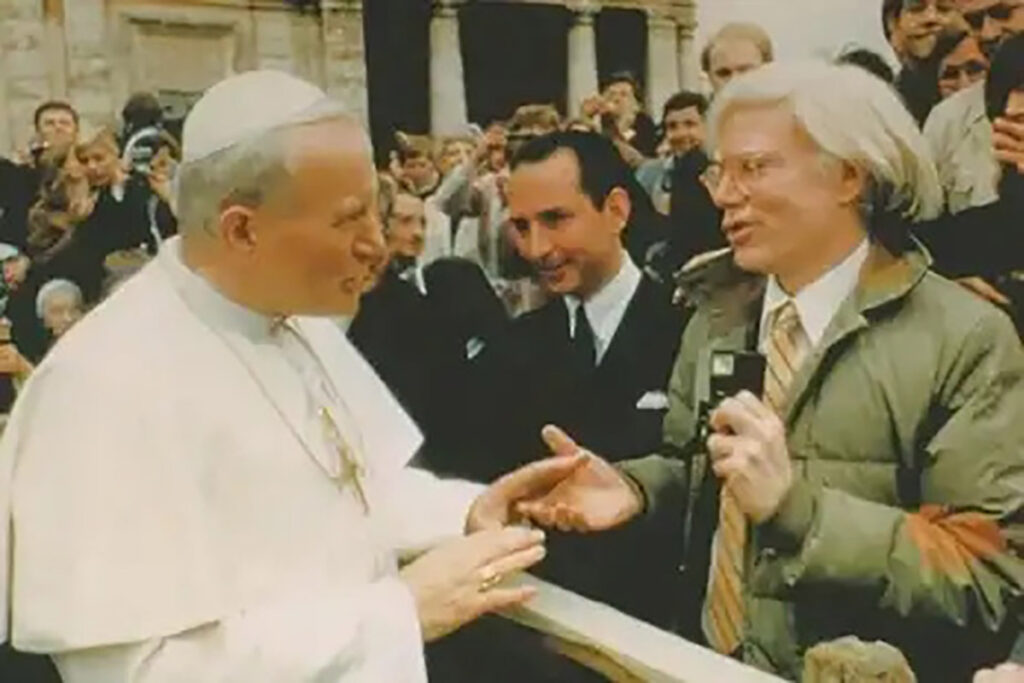
In our spiritual lives, we can certainly still turn to the East, but to the Eastern Orthodox tradition, described by Pope St John Paul II as the other lung of the Church, which has been practising Christian meditation for centuries! It’s concerning that so many people have heard of yoga, but so few know the Jesus Prayer, recited slowly line by line while breathing in and out, and is incredibly calming: “Lord Jesus Christ, Son of God, have mercy on me, a sinner.” This wonderful short prayer encapsulates the whole story of salvation!
At the end of the day, everything we say and do must be centred on the Lord Jesus, at Whose Holy Name every knee should bow (Phil. 2:10). Jesus alone is Lord. In Dominus Iesus, on the unicity and salvific universality of Jesus Christ and the Church, the Congregation for the Doctrine of the Faith once again keeps us right. While I’m putting my own words on it, this document gloriously asserts the uniqueness of Jesus the Saviour and the necessity of His Church for salvation by respectfully stating that it’s only in Christianity that God, in the power of the Holy Spirit, becomes “up close and personal” in Jesus His incarnate Son, inviting each one of us into a personal friendship with Him. Jesus is not a way, but the way, the truth, and the life (John 14:6), to Whom all authority in heaven and earth has been given, and Who sends us out on mission to make disciples of all the nations (Matthew 28:18-20). This assertion of Jesus’ uniqueness as Saviour debunks the misguided notion that all religions are equal pathways to God.
So, with the greatest of respect towards Hinduism, do we Christians really need yoga? As we have seen, it’s not an agenda-free health system, but has the potential to pander to our egos and subtly lead us up the wrong spiritual path. Rather, let us dive deeper into our Catholic faith, where we already have a great tradition of meditation and prayer, and where we already possess all we need for health of soul and body: Jesus our Saviour, friend, and brother, Who is the good Shepherd, the way, the truth, and the life, the gate, and the door.
And by the way, Our Lady must have prompted these thoughts about her Son to the woman on the plane at the beginning of this reflection, because on the flight home from Medjugorje, the yoga mat was no more to be seen!
Fr Robert Mc Namara is PP of Lisdoonvarna/Kilshanny and covers seven churches across the area in North Clare.