‘A grain of rice will tip the scale.’
It remains one of the most enduring lines ever uttered in GAA circles. Coined by the legendary Páidí Ó Sé during his spell as Westmeath manager in the early noughties, the phrase perfectly captures the fine margins that define championship sport. More often than not, it is those smallest of moments that separate ultimate triumph from despair.
That sentiment is likely to ring true once again on Sunday evening when the destination of the Liam McCarthy Cup for the next twelve months is decided after what promises to be another unforgettable contest on the hallowed turf of Croke Park.
When people look back on championship-defining moments, it is usually the spectacular goals, towering catches or match-winning points that dominate the highlight reels. Yet the true turning points are often far less glamorous. A perfectly timed hook, a desperate block, a turnover against the run of play or simply the winning of the dirty ball in a hotly contested ruck that can alter the course of a game, a season and, in some cases, an entire generation.
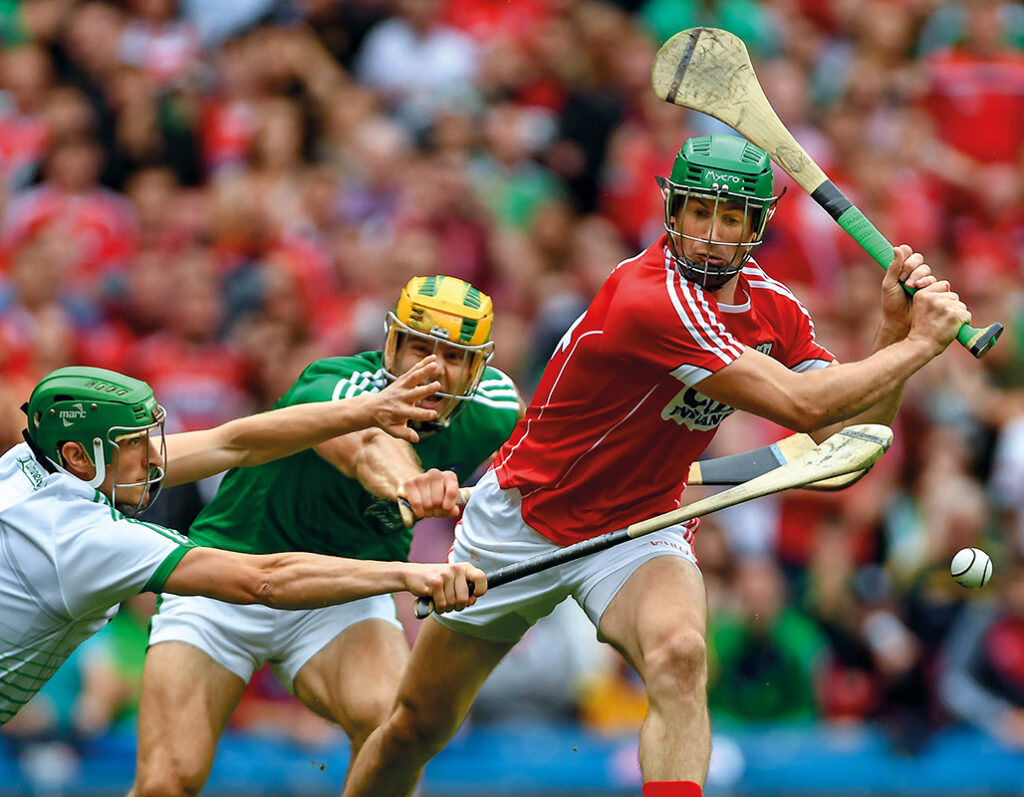
Few moments illustrate that better than Nickie Quaid’s extraordinary intervention in the 2018 All-Ireland semi-final against Cork. With the sides level at 1-26 apiece deep into stoppage time after Limerick had fought back from six points adrift, Seamus Harnedy looked certain to end the Treaty County’s dreams.
Limerick
When Robbie O’Flynn squared the ball across the goalmouth, Harnedy needed only the slightest touch to send Cork through to the decider. As the 82,500 in attendance braced for the inevitable, somehow, Quaid reacted first.
Wielding his famously small goalkeeper’s hurley, he produced a scarcely believable flick to divert the ball away from danger and force extra time. Limerick would eventually prevail 3-32 to 2-31 before embarking on a journey that would become one of the greatest dynasties the GAA has ever witnessed.
Liam McCarthy still remains agonisingly out of reach for a county now entering a twenty-second year without hurling’s greatest prize”
It is one of those moments that invites endless speculation. Had Harnedy found the net, would Limerick’s forty-five-year wait for Liam McCarthy have gone on for much longer? Would the remarkable era that followed ever have materialised? There is no way of knowing. What is certain is that a split-second intervention changed everything.
For Cork, it meant another year of heartbreak despite proving they were every bit the equals of the emerging Limerick side, whose brilliance was yet unknown. The Rebels would eventually end the Treaty men’s pursuit of an unprecedented five-in-a-row in 2024. Yet, despite repeatedly demonstrating they possess the quality to conquer the standard bearers of the past decade, Liam McCarthy still remains agonisingly out of reach for a county now entering a twenty-second year without hurling’s greatest prize.
Limerick, meanwhile, would go on to defeat Galway in that memorable 2018 final and, with it, lay the foundations for an era that has transformed the modern game.
Victory
Three weeks later, after leading Galway by eight points in the All-Ireland final, the old ghosts of 1994’s famous collapse began to stir once more with minutes left on the clock. Conor Whelan and Joe Canning found the net as Niall Burke dragged the Tribesmen back to within a point, and with the final puck of the game Canning launched one last towering free into the Dublin sky. For a split second, it looked as though forty-five years of hurt would continue, with a flick to the net seemingly inevitable. Instead, substitute Tom Condon rose highest to gather the dropping ball, and with one catch, Limerick’s famine was finally over.
Only four of Galway’s starters from that afternoon remain, highlighting just how much the Tribesmen have evolved”
This Sunday, the counties renew acquaintances on the biggest stage once more. Eight years have passed since Quaid’s flick and Condon’s catch rewrote history. Many of the faces may have changed, but the margins almost certainly have not. Somewhere amid the chaos of another All-Ireland final, another grain of rice may once again tip the scale.
Eleven of Limerick’s starting XV from the 2018 All-Ireland final victory over Galway are expected to feature on Sunday, underlining the remarkable longevity of John Kiely’s side. By contrast, only four of Galway’s starters from that afternoon remain, highlighting just how much the Tribesmen have evolved over the past eight years.
Dark horse
Galway have quietly emerged as the dark horses of this championship. In many ways, the makeup of Micheál Donoghue’s side mirrors both Limerick’s own make-up and Tipperary’s All-Ireland-winning team of last season. A hardened core of experienced campaigners has been blended seamlessly with an exciting crop of young talent, transforming the Tribesmen into genuine contenders.
The emergence of players such as Cillian Trayers, Tiernan Killeen, Jason Rabbitte and Aaron Niland has given the Leinster champions a completely new dimension. While the county has not dominated the underage grades in recent years, much like their Shannonside counterparts, their rise demonstrates that sustained success at minor and Under-20 levels is not the only route to building an elite senior panel.
That injection of youth has also revitalised Galway’s senior stalwarts. Conor Whelan continues to lead the attack with distinction, while Dáithí Burke, Pádraic Mannion and Conor Cooney have all enjoyed outstanding campaigns, with Cooney in particular making a huge impact from the bench.
If any manager is capable of exposing weaknesses in Limerick’s once seemingly flawless system, it is the former All-Ireland-winning boss”
Their dismantling of Cork in the semi-final served as the clearest indication yet that Galway are serious All-Ireland contenders. Many had viewed the Rebels as certainties to face Limerick in the decider, but Donoghue’s men produced a tactical masterclass. They nullified Cork’s running game, dominated them with both their physicality and intensity and completely outworked the Rebels across the field. Even the post-match flair-up involving Joe Canning and Donal Óg Cusack could not overshadow just how complete Galway’s performance had been.
Donoghue deserves enormous credit in his second spell at the helm. He has rebuilt Galway into one of the most disciplined and tactically astute teams in the country, and if any manager is capable of exposing weaknesses in Limerick’s once seemingly flawless system, it is the former All-Ireland-winning boss.
Limerick, however, have undergone a subtle evolution of their own. While so many of the familiar faces from their era of dominance remain, the integration of younger players has provided fresh energy exactly when it was needed. Aidan O’Connor has enjoyed a breakthrough campaign and currently leads the county’s scoring charts with 4-48 in his breakout year, while Adam English and Cathal O’Neill have injected serious pace and dynamism into the middle third.

New generation
Shane O’Brien has also developed into an increasingly important attacking outlet, particularly with Aaron Gillane not quite reaching the extraordinary standards that have defined much of his career. Rather than relying solely on their established stars, Limerick have shown throughout this championship that a new generation is ready to shoulder greater responsibility.
In contrast to Galway, Limerick can count themselves incredibly fortunate to have overcome their semi-final opponents. Clare produced a ferocious display in the semi-final and led for virtually the entire contest before Aidan O’Connor’s spectacular 70th-minute goal finally broke Banner hearts and completed another remarkable Limerick comeback.
The game’s defining controversy arrived with just over fifteen minutes remaining. Nickie Quaid brought down Peter Duggan after the Clare full-forward had flicked the sliotar over the advancing goalkeeper, with Barry Nash subsequently knocking the loose ball into the empty net. Referee Tyler Walsh awarded Clare a penalty, which Tony Kelly emphatically dispatched, but Quaid escaped with only a yellow card.
It was a decision that has sparked enormous debate. Few clearer examples of denying an obvious goalscoring opportunity are likely to be seen, yet the wording of the rule arguably saved the Limerick goalkeeper. For a black card to be awarded, the player must prevent a clear goalscoring opportunity while the attacking player is in control of the sliotar.
Had Walsh allowed the goal to stand rather than awarding the penalty, Quaid may have escaped punishment altogether”
Technically, because Duggan had flicked the ball beyond Quaid and no longer had possession in his hand, he was not deemed to be in control. By the letter of the law, the yellow card was correct. Yet you will not see a more obvious example of why the cynical fouling rule was brought in, and had Quaid been forced from the field for ten minutes, Clare would almost certainly have seen the game out.
There is also the intriguing question of Barry Nash’s putting the ball into his own net. Had Walsh allowed the goal to stand rather than awarding the penalty, Quaid may have escaped punishment altogether. Instead, Kelly converted from the spot, but Limerick crucially retained arguably the finest goalkeeper in the game. Without their quarterback between the posts, the Treaty men are simply a different proposition.
It has echoes of the infamous incident involving Seán Cavanagh that prompted Joe Brolly’s famous criticism back in 2013 and ultimately helped accelerate the introduction of the black card in Gaelic football. Quaid’s challenge on Duggan feels destined to become one of the key talking points when the Hurling Review Committee examines potential rule changes later this year.
Familiarity
Controversy aside, there was something deeply familiar about the manner in which Limerick clawed their way back into the contest. Even after Kelly’s penalty stretched Clare’s advantage to six points, John Kiely’s side never panicked. Gearóid Hegarty dominated under the dropping ball, the experienced leaders stood tall, and Limerick simply ground their way back into the game with the composure of serial champions.
It has become a recurring theme throughout their campaign. They found a way against Waterford, staged another dramatic late recovery against Cork in the Munster final, and somehow escaped again against Clare. Time and again, when the championship reaches its defining moments, Limerick have found another gear.
The Tribesmen have demonstrated they can outwork any team in the country, but Limerick possess something equally valuable”
Their injury-time surge carried echoes of the county’s minor triumph just a week earlier. Trailing for almost the entire All-Ireland final against Tipperary, the youngsters struck 1-1 deep into stoppage time to snatch victory and end a 42-year wait for the Irish Press Cup. That refusal to accept defeat appears almost woven into the fabric of Limerick hurling.
That mentality may ultimately prove their greatest weapon against Galway. The Tribesmen have demonstrated they can outwork any team in the country, but Limerick possess something equally valuable: an unshakeable belief that the game is never lost. For a side with so much mileage on the clock, their ability to stay within touching distance, absorb pressure and deliver when it matters most remains extraordinary. Against a Galway team brimming with confidence, that championship DNA may yet prove decisive.
This year’s de facto Allianz League semi-final offered a glimpse of exactly what awaits Limerick on Sunday and just how evenly matched these two sides are. The Shannonsiders looked to have one foot in the final after storming into an 11-point lead, only for Galway to mount a stunning comeback as they seized complete control around the middle third.
Were it not for a late Aaron Gillane goal and a dramatic goal-line clearance from Kyle Hayes in the dying moments, it would have been the Tribesmen, rather than Limerick, advancing to face Cork in the decider.
Blockbuster
Sunday’s final has all the ingredients to follow a similar script. The margins between the teams are wafer-thin, and it may ultimately come down to one moment of brilliance, bravery or simply fortune to determine whether the Cranberries or the Saw Doctors ring out around Dublin 9 at the final whistle.
One thing does appear certain: if Limerick produce another disjointed display like the one that nearly cost them against Clare, Galway have the work rate, discipline and belief to punish them. Donoghue’s side have already shown they can outwork and outfight anyone and will relish a battle that goes deep into the closing stages.
Either way, Sunday’s decider has all the makings of the blockbuster the championship has been crying out for”
On the other hand, if John Kiely’s men can rediscover the relentless, all-action hurling that has defined their era of dominance, something they have shown only in flashes this season, they remain the team to beat. Their blend of championship experience and unbreakable resilience means they can never be discounted.
Either way, Sunday’s decider has all the makings of the blockbuster the championship has been crying out for. After a summer that has too often threatened to ignite without ever truly catching fire, the hope is that the two outstanding teams can produce one final classic worthy of deciding the destination of the Liam McCarthy Cup for 2026.