While there are not as many Irish missionaries working in Latin America as there were a few decades ago, their number – and their importance within the Church across the region – remains significant. Football is the dominant sport in most Latin American countries, and many Irish priests and religious have been following the World Cup, at times as part of their pastoral mission.
That is the case for Fr Patrick Brennan, a missionary of the Society of the Divine Word who has lived in Brazil since 1978. Born in Roscommon, Patrício (as he is known there) is the son of a former footballer.
“My father played for the club that won the championship in 1943. At home, everybody talked about football,” Fr Brennan told The Irish Catholic, referring to Cork United.
He also played football himself, although he describes himself as a poor player. In 1978, he was sent by his congregation to Brazil. Two years later, he moved to the Amazon, where he still lives. There, he became a supporter of Remo, a club from Pará state, while also following Flamengo at national level.
With Ireland having failed to qualify for the World Cup, he has been supporting Brazil.
“You know how things are here during the World Cup: people paint the streets green and yellow [the colours of Brazil’s flag], and there’s an atmosphere of celebration. You only hear people talking about the Cup,” he said.
Reality
In his missionary work, however, the reality is very different. Fr Brennan is one of the coordinators of the Bishops’ Conference’s Prison Pastoral Ministry in the city of Altamira, where he lives. In July 2019, a riot at the local prison left 62 people dead. A new maximum-security facility was built afterwards.
“We’re barely allowed inside to work with the inmates. We can only pray, sing and read the Bible together. We’re not allowed to talk with them,” Fr Brennan explained.
During his latest visit, he managed to tell the prisoners that Brazil had been enjoying a good tournament, with a draw against Morocco and two victories.
“I also said that Brazil would probably win the next one, against Japan,” he added. Brazil duly won the match on June 29.
Under that regime, detainees have no access to newspapers or television. They only learn what is happening outside through visitors.
The Prison Pastoral Ministry’s work is far from easy. In most Brazilian prisons, Evangelical churches enjoy easier access to inmates, while the Catholic Church faces numerous obstacles. One reason is that the Prison Pastoral Ministry not only provides spiritual assistance but also monitors prison conditions and denounces abuses within the system.
Even inmates’ constitutional right to religious practice is not properly respected. Fr Brennan said one detainee requested confession in September 2025, and the prison authorities have yet to respond.
The rivers were so polluted by mining chemicals that they could barely use the water even to wash their clothes”
“We also asked permission for the bishop to celebrate Mass there on January 3, and they never replied to that request either,” he lamented.
Fr Brennan also works with Indigenous communities in Pará state, accompanying the Arara people. He said they have been following some World Cup matches when travelling to Altamira for medical appointments, although without the same enthusiasm shown by most Brazilians.
“They are a recently-contacted people. They still don’t have much connection with television or organised sports,” he said.
The Arara territory has suffered from a major invasion of illegal miners and poachers. Recently, Brazil’s Supreme Court ordered the federal government to draw up a plan to remove all non-Indigenous invaders from the territory. Fr Brennan described the ruling as a major victory for the Arara.
“The rivers were so polluted by mining chemicals that they could barely use the water even to wash their clothes,” he said.

Caribbean
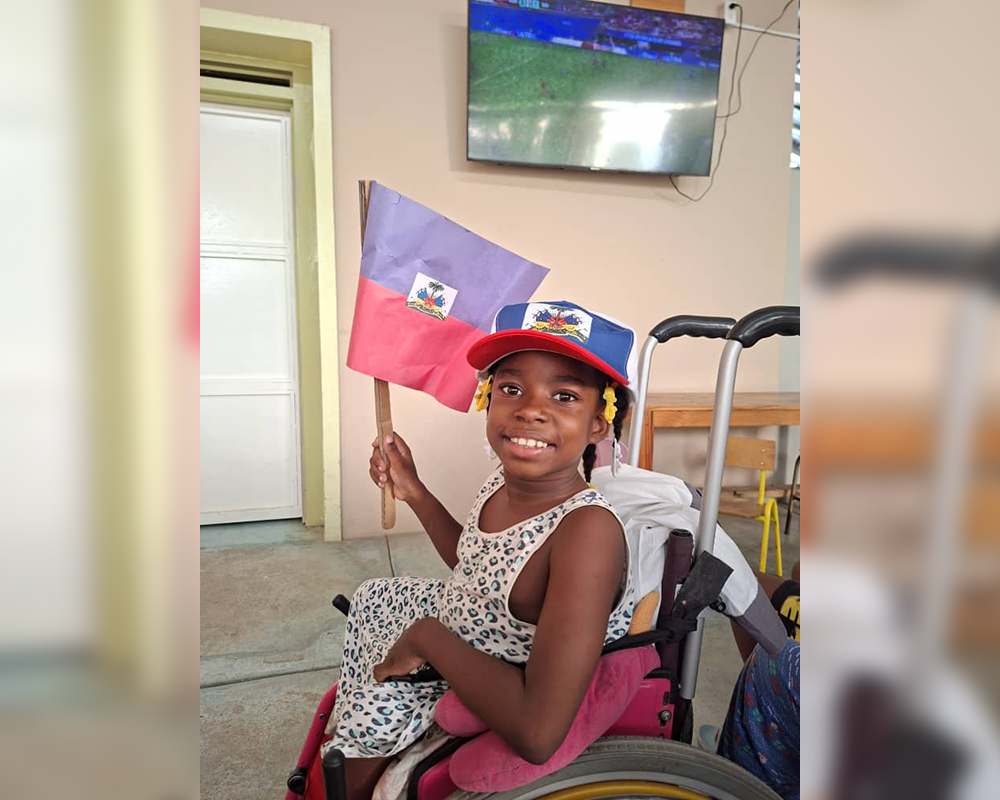
In the Caribbean, far from the Amazon, another Irish missionary has also been following the World Cup amid severe social hardship. Gena Heraty, a native of Westport, Co. Mayo, has lived in Haiti for 33 years. A member of the humanitarian organisation Nos Petits Frères et Sœurs (Our Little Brothers and Sisters), she oversees a home for 59 children and adults with special needs. The mission also includes two hospitals, a special needs school and a physiotherapy programme.
“Many children with special needs end up being abandoned in Haiti. Not because their families don’t want them, but because caring for them while also looking after their other children simply isn’t possible. People don’t have access to basic healthcare here,” she told The Irish Catholic.
Much of the country is currently under the control of criminal gangs, and violence is widespread. Millions of people live without electricity or running water. Even going out to buy basic food can be a dangerous undertaking.
“We take every opportunity we have to celebrate our achievements, even the small ones. The World Cup is one of those opportunities,” Ms Heraty said.
The community had been excited about Haiti’s participation in the tournament, only the second in the country’s history after 1974. Although the national team was eventually eliminated, they have continued to support Brazil and Argentina.
When our captors treated us roughly at times, we thanked God that we weren’t suffering the level of violence experienced by so many other kidnapping victims”
“During the day, they’re busy with their activities, but they’re free in the afternoon to watch the matches that kick off at 6pm. And for the biggest games, absolutely everybody wants to watch. We’re a happy group. We cheer, we shout, we celebrate,” she said.
Many Haitians have no way of watching the matches because of the lack of electricity, but Ms Heraty’s compound is equipped with solar panels and generators, which are essential for keeping the hospitals running.
That, in itself, is a blessing. Working with people with special needs has taught her to celebrate every blessing, no matter how small. It was also that attitude that helped her endure a 27-day kidnapping in August 2025. She and seven other people, including a toddler with special needs, were abducted by a criminal gang.
Prayed
“Even when we had very little food, we prayed together for people who were starving in Haiti and elsewhere. Even when our captors treated us roughly at times, we thanked God that we weren’t suffering the level of violence experienced by so many other kidnapping victims,” Ms Heraty recalled.
When the group was finally released – with Irish authorities playing a crucial role in the negotiations, according to press reports – Ms Heraty was simply grateful to be alive and able to continue her work. She decided not to allow the trauma to define her life.
“The World Cup is, undoubtedly, an opportunity to experience joy, to laugh, and in that way to build a better life,” she said.
While Irish missionaries in Latin America such as Fr Brennan and Ms Heraty make a conscious effort to become part of the local culture – including supporting local football clubs and national teams – their ties to Ireland and to Gaelic football never disappear.
“I follow the World Cup, but what I’m really interested in is the GAA back home. Our Mayo team won its last match,” she concluded.