An African St Peter’s Basilica, a country with no Christians but with voodoo… In Africa, religion and faith play a central role in everyday life. It is a continent of superlatives.
At last: Africa has had to wait a long time for a papal visit. Three years ago, at the start of 2023, Pope Francis toured the continent, visiting South Sudan and the Democratic Republic of Congo. But now the time has come: his successor, Pope Leo XIV, will be visiting Algeria, Cameroon, Equatorial Guinea and Angola from 13 April. The Catholic News Agency (KNA) has compiled some facts about religion, faith and the Catholic Church in Africa.
- According to the latest church statistics, the number of Catholics in Africa is growing at an above-average rate – most recently from 281 million in 2023 to just over 288 million in 2024, an increase of 2.7 per cent. Accordingly, around one in five Africans is now Catholic – and more than a fifth of the world’s Catholics live in Africa. However, the population in sub-Saharan countries is also growing by around 2.7 per cent annually.
- In terms of numbers, the largest Catholic population is found in the Democratic Republic of the Congo. There are more than 52 million Catholics there, followed by Nigeria with around 35 million. However, these figures are often estimates. In terms of the proportion of the population, Catholics make up the largest share in Cape Verde and Equatorial Guinea. There, at least three out of four inhabitants belong to the Catholic Church.
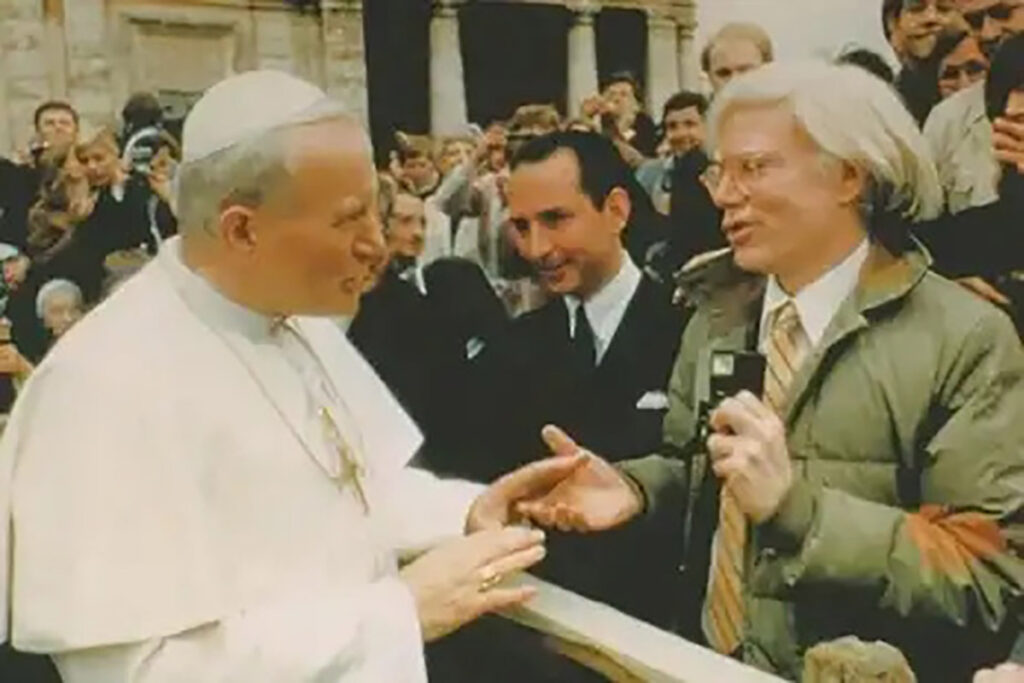
- The largest Catholic church building is the Basilica of Notre-Dame-de-la-Paix in Yamoussoukro, the capital of Ivory Coast. The ‘African St Peter’s Basilica’ is 158 metres tall, making it taller than the original, and has 7,000 seats and 11,000 standing places. The country’s first president since independence from France, Félix Houphouët-Boigny (1905–1993), had it built when he made his hometown the capital in 1983. Pope John Paul II attended the inauguration in person.
- Although the Catholic Church remains influential in many countries, in Nigeria the Bishops’ Conference regularly comments on political developments. However, charismatic and Pentecostal churches are becoming increasingly prominent. In Ghana, West Africa, just under one in three people belong to such a church (2010: 28 per cent); in Malawi, in south-east Africa, the proportion of Catholics in the population also fell from 20 per cent in 2005 to just over 17 per cent in 2018.
- The requirement for churches to register is unusual in many countries across the continent. Often, the ‘call of God’ is enough, and a place of worship springs up in a flat, a shed or a backyard. When Rwanda, under the autocratic leader Paul Kagame, closed thousands of churches in 2024, it drew widespread criticism. Free churches in particular benefit from lax regulations. Their popularity is often linked to economic promises. One such promise is that those who pray – and thus donate to the church – will be richly rewarded. In Nigeria, a number of pastors exemplify this, as they quite naturally own private jets.
- To this day, it is evident how closely evangelisation and colonisation were linked. In Nigeria, once a British colony, the Anglican Church remains widespread, but is significantly more conservative than in the mother country.
- A country without Christians? That might well be Western Sahara, whose status remains unresolved from the perspective of the Sahrawis, its actual inhabitants. Although once a Spanish colony, estimates suggest that at most a few hundred Christians live in the territory, which the UN Security Council declared an autonomous region of Morocco in 2025. These are said to be Moroccan Christians. Morocco has been pursuing a targeted settlement policy for decades.
- Islam, however, has a longer tradition on the continent than Christianity. It spread from the 8th century onwards along the East African coast – in Swahili, the language spoken there, roughly one in three words is borrowed from Arabic – and from the 9th century onwards in the Sahel through trade. Timbuktu, in present-day Mali, also emerged as a major centre of learning.
- Powerful Muslim empires, which waged wars against their neighbours, emerged at the beginning of the 19th century. One example is the Sokoto Caliphate in what is now northern Nigeria. For a long time, radical, conservative Islam was regarded as alien. Yet Salafist and Wahhabi movements are becoming increasingly prevalent.
- However, the country with the highest prevalence of Voodoo is Benin in West Africa, where Voodoo is recognised as an official religion. It is celebrated on 10 January, the National Day of Indigenous Religions. Peaceful coexistence has so far been taken for granted. Officially, not even one in ten of the country’s nearly 14.5 million inhabitants practise Voodoo. Unofficially, however, the number is likely to be far higher, particularly along the Atlantic coast in the south.