Love, War, and Diplomacy: The discovery of the Amarna Letters & the Bronze Age world they revealed,
by Eric H. Cline
(Princeton University Press, £30.00 / €39.95)
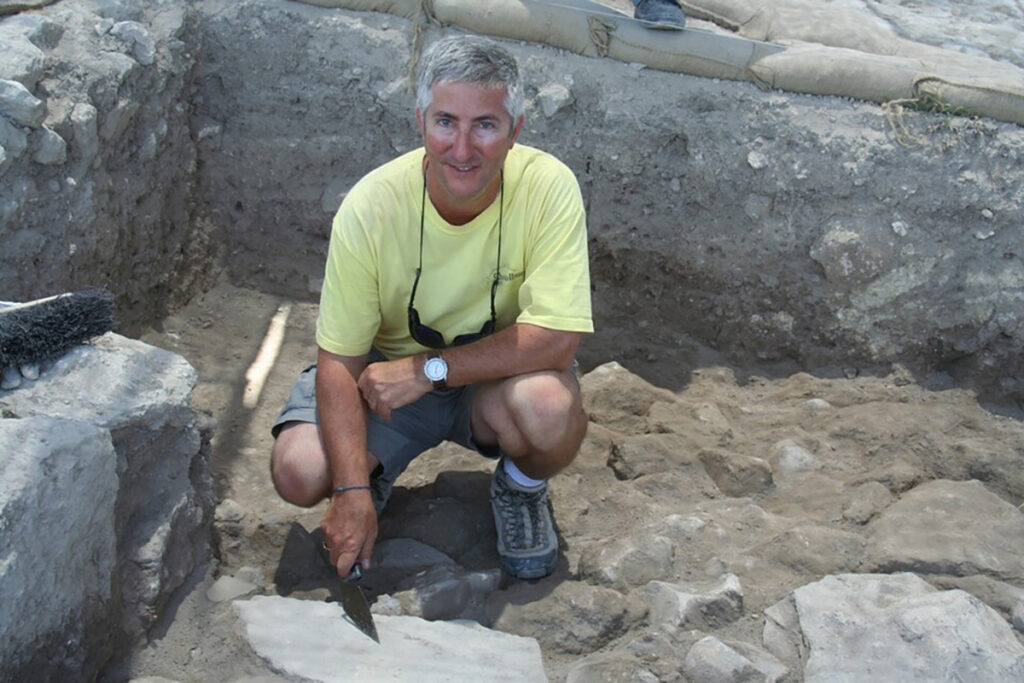
Prof. Eric H. Cline is a leading North American archaeologist of Middle Eastern archaeology. He is the author of a previous widely admired book 1177 B. C.: The Year Civilisation Collapsed published in 2014, and its sequel After 1177 BC, which discussed the Aegean background to the Iliad and the Odyssey.
This new book deals with a very different, but equally riveting subject, the discovery, preservation, and ongoing investigation of the meaning and consequences of the horde of official letters from and to the rulers of Egypt, among them the monotheist Akhenaton, recovered from Tell el-Amarna in Egypt from 1887 onwards.
This horde made a huge impact on the world of archaeology and Middle Eastern scholarship in different ways. Cline’s book makes for a fascinating and world-enlarging read.
Many famous names of the Victorian era appear in the first third of the book: A. H. Sayce, E. A. Wallis Budge, Colonel Claude Conder of the Palestine Exploration Fund, and their friends and rivals. I found these feuds and quarrels an absorbing read, a source of great interest to a person of my sceptical outlook. There was also a strong sense of national rivalry between Britain, Germany and France.
Ever-varying
We should never overlook the fact that “scientific knowledge” is an ever-varying, ever-changing thing. The purpose of scientific research is not always to discover something “new”, but to disprove another man’s hypotheses (and they are all men in this academic speciality).
I feel that the book would have benefited if Prof. Cline had devoted a few pages to explaining the peculiar political and social status of Egypt in the last third of the 19th century to North American readers.
Though it was ostensibly a part of the Ottoman Empire, it was in fact a protectorate run by the British and the French. This background would have illuminated the often odd behaviour of some of the scholars and archaeologists involved in the story he tells.
Prof. Cline sticks to his last and avoids what might be for some of his American readers a confusing aspect of Western imperial history”
Even a reference to Sir Auckland Colvin’s The Making of Modern Egypt (1906) or Lord Cromer’s Modern Egypt (1908) would have cast much light on what was involved for the British and French in Egypt, and also on the Germans in Mesopotamia. But Prof. Cline sticks to his last and avoids what might be for some of his American readers a confusing aspect of Western imperial history.
As he explains, he is telling three interlinked stories: the competition between scholars in a number of countries to translate the letters, preserved in cuneiform on baked clay tablets. This covers a period in the early days of Middle Eastern archaeology from 1887 to 1896.
The second thread is to try to realise from the letters themselves the world as it was across what Breasted called the “Fertile Crescent”. The third thread emerges towards the end of the book, when he attempts, using Social Network Analysis, what can be recovered on the connections between Egypt and the kingdoms to the northeast, and beyond them, the connection of those kingdoms with a yet even more enigmatic people further north, the mysterious Hittites.
Analysis
This is a book which manages then to combine up-to-date theoretical analysis with some very human stories of scholarly rivalry between Germany, England and other countries in the area to be the first with new insights. These insights often proved to be mistaken, for many of those involved, being ordained clergymen, were also intensely focused on trying to extract nuggets of knowledge about Jerusalem and the early days of Jewish culture.
There were mistaken and very misleading claims that the names of Moses, Joshua and Solomon had been found, which were not true. This urgent need to”prove the Bible true” led many people astray then and later.
But at the heart of the matter, readers will see at once, is that the cockpit of this era is the same one across which, even as I write, a new war is waging, a war uncertain in its outcome, for which indeed the “collapse of civilisation” might again be applied.
“Even as technology and societies have changed,” Prof. Cline observes, “human nature has not. In this region especially, ancient history is not always ancient nor is it always just history, for this story of people and events dating back to approximately 3,400 years ago is as intermingled with politics and fighting, diplomacy and international relations, and public posturing of one sort or another as in that same area of the world today.”