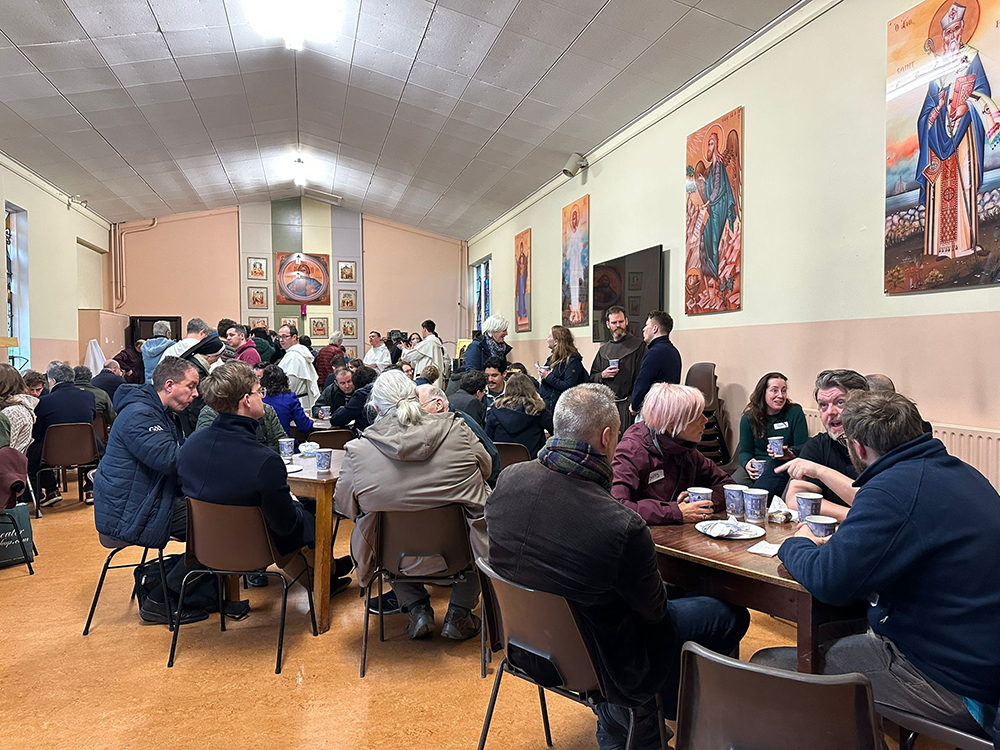
There is a special link between Ireland and Ethiopia, sealed, at the end of 2024, by a visit from a significant number of representatives from the Irish Bishops Conference, on a trip organised by Trócaire, their overseas aid agency. The delegation included Archbishop Dermot Farrell of Dublin, Archbishop Kieran O’Reilly SMA of Cashel and Emly, Bishop Denis Nulty of Kildare and Leighlin, Bishop Martin Hayes of Kilmore, Bishop Fintan Monahan of Killaloe, Bishop Niall Coll of Ossory, and Martin Long, Director of the Catholic Communications Office.
As I report from Ethiopia, the winds of war are once again blowing in this troubled land.
Tension
The visit of the Irish bishops to Ethiopia focused on Tigray where, between November 2020 and November 2022, a terrible and largely ignored conflict took place, causing between 500,000 and 600,000 deaths and leading to a mass exodus of civilians who were victims of atrocious violence. After a warm welcome by Cardinal Berhaneyesus Demerew Souraphiel, Metropolitan Archbishop of Addis Ababa, the bishops moved to Adigrat, the most important city of Tigray after Mekelle, the capital. At the time of the visit, in November 2024, the situation in Tigray was still very problematic, but thanks to the peace agreement signed in Pretoria, South Africa, in November 2022, the guns had largely fallen silent.
However, from mid-2025 onwards, the northern part of Ethiopia began to experience new tensions which, by the beginning of March 2026, were leading to talk of an imminent new war. The Pretoria Agreement, which in November 2022 was supposed to put an end to two years of terrible conflict, never completely eased tensions, nor did it resolve the root causes of the war. Furthermore, the agreement had the serious flaw of not including among the signatories representatives from Eritrea and other Ethiopian regions who had marched alongside Addis Ababa against the Tigrayan forces and who found themselves completely excluded from the new political and economic structure of the region.
Eritrea is also deploying troops and weapons along the border with Tigray and within it, in an area next to the capital Mekelle”
2026 began with serious clashes between the Ethiopian federal army and Tigrayan forces in various districts of Tigray and continued with disturbing signs that led to a noticeable increase in the military presence and military equipment in various areas of Tigray and on the border with Eritrea, involving Ethiopian federal troops and forces linked to the Tigray People’s Liberation Front (TPLF). According to various sources, Eritrea is also deploying troops and weapons along the border with Tigray and within it, in an area next to the capital Mekelle. In other words, the long-standing rivalry between the two Horn of Africa countries, Ethiopia and Eritrea, which had meant 20 years of extremely harsh war and that appeared to have been resolved by the 2018 agreements (the reason why Ethiopian Prime Minister Abiy Ahmed won the Nobel Peace Prize the following year, ed.), appears to be reawakening.

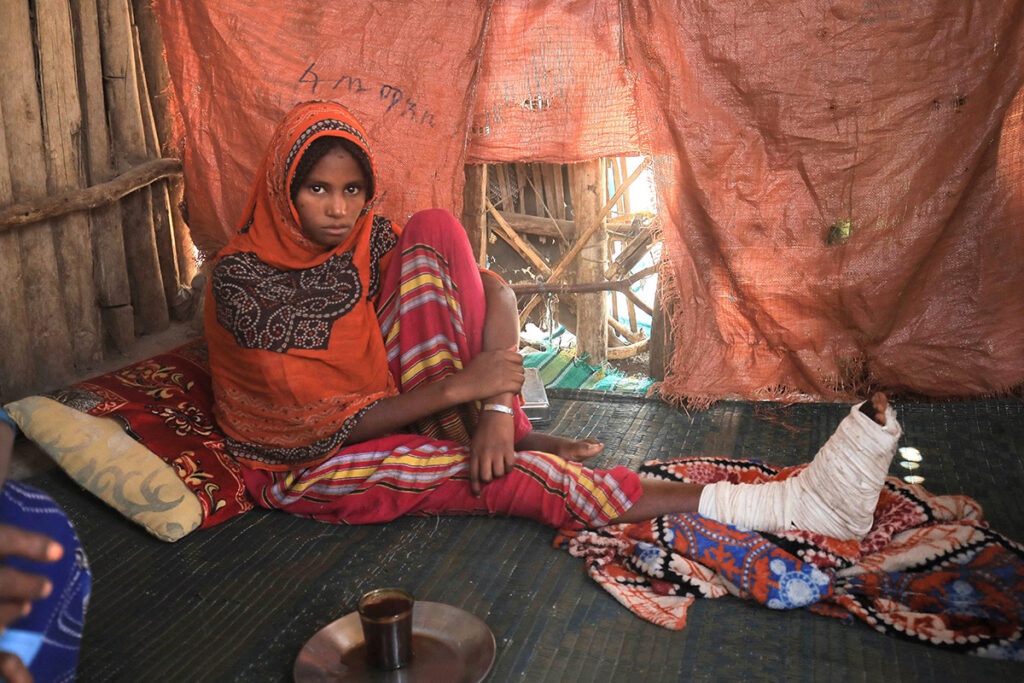
in Ethiopia’s Tigray region, July 10, 2021. Photo: CNS / Giulia Paravicini, Reuters.
Escalation
The Ethiopian Prime Minister Abiy decided to add fuel to an already heated climate when, on February 22, made it clear that he does not intend to wait any longer to obtain the coveted access to the Red Sea. During a provocative parade of Ethiopia’s special forces involved in manoeuvres aimed clearly at provoking neighbouring Eritrea, banners proclaiming Ethiopia would not remain landlocked whether “you like it or not,” were shown.
There is a great deal of tension in the country, partly due to the upcoming elections in May, that can easily be understood in the choice of denying three Reuters reporters accreditation renewal, while a week later the historic independent magazine Addis Standard had its broadcasting licence revoked. Meanwhile, in many areas of the country, there are kilometre-long queues at petrol stations due to the scarcity of fuel, which is struggling to arrive from Djibouti via the border with Eritrea.
Then there is the ongoing conflict in the Afar region between local forces, the Tigray People’s Liberation Front and federal troops”
Unfortunately, Tigray is not the only hotbed of tension in Ethiopia. In Oromia, Ethiopia’s largest and richest region, there are frequent reports of clashes and kidnappings. In rural areas, large sections of the population live in conditions of economic hardship, if not mere subsistence. In February, the Oromo Liberation Army (OLA) organised a series of attacks, while several political leaders of the Oromia regional government have been kidnapped and are currently missing. In the Amhara region, on the other hand, a war has been raging for three years between the Fano militias and the federal army of Addis Ababa. Then there is the ongoing conflict in the Afar region between local forces, the Tigray People’s Liberation Front and federal troops, which has intensified since the war in Tigray between 2020 and 2022.
In Ethiopia, Catholics account for around 1% of Ethiopia’s population of more than 130 million. The Ethiopian Orthodox Church is the largest religious group at 43% and Islam at 31%.