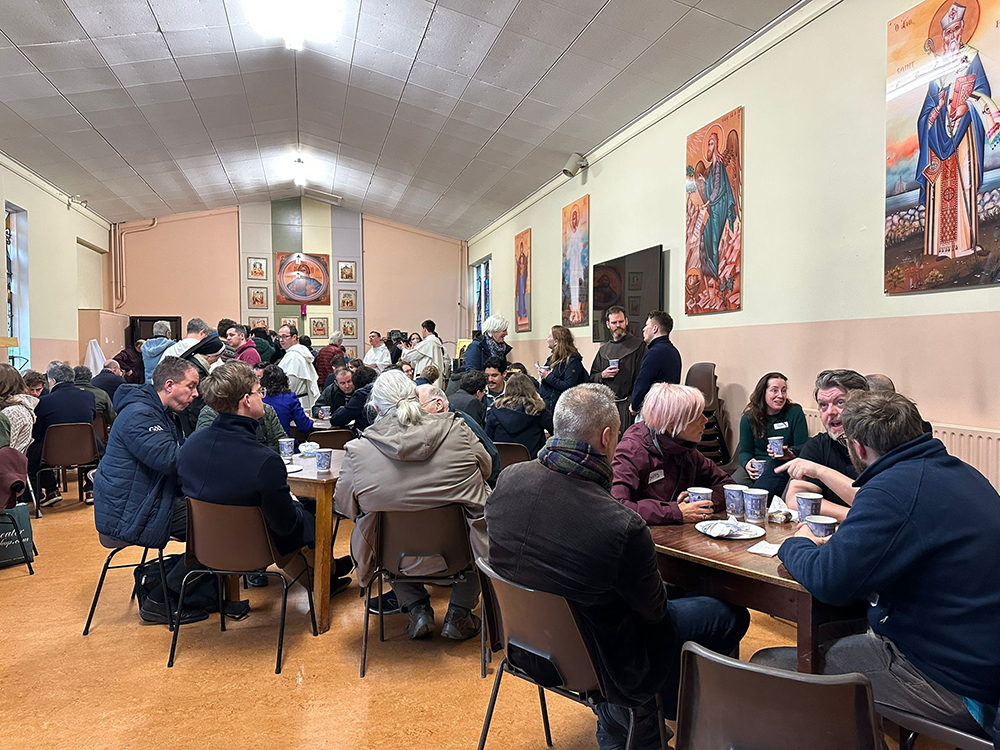
300 audience members in Donegal and Galway got the chance to reflect on happiness, joy and fulfillment during the Irish Dominicans’ Happiness Conference over the weekend. The conference took place in Donegal and Galway, with both locations drawing a crowd of over 150.
“It was evident there were lots of young people,” said Fr Maurice Colgan O.P., who described the atmosphere at the conference as “positive”.
The talks from Fr Conor McDonough O.P., Fr Gregory Pine O.P., and Fr Toby Lees O.P. all centered around the subject of happiness; what threatens it, what is preventing it, and what one can do to cultivate it. Speaking to The Irish Catholic, Fr Colgan said that in the context of the conference, happiness was described as “the fulfillment of desire”.
Fr Toby Lees used his talk to speak about ‘acedia’, which he described as “that enemy of our happiness, that killer of joy, the sorrow over our spiritual good.
“It’s a really paradoxical vice: the idea that we would feel sorrow over what should cause us joy.” Still Fr Lees maintained that acedia is widespread.
He connected acedia’s paradoxical nature with the dangers that “doomscrolling and smartphones” pose to our ability to feel happy, said Fr Colgan, reflecting on the talk. While scrolling produces momentary spurts of happiness and hits of dopamine, or fulfillment of short-term desire, there is a lack of long-term fulfillment.
When asked why happiness is such an important topic to discuss, Fr Colgan said he believes it’s important to be mindful of what true happiness is in the face of social media’s growing presence in all of our lives.
“Christianity doesn’t say that all technology is bad…however when taken in a direction that leads away from beauty, leads away from contemplation, leads away from relationships,” he said, it ultimately leads away from happiness.
Fr Colgan shared that the conference emphasised finding happiness through “enjoying the simpler things in life” like taking a walk in nature or spending time with loved ones, which the presence of phones can sometimes prevent.