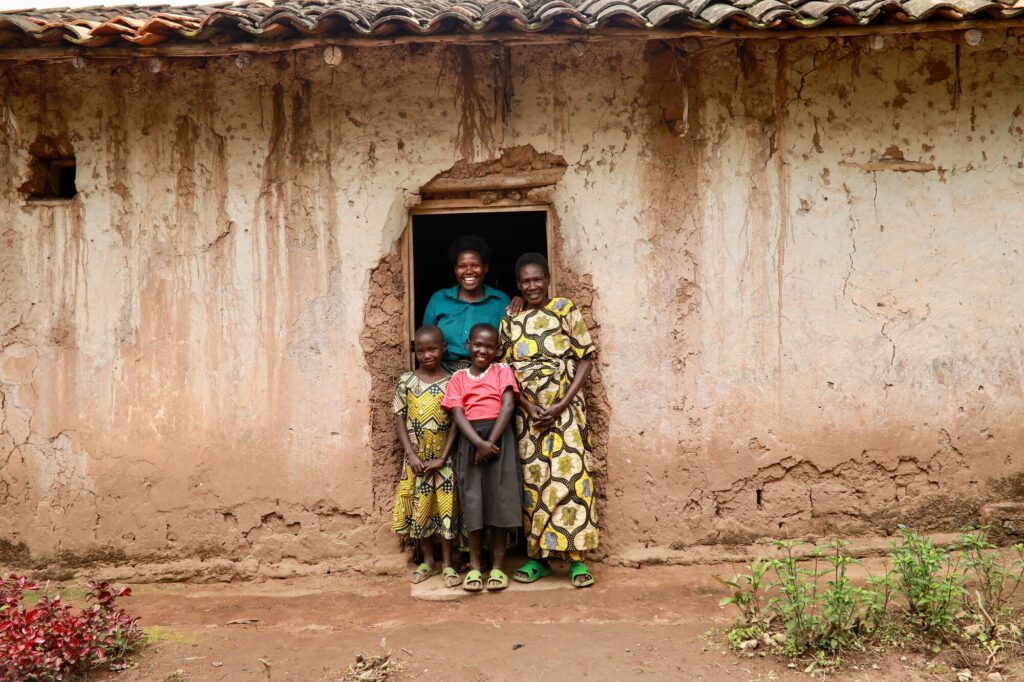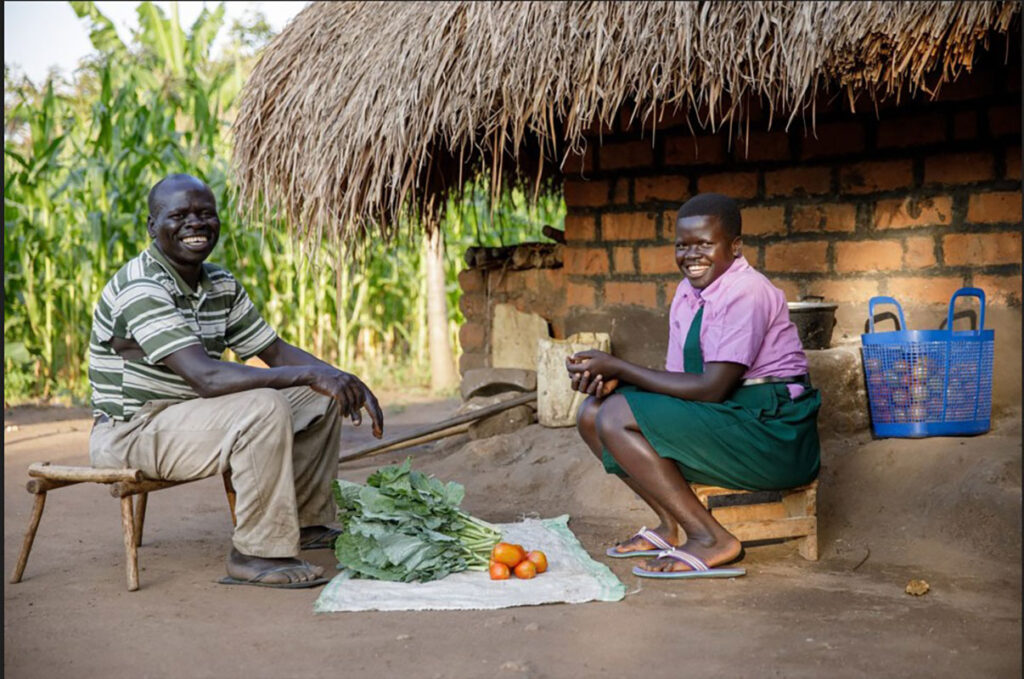
In the West Nile region of Uganda, farmer Nelson Alimuke has helped build a brighter future for his family after enrolling in the Sustainable Agriculture Livelihood Programme at the Adraa Agriculture College, a project of the Franciscan Brothers missionaries. Using farming methods learned during the training, Nelson and his family have built a successful venture cultivating two large plots of land, on which they grow an array of crops and where they also raise chickens and pigs.
“Before Adraa Agriculture College, I had a lot of challenges like low income and food insecurity, resulting from a lack of proper agricultural planning and use of low-yielding seeds,” says Nelson. “The training has improved our farming techniques and we’ve seen improvement in our food, nutrition and income security. All of this is a result of the training, support and resources provided, like piglets and chickens, and seeds for vegetables and crops like maize, soybeans, groundnuts and sesame.”
“We have a better life than before the programme,” says Nelson.
❛❛The impact of these projects on the lives of vulnerable people around the world is undeniable”
In 2024, Misean Cara supported 338 missionary development projects in 43 countries, run by 52 Misean Cara member organisations. These projects helped transform the lives of nearly 1.9 million people.
The impact of these projects on the lives of vulnerable people around the world is undeniable. Globally last year, Ireland’s missionary organisations helped communities achieve life-changing results:
162,766 people in more than 36,000 households had improved incomes through sustainable agriculture and jobs training.
127,519 learners—55% of them girls—gained access to quality education in 29 countries.
Over 1 million people across 28 countries received essential, holistic health services.
1.4 million people learned about their human rights.
106,565 people received aid following disasters, conflict, and disease outbreaks.
Moving into the Future of Missionary Development
In the early 1980s there were about 8,000 Irish-born missionaries working overseas, a number which has dropped to about 450 today, and predicted to be no more than 200 within the next decade.
While the number of Irish-born missionaries has been declining steadily for decades, a new, positive trend is emerging in support of the long, distinguished tradition of Irish missionary work and its impact around the world.
In recent years, thousands of local missionaries in Africa, Asia, and Latin America are now training to take on the leadership of development programmes, carrying on the charism and tradition of Irish missionary work to deliver essential services to vulnerable communities and stand up for the human rights of the poor and marginalised.
Just as with the Irish-born missionaries they have trained alongside, these local missionaries are doctors, teachers, human rights defenders and development specialists who understand the cultures, politics and contexts of their local communities.
At the same time, the majority of existing Irish missionary organisations are retaining a presence in the countries where they operate, with the focus on locally led development. Misean Cara is proud to continue supporting the development work of these Irish missionary organisations and is committed to working with this new cohort of missionaries.
To learn more about Misean Cara, the Irish missionary tradition, and how you can support the continued legacy and impact of Irish missionary development overseas, visit Misean Cara’s website at: www.miseancara.ie/legacy/