Catholic education, Apologetics and COVID-19
This article explores what influences people to develop a faith and conversely why do they lose their faith. Research evidence points to perhaps surprising data on the role of schools and, also on the influence of home. Insight into apologetics helps us consider how we discuss and defend our faith with others. We also see what early research tells us about the impact of Covid on faith.
Why do you have a faith? The answer is, most likely, your parents according to American sociologist Christian Smith. That is not to undersell the impact of many other variables in our lives: friends, books and other good resources, cultural influences and importantly, personal experiences of God. Smith found that in comparison to many other influences, parents usually have the greatest impact. They often set the bar for religiosity which their children usually come somewhere equal or underneath. Parenting style was shown to possess the strongest influence on transmission of religion. Parents talking with their children about religion was the largest contributing factor, followed by the level of parental religious faith and then frequent parent religious service attendance, though all produced significant impact on the religiosity of their offspring. While these forms of parental behaviour do not guarantee that their children will follow in the faith, it is a significant factor for those who do. Through this knowledge, we understand the importance of supporting parents in their role in religious transmission.
Results here indicated that generally, Catholic primary schools were felt to increase faith, and secondary schools decrease or have a neutral impact”
Another important consideration is the role of Catholic education. This remains prominent in Ireland. In my master’s research 96% went to a Catholic primary school and 95% a Catholic secondary school. Results here indicated that generally, Catholic primary schools were felt to increase faith, and secondary schools decrease or have a neutral impact. Participants felt that they learnt more about what the Church teaches than the reason behind Church teachings. This is worthwhile considering in line with modern teaching methods. These results point to continued consideration of the role and impact of Catholic education and the importance of other sources of catechesis for example through parents, the Church itself and programmes.
Questioned
Have you ever been questioned on why you have a faith? The branch of theology and philosophy which explores this is known as apologetics. This term comes from a Greek word and means to defend a particular view. In this context it refers to the practice of providing reasons, usually rational arguments, to defend the faith. Philosopher and theologian Professor William Lane Craig suggests that apologetics can be employed to increase the faith of Christians, bring about conversions and alter culture so that Christianity may be considered an intellectually viable option. As shared in a previous article in this series, irrational beliefs were ranked 5th on the scale of 11 potential factors in rejection of Catholicism. Scientific knowledge and secularist/atheist intellectual influence were ranked 9th and 10th but were still weighted to influence. Below comments taken from my master’s research, both from 22 year olds, reflect both the need for apologetics and an encounter with God’s love.
“I am Catholic culturally but I just feel disappointed in life, like I pray when I hear of someone sick but I just feel that God or whatever God really exists is not listening to me. There has been a lot of tragedy around my community lately and my prayers to make sure that death didn’t happen weren’t answered and now I feel there isn’t really much point because God isn’t listening to me and allows tragedy to happen. It has greatly affected me like I just feel like that whatever hope I had is now gone” Female, 22
Always be ready to make your defence to anyone who demands from you an accounting for the hope that is in you”
“I likely will return to the church when I read some good apologetic books on the papacy in relation to Eastern orthodoxy. Protestantism isn’t even a contender at this point. I’m 100% convinced intellectually that either Catholicism or Eastern Orthodoxy is the true church. It’s just working through the papacy issues to come to a resolution.” Male, 22.
Apologetics clearly has an important role to play to overcome intellectual difficulties in openness to the faith, and for some, apologetics alone will bring them to Christ. But for many others it is a combination of this knowledge and understanding of God, alongside an experience of His love and relationship with Him that will open their hearts. We can address this by learning about our own faith to share with others, in line with St Peter’s call for us to be “Always be ready to make your defence to anyone who demands from you an accounting for the hope that is in you” 1st Peter 3:15 (NRSV). We can respond by using good resources such as Catholic Answers or Word on Fire amongst others (including of course, The Irish Catholic!) and inviting those we know to opportunities to experience God in retreats, Mass, confession, adoration or other events.
COVID-19
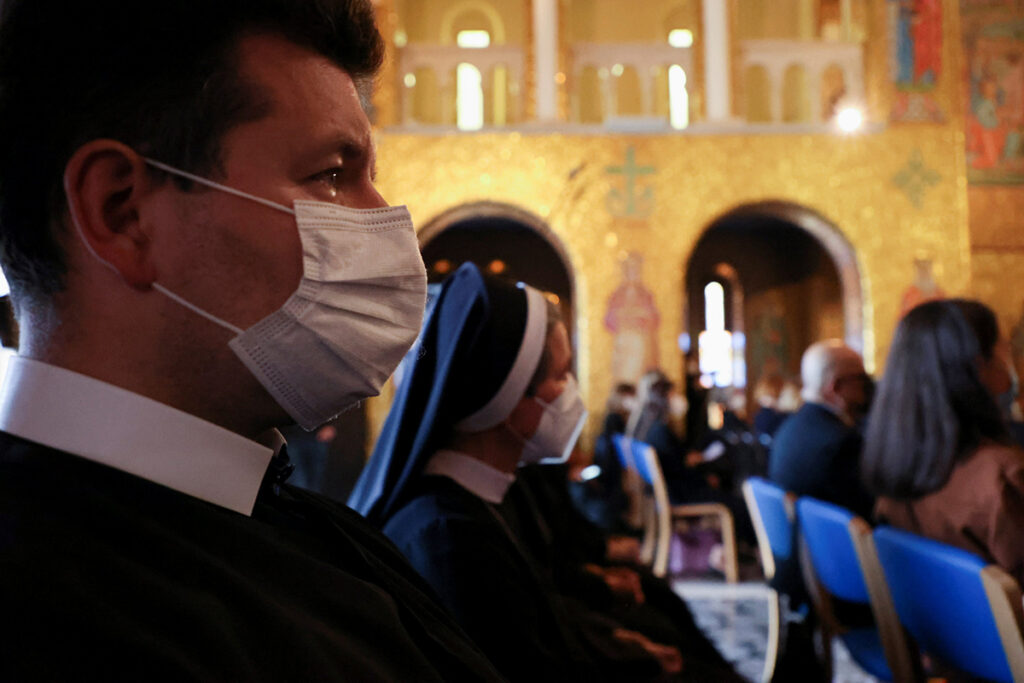
What effect did COVID-19 have on our practice of faith? In ‘Catholicism in the Time of Coronavirus’ Bullivant has suggested that Covid was likely to decrease affiliation due to breaking habits of Mass attendance and the effect of the virus on the elderly population that embody a disproportionate percentage of practicing Catholics. Regarding Ireland, the Iona institute uncovered that 36% of those attending prior to the outbreak returned in September 2020. Out of those who hadn’t 45% said this was due to the fears of the virus and 22% reduced capacity. The remaining 33% were happy to watch online, lost the habit, or unsure as to why. When asked if they would return, only 4% said no and 19% were unsure. In my master’s work, which was completed in 2022, some participants shared the impact of Covid on their disaffiliation. Although only a small minority agreed that Covid did impact their affiliation in some way, it’s still significant that 15 people in a sample of 104 recognised the impact. A combination of new availability of online services, for some increased free time because of change in their job circumstances and recurring news on death and illness may have prompted certain individuals to explore Catholicism or religion in general more. Covid was mentioned by participants in my research and was on numerous occasions described as a contributing factor that acted as the nail in the coffin to their final decision to leave, though for many it did not impact at all.
“Due to Covid and not attending mass regularly it has caused distance. But I already had issues with the church and the rules that they have, and I don’t fully understand where they come from so they just annoy me and feel unnecessary” Female, 23
“Broke the habit during Covid but am attending more often now.” Female, 65
If you know someone who hasn’t attended Mass since COVID-19, maybe now is a chance to invite them back or explore with them their reasoning why.
Apologetics or reasoning for the faith was considered to have a minor but significant impact in this study, though it is recognised elsewhere as being an important factor”
These results demonstrate that a range of issues were felt to contribute to participants distancing themselves from the Church. Factors with greater reported impact on disaffiliation include negative experiences (either directly themselves or vicariously), dissent from Church teaching and for some general busy-ness resulting in difficulties attending Mass. Covid for most was not a factor but did finalise the disaffiliation of a number. Many felt their Catholic secondary education did not increase the faith, while the opposite was felt at primary school. Apologetics or reasoning for the faith was considered to have a minor but significant impact in this study, though it is recognised elsewhere as being an important factor. Thereby, we can see which issues effect greater numbers while also recognising the importance of individual narrative. We can prepare on this basis and use our learnings to impact those we come across and care about.
What will the future bring? We will explore more in the final edition of this series.