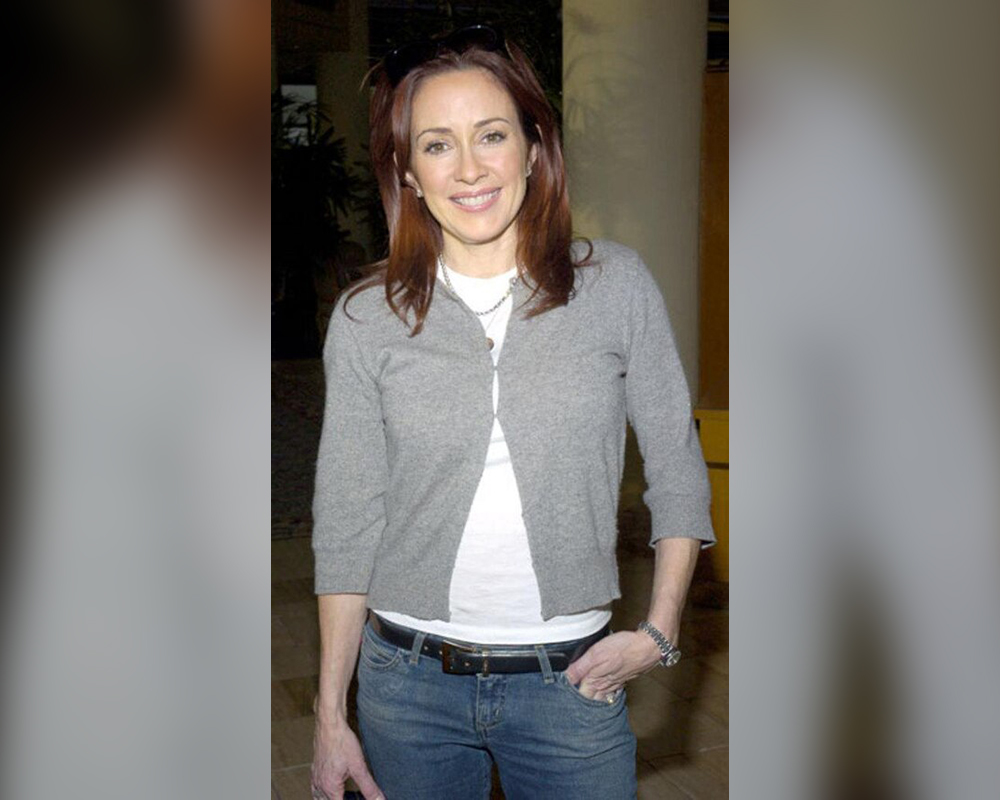
Sr Stanislaus ‘Stan’ Kennedy, the Kerry born nun who founded Focus Ireland and transformed the nation’s response to homelessness, passed away on November 3, 2025. She was 86.
Her passing came, fittingly, on the Feast of All Souls, a day set aside to remember the dead and to place our mourning in the light of hope. Preaching in St Peter’s Basilica, Pope Leo XIV spoke of a hope “that does not look to the earthly horizon, but beyond, to God,” reminding the faithful that “even the most tragic death cannot prevent our Lord from welcoming our soul into his arms and transforming our mortal body, even the most disfigured, into the image of his glorious body.”
It was a message that seemed written for the day Sr Stan left this world. She who spent her life insisting through her words and works that every life, even at its most fragile, is precious and redeemable.
Service
Born Treasa Kennedy in Lispole, Co. Kerry, in 1939, she entered the Religious Sisters of Charity at 18, inspired by the foundress of the order – Mary Aikenhead. From the beginning, she saw faith not as retreat but as service. As Sr Patricia Lenihan, Superior General of the order, said this week, “She was a powerful voice for compassion, equality, and systemic change…a courageous force for social change.”
Sr Stan founded Focus Point (now Focus Ireland) in 1985 after witnessing first-hand the isolation felt by women sleeping rough in Dublin. What began as a small outreach project became Ireland’s leading homelessness charity, housing thousands and shaping social policy for decades.
Her legacy of a life dedicated to the service of others in need will continue to inspire us and generations of activists and social innovators”
Pat Dennigan, CEO of Focus Ireland, said the charity’s founder “was a visionary, a tireless advocate, and a compassionate force for change whose legacy will forever shape the heart, soul, and values of Focus Ireland.” He added: “Sr Stan’s work changed thousands of lives, not only through the services Focus Ireland provides, but through the hope and humanity she brought to every encounter.”
The Association of Leaders of Missionaries and Religious of Ireland (AMRI) described Sr Stan as “an icon of hope and a staunch campaigner and advocate for human dignity and human rights for all.” In a statement, AMRI said that “as a Catholic Religious Sister, she lived a life of faith, bringing Christian hope to those on the margins and periphery of our society.”
Sr Patricia echoed that sentiment, noting that “while she will be greatly missed, her legacy of a life dedicated to the service of others in need will continue to inspire us and generations of activists and social innovators in Ireland.”
President Michael D. Higgins, now nearing the end of his presidency, recalled meeting her “on many occasions over the years,” noting her “generosity of spirit, integrity and immense strength of character.” He described her as “a fearless advocate for human rights and equality” whose work “transformed how we as a society respond to people in need.”
Faith
Others echoed his words. The Taoiseach called her “a formidable force in public life,” while Social Democrats leader Holly Cairns said, “Sr Stan’s spirit of generosity and charity touched us all.” Labour TD Conor Sheehan described her as “one of Ireland’s most extraordinary social reformers,” while the Peter McVerry Trust hailed her “legacy of compassion, justice, and systemic change.”
To speak of Sr Stan only as a campaigner is to miss the depth of her faith. Her activism flowed from contemplation, and her contemplation from Christ. In 1998, she founded The Sanctuary, a centre for meditation and spiritual reflection in Dublin, on Stanhope Street, where she taught contemplative prayer as a means for nourishing faith.
Paula Gilmore, managing director of The Sanctuary said: “Sr Stan was the heart and guiding spirit of the Sanctuary. Her vision, compassion, and tireless commitment to those most in need shaped every part of who we are and what we do. Through her example, she showed us what it means to care deeply, act courageously, and believe in the dignity of every person.”
She wrote with clarity about the meeting of faith and justice seeking to awaken readers to a vision of compassion put into action”
Sr Stan was never afraid to let the language of the Gospel meet the language of policy. Through her columns for The Irish Catholic, she wrote with clarity about the meeting of faith and justice seeking to awaken readers to a vision of compassion put into action. In her February 2016 column, ‘The homeless crisis should be a national priority,’ she urged readers to act: “This is a terrible crisis but it’s vital to stress that there are solutions… if the newly elected Government knows that this is a national priority.”
Reform
For her, reform began within. “It takes courage,” she wrote in December 2019, “to stand up for immigrants or people who are homeless at a certain type of party… but it is worth doing, because that is how we can gradually win over hearts and minds.” And in her meditation on mindfulness (November 2019), she saw prayer as an opening to the divine: “For Christians, training in mindfulness has the potential to create the space which ultimately holds the capacity for full communion with God.”
Sr Stan held to the hope that courage, compassion, and faith could still remake the world”
Her faith was contemplative yet active with a habit of seeing God in all things and refusing to look away, even at the many tragedies of this world marred by sin. In her words and in her work, Sr Stan held to the hope that courage, compassion, and faith could still remake the world.
Ar dheis Dé go raibh a hanam dílis.