The call to resurrection goes beyond physical revival; it’s about embracing transformation, says Fr Barry White
You only live twice. Once when you are born and once when you look death in the face,” said Ian Fleming.
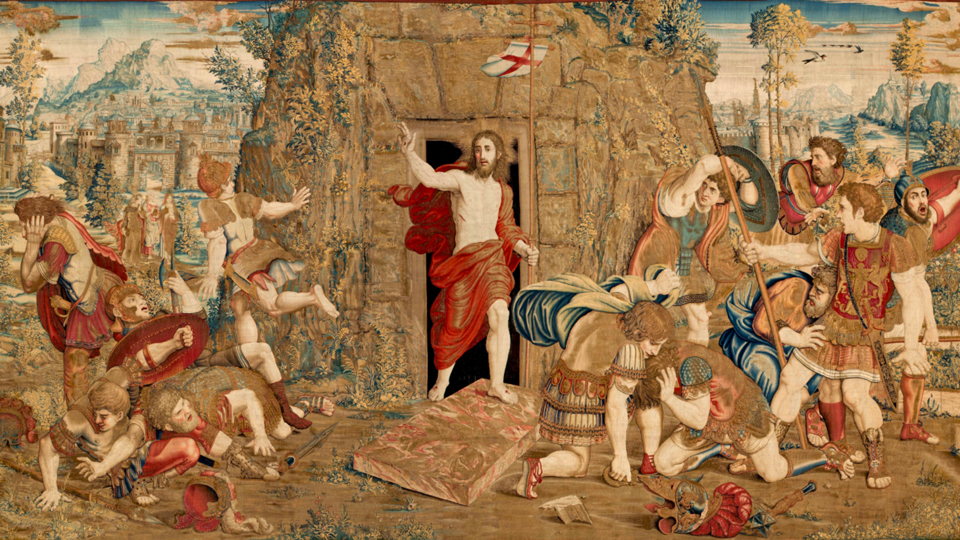
Jesus raised Jairus’ daughter (Mark 5:21-43), the son of the widow of Nain (Luke 7:11-17), and Lazarus (John 11:38-43). These acts restored them to earthly life. In contrast, Christ’s resurrection was not a return to mortal life but an expansion of human existence into a new dimension, opening the way to eternal life and communion with God. Pope Benedict XVI, in Jesus of Nazareth: Holy Week, contrasts the raising of Lazarus with Christ’s resurrection. Lazarus returns to earthly life, but Jesus’ resurrection is an “evolutionary leap” for humanity into a new existence.
The Gospel account of the raising of Lazarus, proclaimed during Passiontide, foreshadows Christ’s own resurrection. St Thomas Aquinas highlights three profound effects of Christ’s resurrection: it brings about our bodily resurrection by divine power (Summa Theologica III q. 56 a.1), enables our spiritual resurrection from sin to grace (ST III q. 56 a.2), and inaugurates the new creation. Resurrection is not only about restored physical life but also about the ongoing transformation of the human soul.
Reflecting
Another Gospel text reflecting this theme is the Parable of the Prodigal Son (Luke 15:11-32). The father’s words, “This son of mine was dead and has come back to life,” reveal that conversion is a kind of resurrection. Similarly, John 8:1-11, presents another moment of resurrection. This scene unfolds at dawn, as Jesus goes to the Mount of Olives (John 8:1), subtly anticipating Easter morning, when the empty tomb is discovered at first light. The woman caught in adultery faces a death sentence under Mosaic Law (Leviticus 20:10), but Jesus, in his mercy, does not condemn her. Instead, he offers her a new beginning: “Go, and do not sin anymore” (John 8:11). Her life and dignity are restored – resurrected.
John McKenna’s Once We Sang Like Other Men reimagines the story of Lazarus in a striking way. Instead of showing him as a man grateful for a second chance, McKenna presents “Laz” as someone who struggles to change. His sister Martha voices her frustration: “All she could talk about was how Laz hadn’t really appreciated the second chance, how he’d been drinking too much and had fallen and broken his hip, how he didn’t seem to have any real gratitude for the chance he’d been given and how anyone else would have taken the opportunity to make something of themselves.” Unlike the Lazarus in the Gospel, who represents transformation, McKenna’s ‘Laz’ falls back into old habits, unable – or unwilling – to start fresh. His story raises a question: Do we truly want freedom, or do we cling to what’s familiar, even if it holds us back?
Resurrection
Sylvia Plath’s poem Lady Lazarus offers another unsettling take on resurrection. Here, the speaker sees death as a performance, something she returns to again and again: “Dying / Is an art, like everything else. / I do it exceptionally well.” Instead of a new beginning, resurrection becomes an endless loop, without real change or redemption. Like McKenna’s “Laz”, she is trapped in self-destruction. Both works remind us that a second chance doesn’t automatically lead to transformation. True renewal isn’t just about getting another opportunity – it requires the courage to embrace change. But there is hope. Christ doesn’t just bring us back to life; he calls us to live fully. The question is: will we answer his call?
In Come Forth: The Raising of Lazarus and the Promise of Jesus’s Greatest Miracle, Fr James Martin, SJ, explores a fascinating idea: Could Lazarus – the man Jesus raised from the dead – also be the mysterious “Beloved Disciple” in John’s Gospel? Traditionally, the Beloved Disciple has been identified as John, one of the Twelve Apostles, but some scholars propose a different possibility.
The Beloved Disciple is mentioned only after the story of the Raising of Lazarus is recounted in John 11, as if that story was the Beloved Disciple’s introduction to the narrative. John 11:3 describes Lazarus as “the one whom Jesus loves,” a phrase closely linked to the Beloved Disciple. After his resurrection, Lazarus shares a meal with Jesus (John 12:2), showing their deep connection. Later, at the Last Supper, the Beloved Disciple is described as reclining beside Jesus (John 13:23), a position of honour. Some scholars, like Mark Stibbe, suggest that if Lazarus had been hosting the meal, it would make sense for him to sit next to Jesus.
Another intriguing link appears in the resurrection accounts. When Jesus calls Lazarus from the tomb (John 11:44), he emerges wrapped in burial cloths, needing others to unbind him. In contrast, when the Beloved Disciple enters Jesus’ empty tomb on Easter morning, he sees the burial cloths left behind, including a head covering (John 20:7). The head-covering (soudarion) in John 11:44, which still binds Lazarus in death, contrasts with the neatly folded head-covering (soudarion) in John 20:7, signifying that while Lazarus was brought back to mortal life, Jesus, in his resurrection, has fully and triumphantly conquered death. Fr James Martin suggests that the Beloved Disciple immediately believed in Jesus’ resurrection (John 20:8) because he had experienced something similar—except, unlike Jesus, he had needed others to free him.
This theory remains debated. Scholars like Ben Witherington and Mark Stibbe support it, while others, such as Raymond Brown and John Meier, argue against it. Tradition still holds that the Beloved Disciple is the writer of John’s Gospel. Regardless of his identity, the Beloved Disciple represents all those whom Jesus loves and calls to new life.
Life
Human life is filled with moments of death—times of despair, anxiety, sin, and fear that entomb us. These are the tombs of the soul, places where darkness reigns. Yet God continually offers second chances—opportunities for renewal and freedom. But human nature, fragile and fearful, often drifts back to the tomb, clinging to what is known, even if it is a place of suffering. The challenge is not merely to rise but to step fully into the light of new life. Christ calls, as he called Lazarus. The call to resurrection goes beyond just physical revival; it’s about embracing transformation in our daily lives. Christ invites us to step out of our tombs, leaving behind the shadows of sin and despair. By forgiving others, engaging in prayer, experiencing community, and serving others, we can find hope, healing, and renewal. The question is: Will we choose to step into the light?