I was pleased to find several positive examples of religion and spirituality in the media last week.
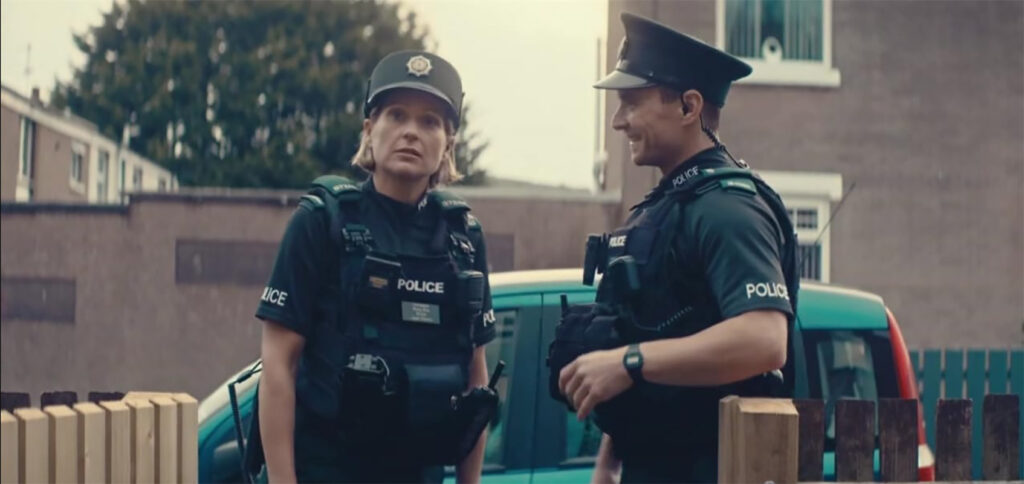
A few weeks ago, I favourably reviewed Blue Lights (BBC One, Mondays) after seeing the first few episodes. It finished last Monday and must upgrade my rating to ‘outstanding’. It worked as gritty crime drama but it was so much more. There was a depth to the character development, and strong sense of the importance of relationships. Crucially there were plenty of relatable and likeable characters, so you cared for them when they were in peril. This made for extremely tense moments – especially in the case of two impending ambushes. You get the impression that the show’s creators like humanity in general and people in particular.
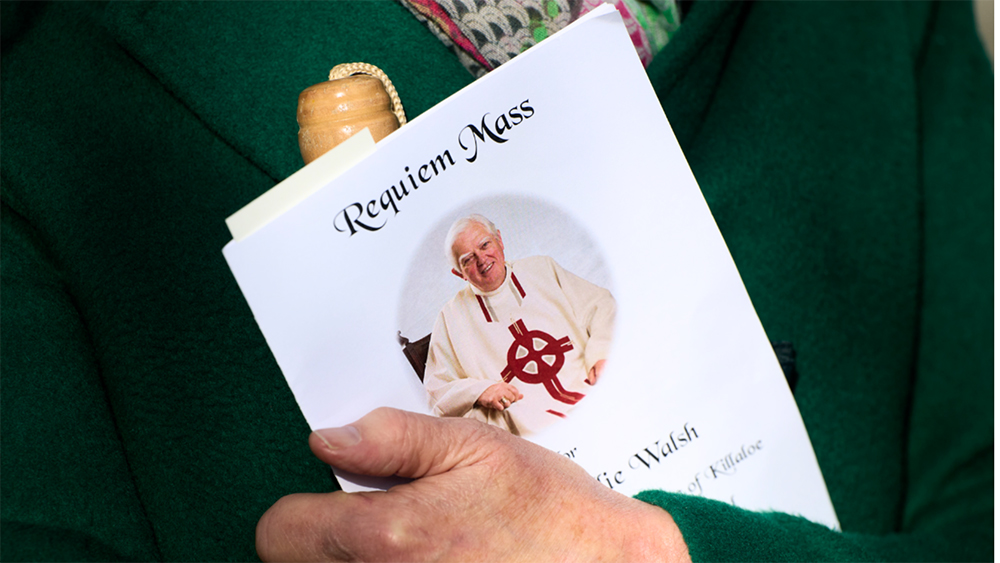
Most striking of all for me was the treatment of religion. I mentioned before how the Rosary played a central part in one road accident scene. This was picked up in later episodes, where rosary beads meant a lot to a police woman and the family of a young man she had comforted at the scene of the accident. Another plot strand featured a police woman who had been under threat from Republicans in her rural community because of her role in the PSNI. With her mother near death this created serious security issues as she wanted to come home. The issue was handled in a credible and sympathetic way, while the Requiem Mass scene came as a surprise and may move you to tears.
There’s a likeable priest character, who is prone to colourful language. When someone says they’re spiritual but not religious he uses a four-letter word. He has deep conversations with two police constables, when he stresses the importance of faith, also in colourful terms. The show won a well-deserved BAFTA award earlier this year and it’s so well deserved. Personally, I’d prefer if there was less bad language. There is very little, if any, in hit shows like Line of Duty, and this doesn’t make them any less intense, realistic, entertaining or emotionally affecting.
Religion and spirituality were to the fore in the new one-hour series Divine Sparks with Áine Lawlor (RTÉ Radio 1, Friday), described as a show ‘which explores religious, spiritual and ethical issues through a fresh and engaging mix of discussions, interviews and features.’ It opened with a fascinating discussion on a revival of faith among young people, in particular Gen Z (approx. those born 1997-2012). Sarah Ryan-Purcell found energy in the company of other believers and didn’t accept the narrative of the Church dying, reference the huge attendance at the recent Jubilee of Youth in Rome. P.J. Cronin had asked deeper questions after leaving school, had questioned what secular orthodoxy had to offer, and had made his way back to his Catholic faith. Irish Times journalist Ellen Coyne was somewhat older, more of a millennial. I couldn’t agree when she said that the social changes brought about by the referenda on ‘marriage equality’ and ‘abortion rights’ were ‘objectively’ (!) very good for the country. However, she found religious faith ‘interesting, enriching and important’ and thought the Catholic faith provided ‘something so profound that it’s very hard to find elsewhere in a secular or capitalist society’. She felt a ‘duty’ to pass it on and a ‘profound responsibility’ offer it to her own child. Interestingly she had got abuse for her faith, especially from quarters that considered themselves progressive. As a political correspondent she ‘struggled’ to find an instance of the word ‘Catholic’ mentioned on the Dáil floor when it wasn’t pejorative. Presenter Áine Lawlor was a genial host and found it ‘a privilege and pleasure’ to talk to these young people about the faith revival.
Finally, I was saddened to hear of the death of Sr Stanislaus Kennedy last Monday morning. On Newstalk Breakfast there was a tribute from Teresa Buczkowska of the Immigrant Council (established by Sr Stan), though on the news headlines that followed on Newstalk the only clip they played was of her criticising the overly institutionalised and rule-bound Church. I thought that was a strange choice considering that she was primarily known and admired for her work with the homeless and marginalised – work acknowledged on Morning Ireland (RTÉ Radio 1) by Roger Childs, Head of Religious Programming for RTÉ. He described her as ‘an amazing woman … gracious, innovative, visionary’ and said she had the qualities of ‘humanity, humility and humour’.