Anyone wishing to understand the nature of Canada as a nation could well begin that exploration by first making a visit to our own National Museum in Dublin.
There in Kildare Street there is to be seen among the select moments and events in our long island history, a lavish display dealing with the Irish Republican attempts at invading Canada in 1866 and again in the early 1870s, a wildly foolish and unsuccessful effort to break the union of Ireland and Great Britain which only served to created an even greater and stronger union among the British territories of North America resulting in the creation of the Canadian Federation in July 1867.
It also gave rise to a wave of Canadian antipathy to the United States of America, that is echoed today in the current expressions of outrage in Canada over the recent actions of the US administration.
But what President Trumps ignores now, as the Fenians did in the 19th century, is that Canada basically was founded and inhabited by those settlers of British, Irish and French origin who simply did not want to live in the republic to the south.
These included the Loyalists driven forcibly out of the thirteen colonies by the patriots of 1776, the French speakers of Quebec and the Laurentians, and later various other groups including for a time refugee Sioux Indians from the USA led by Sitting Bull, the victor of the Battle of the Little Big Horn.
From its foundation by the French in opposition to the British, Canada was essentially a more Catholic country. But the changes over time have meant that though Quebec and the Laurentians maintain their cultural identity, the country as whole reflects a different passage of history to that in the USA.
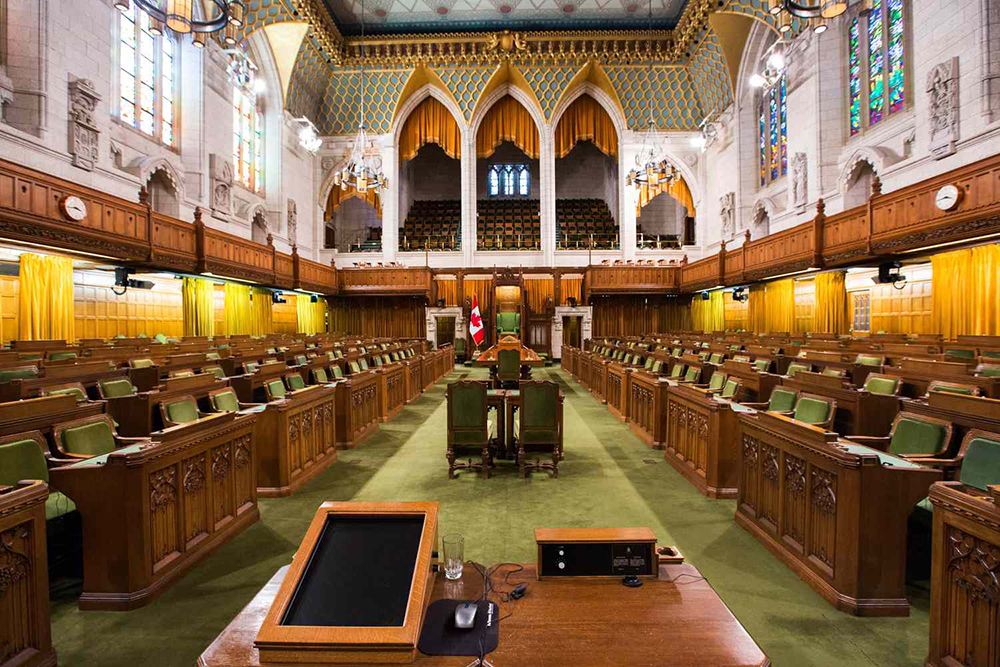
One essential characteristic of Canadian civil society is not just the parliamentary system, derived like ours from the nature of the parliament at Westminster. It was not intended, like the “American system”, to be revolutionary but to be essentially conservative, retaining and building on long established ideals of civil rule going back indeed to the middle ages.
Amalgamation
Literary critics in the US give little attention to what is written and said in the nation to the north of them. An exception to this, as in so many things, was the late Edmund Wilson of the New Yorker in his critique O Canada (1963), tellingly subtitled, “An American’s Notes on Canadian Culture”.
It a quite unique literary exploration, to set beside Wilson’s other book about native American culture Apologies to the Iroquois (1960), another ignored aspect of US life. Neither title I imagine are on the shelves of President Trump.
Wilson covered a wide range of writers. Since then other names might be added to his selection, such as Leonard Cohen, François Mallet-Joris, Morley Callaghan, Mordecai Richler, Margaret Attwood , Roberson Davies and many, many others. One begins to see that where these writers achieve great fame these cease to be “Canadian” writers, but American writers, much as Irish writers and artists so casually become seen by some as “British”.
The country north of the Great lakes is not as some in Washington DC seem to think a second rate USA. It is in fact a first rate nation of its own, and one where over forty million civilised, respectful, polite, peace loving people of great diversity feel happily at home, with their diversity calmly recognised. Happy to, the great majority of them, even those of French and Irish origin to be formally ruled over by King Charles III, direct descendant of the still loathed King George III.