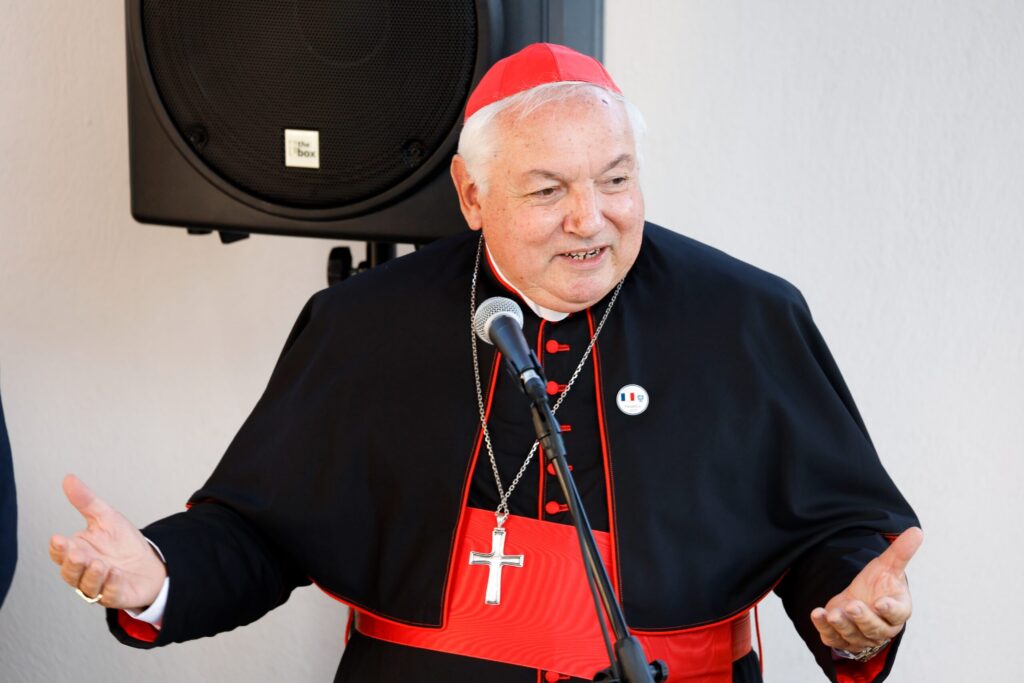
Each day between now and the May 7 conclave to elect a successor to Pope Francis, John Allen is offering a profile of a different papabile, the Italian term for a man who could be pope. There’s no scientific way to identity these contenders; it’s mostly a matter of weighing reputations, positions held and influence wielded over the years. There’s also certainly no guarantee one of these candidates will emerge wearing white; as an old bit of Roman wisdom has it, “He who enters a conclave as a pope exits as a cardinal.” These are, however, the leading names drawing buzz in Rome right now, at least ensuring they will get a look. Knowing who these men are also suggests issues and qualities other cardinals see as desirable heading into the election.
ROME – Pope Francis famously bucked convention by living not in the traditional papal apartment in the Apostolic Palace but rather the Casa Santa Marta. But suppose the maverick pontiff had taken things a step further and decided to relocate not merely from one Vatican spot to another, but outside Rome altogether?
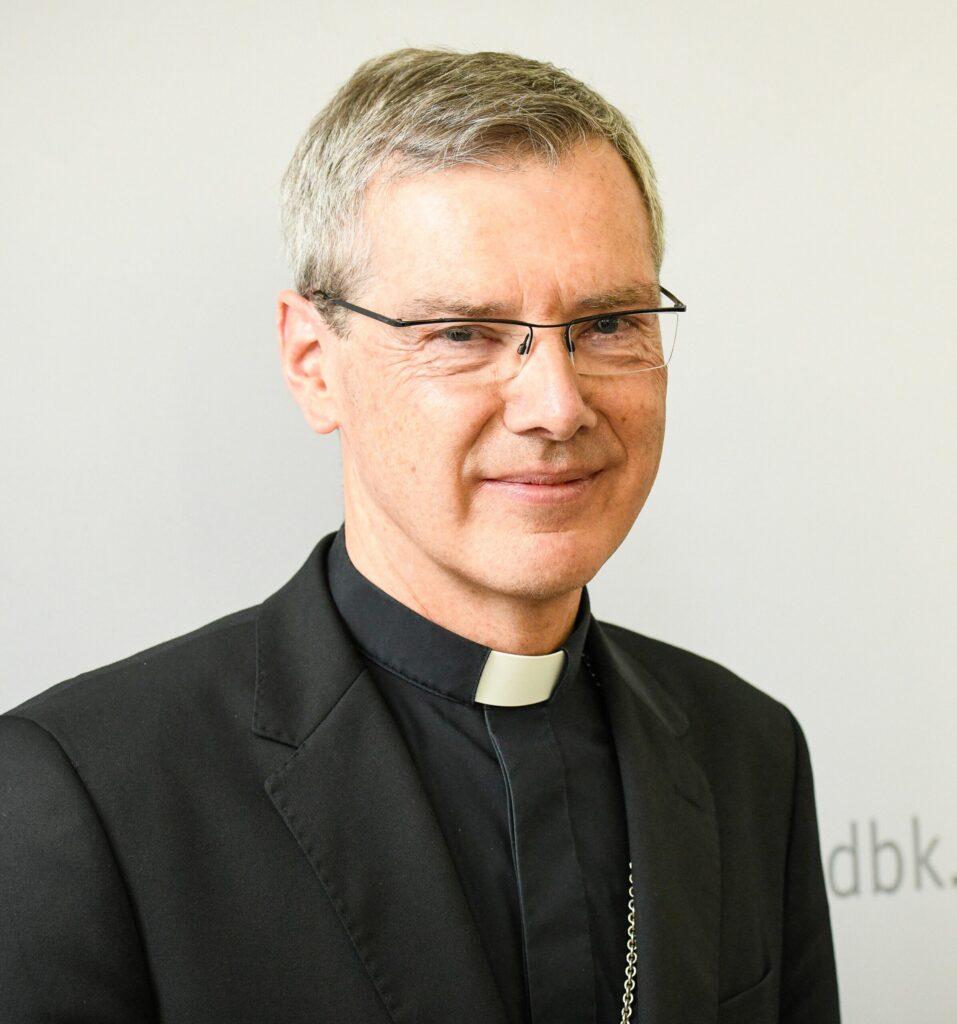
A good case could be made that given the pontiff’s social and political priorities, he might well have chosen Marseille in France – where he would have found a highly congenial host in the 66-year-old Cardinal Jean-Marc Aveline, often described as the late pontiff’s favorite bishop.
Marseille is, and always has been, a port city, making it a natural crossroads of peoples, cultures and faiths. Today roughly 25 percent of the population is Muslim, mostly immigrants from North Africa. It’s also a place of contrasts between great wealth and heartbreaking poverty in the immigrant neighborhoods on the northern outskirts of the city known as the quartiers nord. It’s a key point of encounter for the entire Mediterranean region, which Francis often termed the world’s largest outdoor graveyard for all the migrants and refugees who’ve died trying to make the crossing into Europe. As a coastal city it’s a good spot to assess the impact of climate change, including rising temperatures, more frequent heat waves and coastal erosion.
Pope Francis visited Marseille in September 2023, a trip in which the pope’s fondness for the city, and for its chief shepherd, seemed obvious.
Born in Algeria into a family of pied-noir, meaning Europeans (in this case Spaniards) who had settled in Algeria during the era of French colonization, at four years old Aveline and his family were forced into exile after a bloody war of independence. They eventually settled in Marseille in 1965, giving the future cardinal a natural sympathy for migrants and refugees since he lived their experience himself. Among other things, Aveline speaks Arabic, allowing him to communicate with his city’s immigration population in its native tongue.
Aveline had two sisters, both of whom have died, but his parents are still alive and living in Marseille, where he devotes a share of his personal time to helping take care of them.
After discerning a vocation to the priesthood, Aveline would study in seminaries in Avignon and Paris, and was ordained in 1984. Perceived as a gifted intellectual, Aveline would teach theology and run an interdiocesan seminary in Marseille, then moved on as an instructor in theology to the Catholic University of Lyon.
Aveline was known as the “spiritual son” of the late Cardinal Roger Etchegaray, who himself had served as the Archbishop of Marseille before moving on to run the Vatican’s Pontifical Council for Justice and Peace. Throughout his career Etchegaray was known as a man of deep culture and great openness, committed to listening and dialogue – all qualities which most observed attribute to his protégé as well.
After Francis was elected to the papacy in March 2013, he missed almost no opportunity to propel Aveline’s career, naming him an auxiliary bishop of Marseille in December 2013, then Archbishop of Marseille in August 2019, and finally naming him a cardinal in August 2022.
It’s not just the late pontiff who exuded fondness and trust in Aveline; earlier this month he was elected the new president of the French bishops’ conference, with one of his fellow prelates, Bishop Renauld de Dinechin of Soissons, Laon and Saint-Quentin, gushing that “the cardinal is fraternal, joyful and encouraging, with a great intelligence … he is appreciated by all.”
He also gets good reviews in secular circles, having been inducted into the country’s prestigious Légion d’honneur in 2002 by French President Emmanuel Macron.
Progressive Catholics especially tend to like what they see in Aveline. In some French Catholic circles he’s known as “John XXIV,” a reference not only to the reform-minded spirit of “Good Pope John” and the Second Vatican Council, but also to the fact that the smiling, somewhat frumpy and roly-poly Aveline bears a striking physical resemblance to John XXIII.
Yet Aveline is not an ideologue, and at various times over his career has been willing to buck liberal orthodoxy.
For instance, he’s not an advocate of uncontrolled immigration and has said that anyone who is “certainly doesn’t live in certain neighborhoods of many cities marked by a high unemployment rate, the drug trade, degradation and a lack of security.”
Aveline has also shown some sympathy to French Catholicism’s small but influential traditionalist wing. Among other things, he tried unsuccessfully to mediate a dispute in the Diocese of Toulon between Bishop Dominque Rey, who’s a personal friend, and the Vatican over issues such as welcoming traditionalist movements and ordaining large numbers of priests attached to the old Latin Mass. In the end, Rey was compelled to resign anyway in January, but traditionalists nonetheless remember Aveline’s efforts to help.
In general, Aveline is seen as a figure almost impossible to dislike on a personal level, a figure with broadly progressive positions but who’s open to those with more conservative inclinations, and a prelate with a nimble mind, a solid work ethic, and a good heart.
The case for Aveline as pope?
If you’re looking for someone to continue the Pope Francis legacy but perhaps with a bit more consideration for Catholics of differing temperaments, someone capable of reducing the internal tensions in the church rather than to exacerbating them, Aveline might have a great deal of appeal.
Moreover, his background in Marseille certainly has equipped Aveline to face most of the major social and cultural challenges of the early 21st century, from immigration and inter-faith relations to poverty and the environment.
Aveline’s affable personality and charm would also make him a compelling figure on the global stage, a sort of antipode to the in-your-face dynamics of the Donald Trumps of the world. That would be a good look for the Catholic Church, perhaps even helping to revive its missionary fortunes.
All that helps explain why Aveline seems to be attracting a good deal of interest, and not just among the usual European suspects. Right now, for instance, several Latin American cardinals are said to be favorably inclined to his candidacy, seeing him as a figure with a properly global perspective on the church.
The case against?
For one thing, Aveline is French, which for centuries has been though to be disqualifying for a potential pope because of the legacy of the Avignon captivity of the papacy, a dark chapter of history no one is eager to revive. Almost seven centuries later, however, perhaps electors are finally ready to let that old prejudice drop, especially because Aveline is such a supporter not only of European integration but also Mediterranean.
In addition, Aveline doesn’t really speak Italian, which is an obvious handicap for a potential Bishop of Rome. He does have a capacity for languages, however, and could probably learn; in the meantime, the way he stirs memories of John XXIII might be enough to earn him all the Italian street cred he really needs.
Aveline’s age, 66, could possibly be a stumbling block for some cardinals. Should he remain in office to the same age as Pope Francis, 88, that would make for a 22-year pontificate, which might be seen as awfully long – though others might find the stability such a scenario would imply to be reassuring.
Most basically, if you’re a cardinal who found compelling the recent prayer for the conclave released by 94-year-old Cardinal Camillo Ruini, especially his plea for “the certainty of truth and the security of doctrine,” it’s not clear Aveline would be your candidate. While he hasn’t taken strong public positions on most contested theological questions, playing his cards close to the vest, his generally progressive outlook probably won’t reassure those looking for something more predictable and conventional.
Supposedly, Aveline once told someone concerned the cardinal was being overtaxed that, “Each time the weight of your workload is increased, you must lengthen the time of your prayer.”
It remains to be seen if he’s going to have to fall back on that rule in a whole new way should he be the man to step onto the central loggia of St. Peter’s Basilica wearing white. If that happens, one would have to imagine Pope Francis looking down from heaven with satisfaction; more than once, after all, he predicted that his successor would be named John XXIV.
This story was first published in CRUX