The alignment of a coffin before the altar tells its own story.
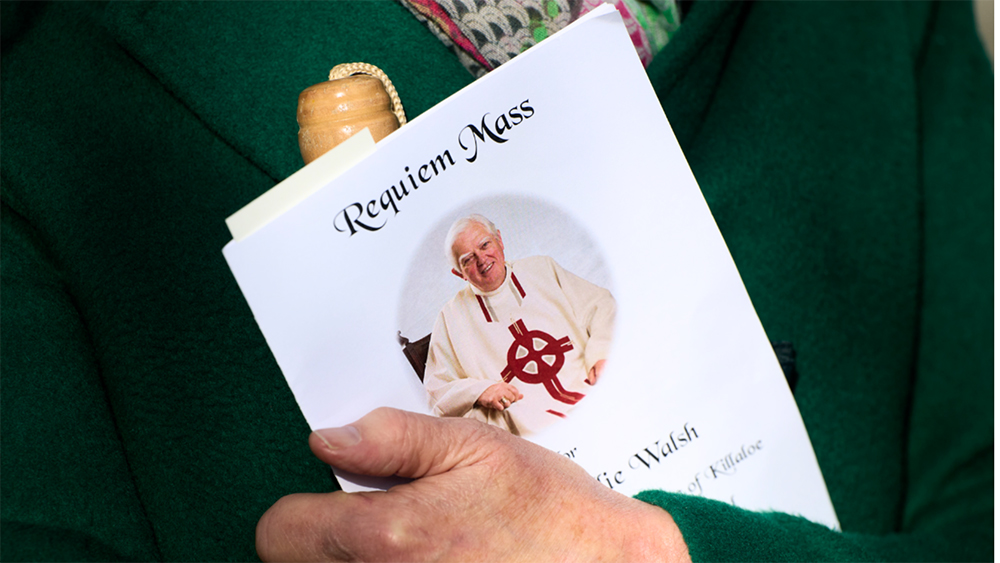
I celebrated a funeral Mass for a priest during the month — not that many who attended were aware of this man’s one-time status. He had trained and been ordained by a religious community I had never heard of, in another country, and worked with them just a few years. In the school where he ministered, he formed a liaison with a lady member of staff, who later became his wife after he had obtained the necessary dispensations. After ten years together that marriage ended; he later fell in love with another, but she died of cancer after a short engagement. This finally brought him to our rural parish where he formed a partnership with a lady who had just escaped from her own difficult marriage. This was the reason why 25 years after they set up house together, I got the opportunity to preside at his obsequies. These funeral liturgies were as for anyone else, apart from the fact that when the funeral director wheeled this man’s remains into the church, he was careful to align the coffin so that the head was to the altar and the feet to the door. In his mind at least, “Thou art a priest forever”. I found this stubborn insistence that some things are immutable strangely moving.
October is still mission’s month, is it?
Mission Sunday used to be such a big deal. You couldn’t enter a church without being assailed with mammoth posters plastered everywhere, on the ambo, the altar, the walls, door, all over the building. Now the mammoth posters have been cut in size and in number, reflecting our straitened circumstances. Mission Sunday used to provide an opportunity to speak about our parishioners working abroad on our behalf, doing many different sorts of good works: now these same missionaries are more likely to be in nursing homes. Not that any of these developments lessens our appetite or the urgency of the mission appeal; it’s just that these changes are scarcely remarked on. All has changed, changed utterly.
Who was this teacher I honoured at a retirement Mass?
One of the Masses in the past month celebrated the retirement of a teacher. She worked in our local Catholic school and I think I vaguely recognised her, but personal notes of congratulation and well-wishing were out of the question; in truth, I did not know her at all. Like so many teachers now, I wonder if she ever went to Mass: those resident locally never seem to.
The scriptures were my friends however, and the prophet Daniel’s verdict on teachers (among the funeral Mass readings, strangely enough) gave me my homily. After all, did this wise man not remark that: “the learned will shine as brightly as the vault of heaven, and those who have instructed many in virtue as bright as stars for all eternity (from Daniel 12:1-3, Reading 6 in the first readings for funerals).
Weirdly (or providentially?) within a week of this special school Mass, I presided over the funerals of two separate individuals who had been teachers too. This meant that this scripture reading formed the basis for not one but three homilies — a sweet spot for homilists, and a rare one too.
Diocesan retreats are unique occasions for priests
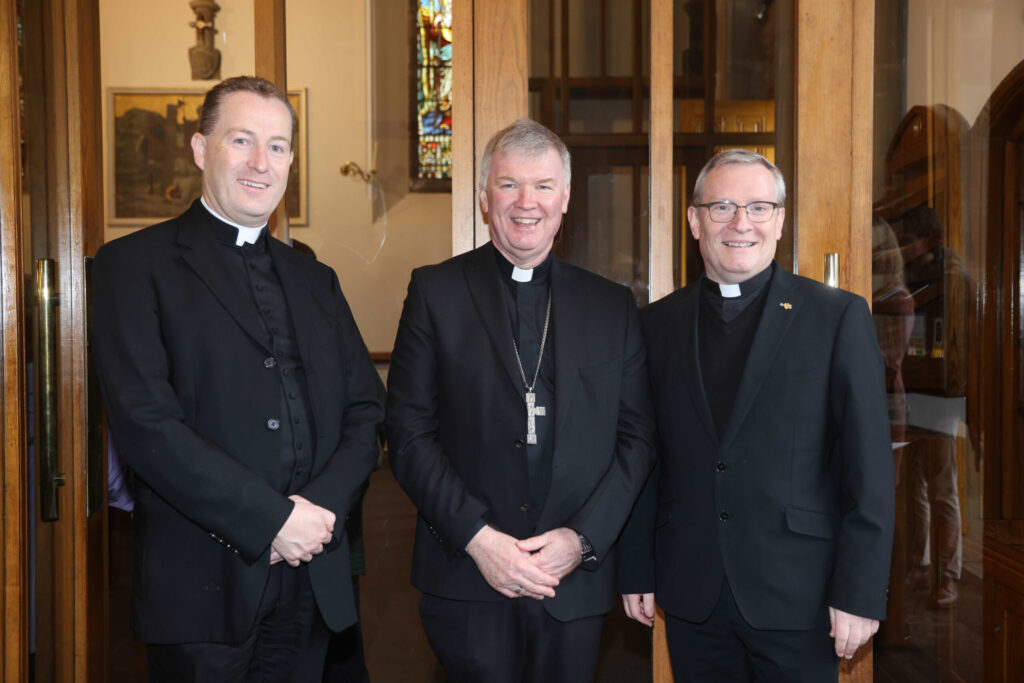
Like every diocese, our diocese has a diocesan retreat once a year. It involves many of us staying in one spot together for a few days, with Masses, prayer times, meals, drinks and numerous chats. We vacate our usual routine and stay over, together, not returning to our parishes even for funerals. It’s an annual chance to reflect on what is unique about being a diocesan priest, as opposed to membership of a religious order or congregation. The question that suggests itself is: what is our unique charism? To be a secular priest is to live in the world, close to people, but what keeps us tuned into the divine?
At our 2025 retreat, we had one feature that doesn’t seem to have changed, no matter what else has: talks by the retreat giver. Each lasted 30 minutes or so, and each one was dreary as hell. It smacks of clerical exceptionalism, this sense that we can sit and listen to one person drone on and on.
All the world is treated to multi-media presentations, or short addresses delivered with life and fire, but we are expected to sit and listen (or doze). The other feature of our diocesan retreats is that they are invariably given by Religious priests, nuns or brothers, which leads one to ask why no diocesan priest gives retreats? They’re too busy, I suppose.
Attendance at a diocesan retreat for an outsider would probably draw that person to the conclusion that this is a group of people who cannot keep silence. The outsider might forget that most of the rest of our lives are spent in silence, so that the fraternity offered by our retreat gives vital opportunities for conversations. Now, more than ever, it is good for us to meet up, to share and discuss and listen and learn from each other. It’s not just a gathering for swopping anecdotes from the past, though these can be fun. Our sense of reality about how things are today necessarily inform our discussions.
So what does the gathering say about our unique charism as diocesans?
For me, it underlines the significance of fraternity; a sacramental brotherhood is one way of describing how we are. We pray the Divine Office in common during these days, which usually brings home how different this way of praying is for each of us: we would never survive communal recitation for long. (We were definitely never called to monastic life.) We are rarely far from an argument about which saints to celebrate and which to conveniently skip over — and how to do that.
Our concelebrated masses are an experience too. Some priests are word perfect in the celebration, others appear never to have heard that the Mass words changed in 2011. But we sing with gusto: we go to so many Masses we know the words to a surprisingly large repertoire of songs. We even know the air to some of them, though not knowing the air will not prevent our joining in either.
How to describe the charism of a diocesan priest?
He has an individual pastoral life with communal elements; he shares a brotherhood with every other priest in the world who shares this life. The diocesan has a unique relationship with a bishop and a healthy scepticism for the big plans often launched at diocesan events, though he will row in with them, even if grudgingly. There is an element of cynicism to his conversation with other priests, the fruit of too many disappointments, yet he has unexpected enthusiasms equally. His secularity draws him away from excessive religiosity; he enjoys food and company, but he probably fasts too, and prays quietly when no one is watching. Diocesan priesthood is a good life, a life to recommend. If you join secular priests on a diocesan retreat, you will see what we are really like!