A suicide on All Souls Day adds to parish depression
All Souls Day is bad enough without a man going missing in the parish. He was absent for all of a cold winter’s night: “He never did that before”. A hardworking husband and father, he kept a low profile in the parish. After just a night missing, people spoke of him in the past tense.
I didn’t ask if he had gone missing before. I should have: he had. but he had never been away overnight before, just for hours of daytime disappearance when it all got too much.
I hadn’t asked if he suffered from depression. I should have asked, because he had suffered from it, and everyone knew that. He wasn’t the sort for doctors or medicines, he just braved it out till the bad feeling passed. But this time it didn’t.
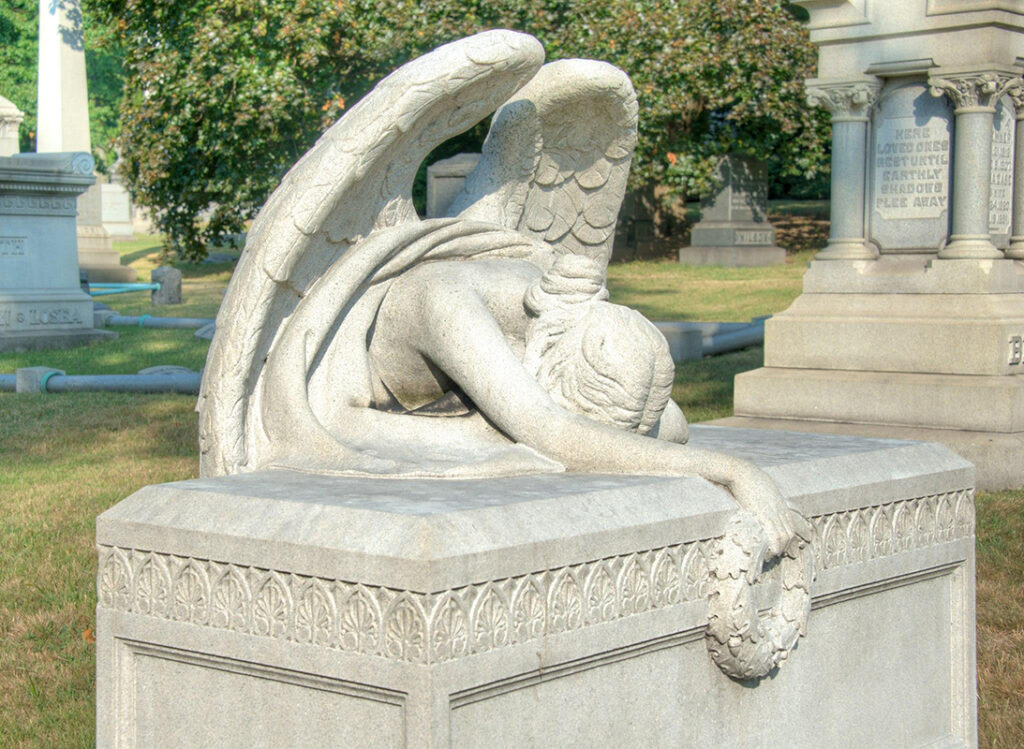
I was called to the house, by then full of neighbours and family, with foil-wrapped sandwiches being delivered and hot steaming tea served. We watched and waited together. When the body was found in a tree, relief was the feeling, not shock. His now-widow had the funeral arrangements well prepared in her head, the hours of reposing, who would say the rosary, the place of funeral and burial, where they’d go for the meal afterwards. And then would begin the long, lonely nights of loss, the worries of suicidal ideas in the family, the unrelieved depression that accompanies death by a man’s own hand. The priest feels powerless, all he can do is to be there, drink the tea, listen to all the missed opportunities to help, share the powerlessness and pain. It was a memorable All Souls Day in the parish, and its shadow would loom over every subsequent one.
St Malachy — patron saint of pastoral areas?
November 3 brought us the feast of Malachy, causing the transfer of poor Martin de Porres’ feast in Irish churches. Malachy is worth remembering, because he has a message very urgent to us today. He was the man who reformed the Irish church in his day, but he was convinced that administrative changes without a spiritual underpinning were a waste of time. So, he brought in the monks, to deepen the faith experience of our ancestors.
Something similar is needed in our day, when so many administrative changes are forced upon us, with parishes being grouped and new organisms created. Malachy would remind us that such a managerial approach alone will not change people’s hearts, something deeper must underpin it. Where is the Malachy of our day?
Was I wrong to baptise First Communion children?
November brought enrolment for the sacraments, with the demand for a baptismal certificate producing the usual crop of unbaptised children. Their parents really meant to baptise them, but what with COVID, and jobs and family and whatnot, it had just slipped their mind. Others may well put on special preparation classes for children and parents, but for the peace, the simple private baptism seems to be easier all round. I only hope that the late enthusiasm that has led to this urgent request for baptism turns into regularly practising parents; we have more than enough lukewarm believers already.
The living ‘Holy Souls’ can be more troublesome than the dead ones
Many priests have a morbid fear of the Holy Souls. Not the dead ones, of course, we know they are praying for us and we for them. It’s the living Holy Souls who cause all the problems.
These are the people who live for the minutiae of church life, and who often plague clergy with requests, suggestions and ideas — always things others might do to improve.
I remember a run-in with just such a soul. She wanted more prayer meetings, at which the good and holy ones might pray for the sinners out there. I wasn’t buying it and suggested after much argument that at least she and I might pray for each other. To which she stormed: “Well, I’m dead from praying for you, Father, and it makes no difference, you’re still as bad as ever.’ Certainly a ‘Holy Soul’ to avoid.
The GAA teaches us the parish’s boundaries
The fall of the year is a great time to learn about the limits of the parish. Why so? Is it because, as things ease off, there is more time to peruse ancient maps and find those hidden streams that mark the all-important limits. No, that’s not the reason, parish never really winds down anymore, and autumn/winter can be as busy as spring/summer.
But this is the time of year when the GAA championships reach their climax, and some places find themselves adorned with a flag in parish colours hanging from practically every house. The houses most generously adorned are the parish outposts; when you pass these houses, you are most definitely in the parish whose team has progressed. And now you know where Parish A ends and where Parish B begins. It can be an eye-opener to see how some rural parishes stretch right into the suburbs of the big towns. The flags tell the story!
It’s all a reminder of just how ancient parishes really are, so much older than local civil and even county bounds. And some think they can be so easily merged and amalgamated, these ancient and beautiful communities, so lovingly depicted in this year’s ‘Killeagh song’ — a paean to the Irish parish.
Is it our job to save the world, or did Christ not do that?
A more recent run-in concerned Our Lady of Fatima, who seems to attract many of these Holy Souls. So overwhelmed was this parishioner with devotion to OLOF, that she wished the parish newsletter to carry reams of coverage every week. “Because”, as she pointed out, “we have to work hard to save the world, which is in a very bad way.” I couldn’t but agree that the world was looking a bit bleak at present, but as for saving it, I had to remind her that Jesus Christ had already done just that, with salvation for all. This assertion just brought blank looks of incomprehension and more promises that she might pray for me (that I might improve, doubtless). Such are the trials of the pastor; often, the ‘Holy Souls’ cause more trouble than the lukewarm ones.
Who owned the car that crashed into the bog?
There was a car in the bog. After a not-particularly-frosty night, a car lay on its side off the road. It had been seen speeding along, had braked suddenly, slid and ended up there. Who was driving? “Foreigners”, they said, though whether these were from the second-next parish or second-next continent was unclear. And then, days later, the damage got worse, windscreens suddenly cracked as if hit with golf clubs. The Guards were called. And then the car was gone. An insurance scam? Or a moment of embarrassment? No one knew for definite. But someone overheard a man talking about his sister-in-law’s friend whose workmate in the garage heard the story. Sometime in the next hundred years, it would become clear what had happened on what was now the “Car-in-the-Bog” Road.