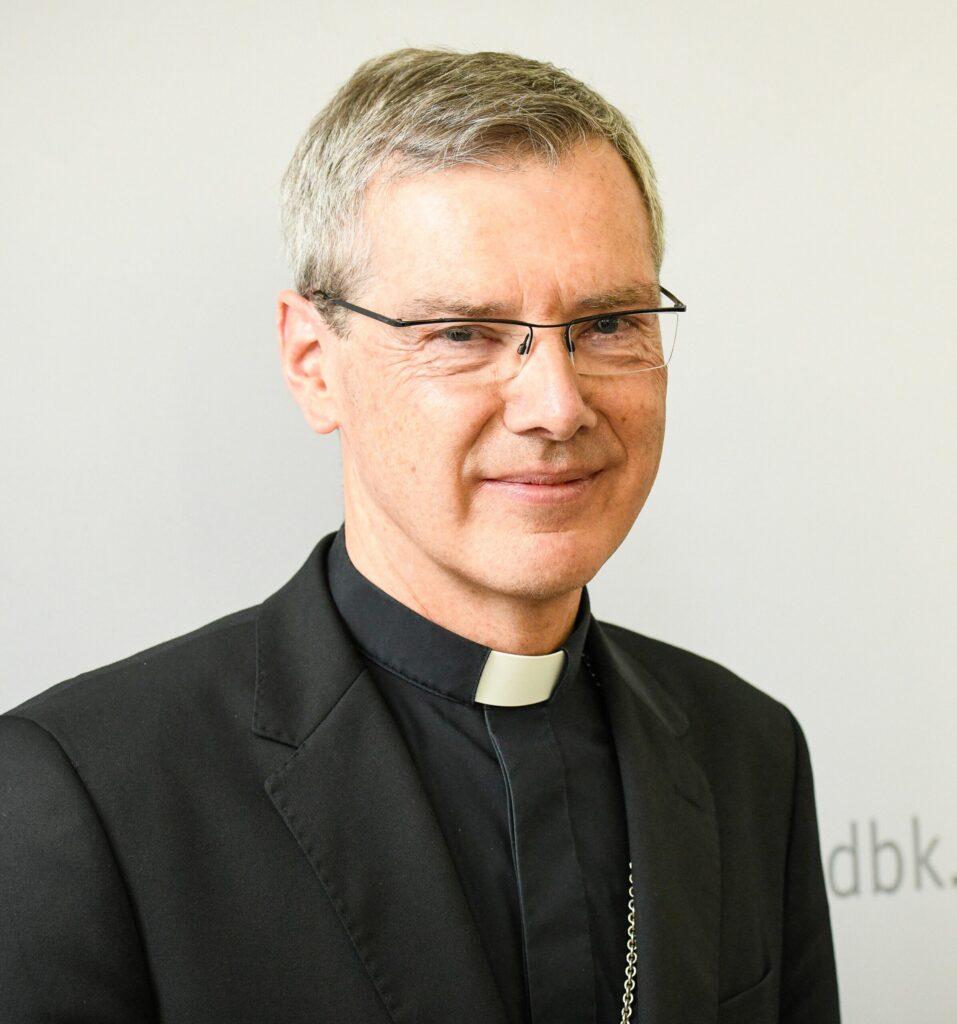
The new chairman of the Bishops’ Conference, Heiner Wilmer, does not want Germany to go it alone on Catholic Church reforms. Good coordination with the church leadership in Rome and with the World Synod is important to him, said the Bishop of Hildesheim on Thursday in Würzburg. He will travel to Rome soon so that the Vatican can approve the statutes of the planned synodal conference approved by the German bishops.
In the new body, bishops and laypeople at the federal level will discuss important issues for the future and make decisions together. The planned synodal conference is a result of the Synodal Path reform project, which deals with issues such as the separation of powers within the Church, a new sexual morality and ordination for women.
Synodal Path controversial
The Bishops’ Conference has been divided over this project in recent years. Four conservative bishops withdrew from it. There were also strong reservations among the church leadership in Rome. The Vatican warned that the decision-making authority of each individual bishop for his diocese should not be revoked. ‘My concern is to mediate, to build bridges, to fill in divides,’ said Wilmer. ‘Unity is our greatest testimony.’
In Rome, Wilmer also wants to seek approval for another decision: women and non-ordained men should be allowed to preach at Catholic masses in future. De facto, preaching by lay people, i.e. non-ordained people, is already practised in many German dioceses, said Wilmer. But here too, the aim is to remain in unity with the universal Church.
Bishops warn against the AfD
At their four-day spring plenary assembly in Würzburg, the bishops once again addressed the AfD. They anticipate serious consequences should the AfD form a state government in eastern Germany after the upcoming state elections.
‘We appeal to the people of our country to take a close look and not be seduced by the superficially attractive rhetoric of the AfD,’ said Wilmer. ‘Let us protect our democracy.’ The AfD wants to discredit the church: ‘We reject the cheap copying of our issues and their transformation into nationalistic thinking and action.’
Looking at the party’s election programmes in Saxony-Anhalt and Mecklenburg-Western Pomerania, procedures that have been in place for centuries in the relationship between the state and the church could be called into question, warned Beate Gilles, secretary general of the Bishops’ Conference. For example, state subsidies in Saxony-Anhalt make up a significant portion of the Magdeburg diocese’s budget. If an AfD government were to cut these payments as announced, the diocese’s existence would be at stake after just a few months.
Wilmer: Integration courses are important
The bishops also urged that access to integration courses for refugees from Ukraine should not be made more difficult. Many Ukrainians in Germany want to contribute to society, and their integration into the labour market has made significant progress. ‘Such successes should not be thwarted politically,’ said Wilmer.
At the beginning of February, the Federal Ministry of the Interior announced that it would review the approval of integration courses for refugees. Courses would continue to be available for people with positive prospects of remaining in the country, but providing unlimited funding for them could not be a permanent solution. According to the Expert Council for Integration and Migration, the cuts would particularly affect refugees from Ukraine.
Sexual Abuse Fund
Wilmer also advocated for the continuation of the Sexual Abuse Fund. The fund is particularly important for those affected. Wilmer recalled that the federal government had committed to maintaining the fund in its coalition agreement. The fund was established in 2013. Those affected can apply for assistance that goes beyond health insurance or nursing care benefits or other forms of support. No further funds have been earmarked for the fund in the federal budget for the current year.
Bishops call for improvements to the asylum system
The bishops see a need for improvement in the reform of the Common European Asylum System (CEAS). With the border procedures now planned, there is a risk ‘that vulnerable and genuinely protection-needy persons will not be recognised as such,’ said Matthias Kopp, press spokesman for the Bishops’ Conference.
The bishops also consider it problematic that in certain cases families with small children are to be housed in closed camps at the EU’s external borders. ‘And our third point of criticism is that, with regard to the German implementation law of Geas, we once again regret that humanitarian leeway has not been exhausted.’
According to the Federal Ministry of the Interior, the reform is intended to limit, control and regulate migration in the EU. If the Bundestag passes the relevant bills on Friday as expected, they will then have to be approved by the Bundesrat.