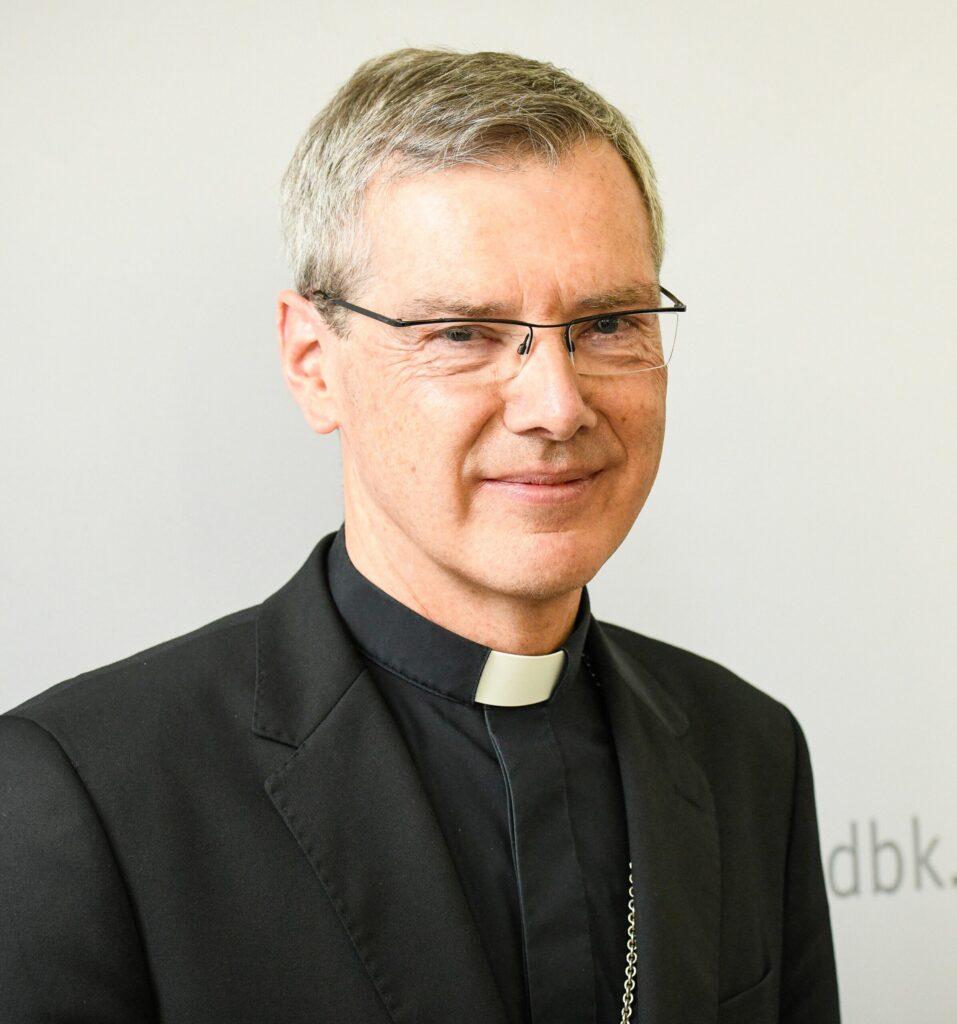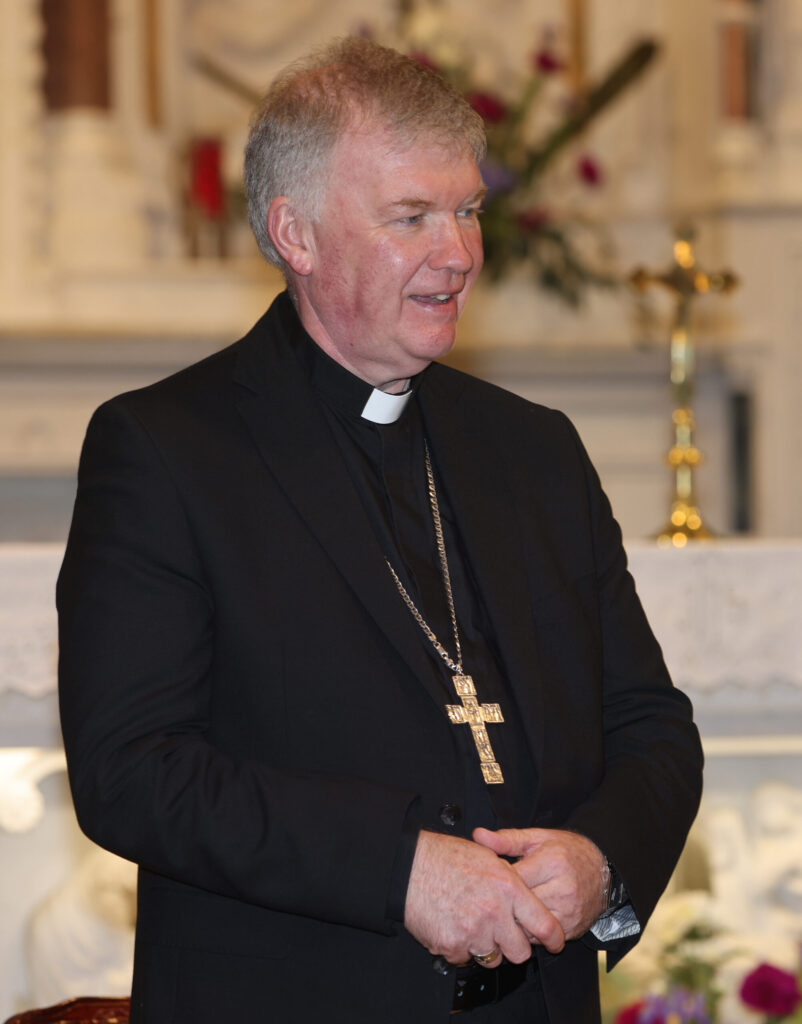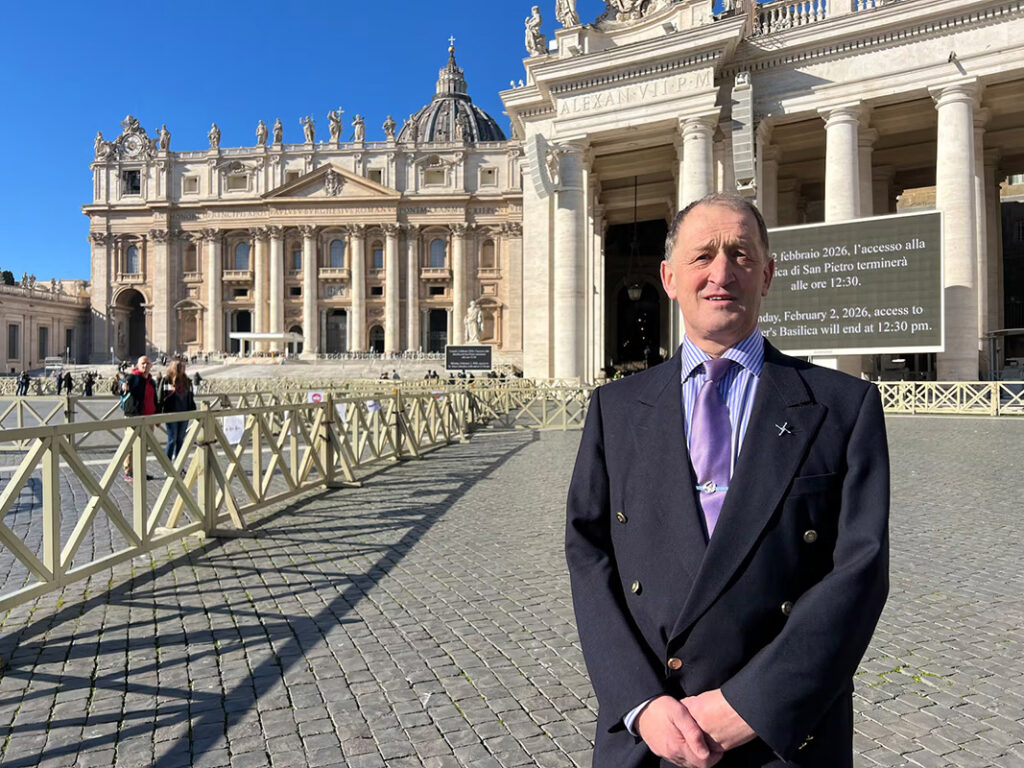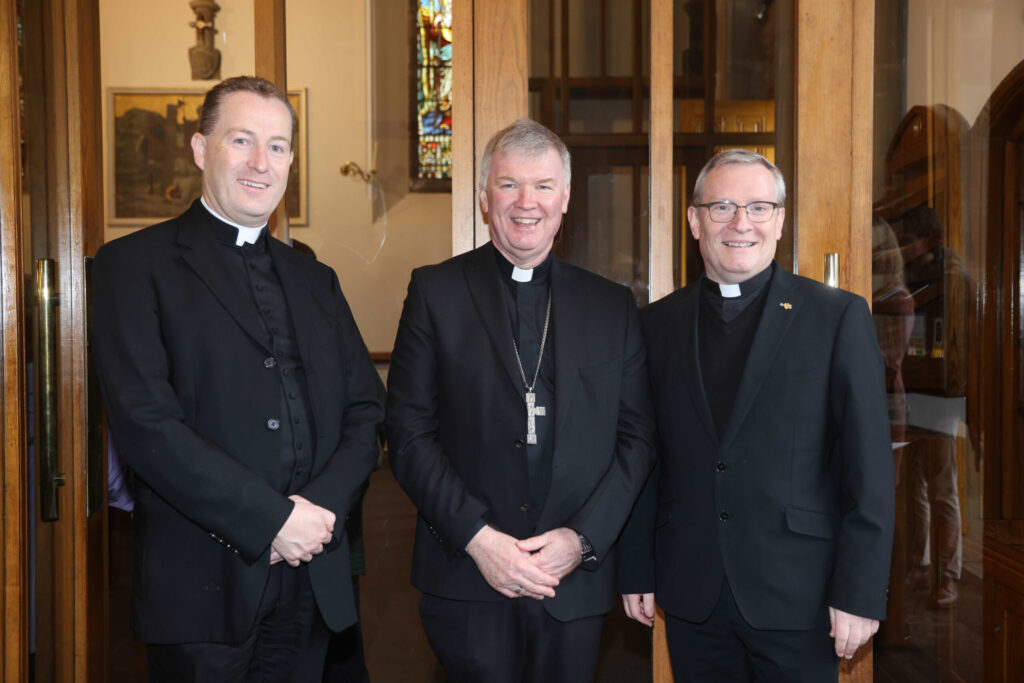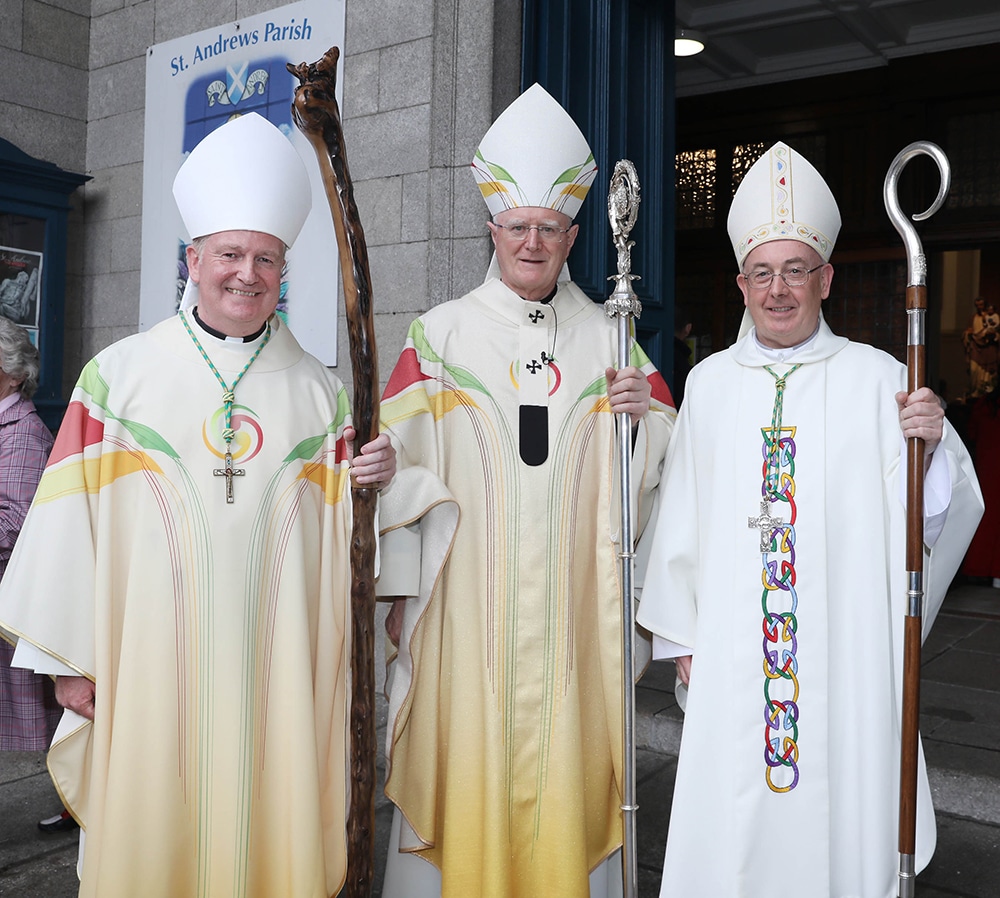
Bishop Donal Roche, in an interview with Garry O’Sullivan, describes a love for the priesthood, and reflects on a way of life that is mixed in hope and a sense of fear for what comes next.
So I asked you to reflect on Relentless Ministry, what are your thoughts?
I don’t find ministry relentless, personally. I’ve always enjoyed being in parishes and the ministry side. Sunday Masses and being in the community, even funerals, it was and is an engaging and fulfilling ministry. What I found relentless was the administration, the constant emails, trying to deal with all the stuff coming from the diocese, etc.
So I can understand the frustration the guys have and I do have that a bit of that myself. You’re trying to keep on top of things and then more stuff comes in. But obviously the ministry part, as I said, if you could be left to do it, it’d be great. But you get caught up in the administration, running the pumps. A lot of places are talking about getting people in to do these things and some places have started. Not to have the priest running everything and fixing the lights or the broken toilets or whatever.
Why is the priest running everything? You can have a pastoral council and lay help, is it as simple as that?
It’s not as simple as that because you do need paid people. There are so many things to be done in a parish or a group of parishes. You can’t rely on volunteers for everything. You need a manager of some sort. We are moving in that direction for the office stuff, when I started as a parish priest, I was doing the books and I’m not a bookkeeper and paying the bills, now all of that is done by parish secretaries by and large. That’s a huge burden lifted.
But there’s all the other stuff that comes your way. There’s something wrong with the house, the parish centre, so there is a need for paid people to take on the management of parishes.
Yet that’s hard for parishes financially but with parishes coming together maybe it can happen?
That would make it more possible that maybe five or six parishes together could hire somebody to manage. But we’re not there yet. We don’t have the structure built up yet for that.
But aren’t priests nervous about handing over the operation to lay people because it could all fall apart, committees and in-fighting etc, some priests have found out the hard way that this doesn’t always work or you don’t always get the right people to step up?
That’s true and you can end up with nobody in charge. A pastoral council should have an overall vision and this Synodal approach that we’re asking people to reflect, don’t just rush into things, you’re asked to talk, to share, to reflect or maybe pray and take time to make the right decisions.
I’ve been at council meetings [Bishop Donal worked in local government before he became a priest] where somebody says, ‘let’s do this’, and the response is ‘great idea, we’ll do it’, without thinking ‘is it the right thing to do’, ‘is there a better thing to do’; just because somebody forceful in the group says it’s a good thing to do and there is that danger when you put someone else in charge that you are losing that control.
It is a good summation of the problem that we have to get sorted. There’s so few of us left, we’re getting older, health issues and priests feel this burden of responsibility. I know priests who retired, at 75 they can walk away but they have this sense of ‘I can’t abandon them, they still need me’ they feel they can’t let ago and are afraid what might happen, that the whole thing will unravel.
So I just think this thing of relentless ministry, it’s a fear. It’s not a tiredness that comes from the work itself, I don’t think that is the main problem. I think it’s more the fear that we are dwindling now. Who’s coming after us.
The fear of who will preach the gospel in 20 years?
I think that’s at the heart of it, behind it all, the fear. I was in Maynooth last week and we had a Mass with seminary students and there are 30 of them. When I was in seminary there were hundreds of them. It was very nostalgic and lovely singing and the liturgy was beautiful, but nostalgic. It did give me hope that there are 30 and that there are people interested in joining, but there’s a huge gap between them and us in our 60’s and 70’s.
So there’s this huge gap. And not that long ago a parish priest had three or four curates. Now it’s one parish priest for two parishes. And it’s quite incredible just to take that in, big, busy Dublin parishes that I would have seen as a young man, the parish priest with a team of curates, and now a recently ordained guy running it and two others.
And the two others are probably in their 70s.
Yes. I just feel a great sense of sympathy for the older guys. And the health issues. Thank God I don’t have any health issues at the moment. But so many guys at my age, or slightly older or even the younger guys getting stents put in and so many of our age group with health issues.
As you go around, do you see and feel any solutions, like a taskforce?
Not so much a taskforce, it is more local. I’m meeting the priests of an area later in the afternoon and we’ll be looking at their Mass schedules and how we can help each other, we can have two Masses there and one here and whatever. We’re looking at those kind of things to try to help that cooperation between parishes. The partnerships are in progress for a long time and some need more work and cooperation than others. We don’t all need a 10 O’clock Mass for instance.
If you look at the number of Masses that are live streamed on Sundays, it does make you wonder if we need all the Masses?
What’s funny is Sunday Mass is probably the least of the problems. Okay, there could be an emergency, somebody gets sick. But generally I think we have streamlined the Sunday Masses or that there maybe still some big churches that don’t need two or three Masses a day, one might be enough.
With the weekday Masses, it’s a good innovation with the parishes groupings that Masses can be cancelled and you can go five minutes up the road and have Mass in another parish. So that’s manageable.
It is more of that sense of despondency. It you read the gospel on St Patrick’s Day it speaks of the fishermen having worked hard all night long and caught nothing. What do we have to show for all the hard work, we’ve given our whole life for this, and we’re dwindling.
We’re talking about building hope, and we’re talking about synodal pathways but on the ground we’re seeing things contracting and dwindling. But while I say that I genuinely believe that there are great signs of hope, it’s not just talk of building hope. It’s one of the things I’ve seen going around parishes.
There are quite a number of young people, not as many as you’d like, obviously, and a lot of them are foreign nationals that brought great life into parishes.
Even with vocations there are encouraging signs. That there are quite a number of guys who are making inquiries
I want to talk about priests and synodality – it usually elicits eyerolls from priests – but priests really haven’t had their voices heard in this process in Ireland? Ultimately, I think the synodal Church idea has to come back to priests, because if priests are not on board, it’s not going to be a runner is it?
Are you saying that priests are not on board in general?
I wonder what your experience is. I don’t think they understand it, it is pushing them out of their comfort zone, it’s pushing them to share power, trust lay people, it’s asking a lot of men who were trained for a different model of Church.
I found to be honest and agree with you that we do need to be more engaged, there is a sense of that the most enthusiastic people, I would see, would be members of parish pastoral councils, lay people committed to the Church. I see this as a wonderful way to reinvigorate the Church and make it more inclusive.
The majority of people just go to Mass on Sunday. The most enthusiastic would certainly be the lay faithful and maybe priests tend not to be as enthuastic as they could be.
Maybe they feel they’ve been here before with the push for the New Evangelisation, now it’s Synodality.
Well we’ve had these things all along. Remember the PDR parish development renewal, that was a big thing in Dublin diocese back in the 90s. That was a big thing at the time but there were a lot more priests, a lot younger priests then. And it was seen as a real revival, renewal, but with the older priests age profile now and all the workload maybe they find it hard to get as energised about it.
Do you think we’re asking the wrong questions in the lead up to an Irish synod, shouldn’t we be talking about the future of the Church in Ireland, what kind of Church we want, etc?
I think we need to do more vocations promotion. We have put so much effort and energy and resources into synodality and lay-ministry and lay involvement that the danger is we’ll say we don’t need priests, that’s all going to be done by laypeople. We do have to focus. And I think that is happening, we are more aware of it but we need to do more promotion of vocations, it’s valid way of life. A lot of people are afraid to talk about vocations. A lot of priests are afraid to encourage somebody, what are we inviting them into and I understand that. There is a great uncertainty, much more difficult now than it was in my time, when it was a much more valid thing to do.
Now it just seems so strange that somebody would want it and there is a reluctance on the part of priests to encourage vocations. And I think that’s a big loss. You know, I look at myself. I’m happy almost 39 years of priesthood, despite all the stuff that went on, the sex abuse scandals and all that. That really dragged me down but I’ve never, ever felt like leaving. I love the ministry. I love the priesthood. I love what I do. I’m still enthused by the gospel that brought me into it in the first place. The young people I see now who are coming, in smaller numbers, they’re hearing the same gospel, the hearing the same message and they’re finding it attractive.
Why can’t we not do more to encourage them to come in and to just take that step, have the courage to say, yes, give this a try. I just think a lot of priests are reluctant to do that. I’d love to see more of it. Just let them share their joy in their faith. There’s this perception of being a priest at times that’s it a lonely, miserable life, I cannot speak for everybody.. For me and for my friends, the people I know, it isn’t. It is a very fulfilling life. But how do you get that across to people?
We have something very positive to offer, we have something to give, let’s not be too downhearted about our own failings.