In the 1990s, Ciarán Carey was a colossus on the hurling pitch—fierce, commanding, and brilliant. Revered as a Treaty County legend and remembered for a 15-year-long intercounty career and his iconic point against Clare in 1996. His influence still lingers on the field – played out through his nephew and modern-day great – Cian Lynch.
To Limerick supporters, he was the epitome of hard work, speed and strength. But off the field, behind the cheers, the claps on the back and the emerald green jersey, Carey was fighting a quieter, more harrowing battle. His story is not just about the highs and lows of sport but about the redemptive power of faith and the difficult, lifelong journey of recovery from addiction.
Today, Carey is not only sober but deeply rooted in a life of purpose. He runs a counselling service that specialises in mental health and addiction, drawing from his own experience and journey back to faith, helping to guide others through theirs, while also giving talks in schools, GAA clubs and in the corporate sector – lending a hand wherever it may be needed.
“I found my faith through default,” Carey says with quiet honesty. “I struggled with addiction for 20 years, and I tried everything to get well and sober. I might get a year or six months, and then I’d be back binge drinking, but the one avenue that I hadn’t tried was up there.”
Carey didn’t return to the Church through a sermon or a retreat—it began, oddly enough, with a pre-game ritual that hardly anyone was aware of.
It was not until the darkest depths of his addiction that he eventually opened up to his faith fully”
“Before coming back into my faith around 2010, I got into a habit—about 40 minutes before a game, I’d be using the loo. I’d be smoking a sneaky Rothman, about three pulls, and I’d be having a conversation with Jesus.”
“It was fairly basic—please give me the power in the legs to stay going and keep me injury-free; everything else is a bonus, and that was it.”
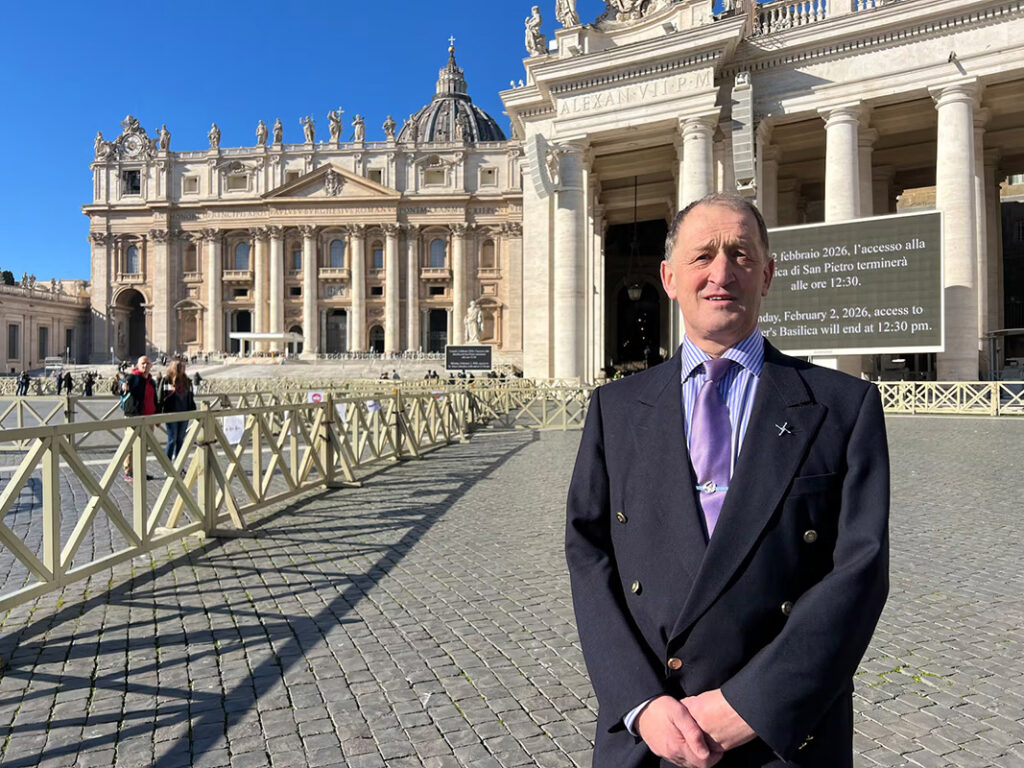
However, it was not until the darkest depths of his addiction that he eventually opened up to his faith fully, and it was in Medjugorje where it found him – where his wife brought him during a period of personal crisis.
“If she said Canada, Dingle, Gran Canaria—I would’ve mumbled ‘yeah’ to anything,” he laughs. “I was at my absolute lowest.”

Championship Semi-Final match between Limerick and Clare at Gaelic Grounds in
Limerick on June 16, 1996. Photo: David Maher/Sportsfile.
Change
But what happened there was transformative.
“I haven’t drank since, and my faith has grown stronger and stronger. By no means am I the finished article, but I try to live the Mass and be a decent human being.”
“I just went out there with an open mind, but something happened that I can’t explain. There were adorations every evening, and it was during those periods that I felt it. They say that if you get the smell of roses, then it’s from Our Lady, and I was getting it every night of the week.”
“I didn’t realise it at the time, but I was getting a recovery package for life, and I’m still getting it and still learning.”
Carey’s addiction didn’t come in one tidal wave but as a slow, creeping storm.
“Anybody who finds themselves in addiction—there’s a beginning, the middle and the end. No one becomes pear-shaped overnight. I was very disciplined at the start in my training. I felt that if I hurled well and produced the goods that day, I was well within my rights to cut loose – manipulating myself.”
There was obviously a greater plan for me which I wasn’t aware of at the time, but it’s manifesting itself now”
He describes the later years of his addiction as misery and slave drinking, stretching into binges that lasted up to two weeks. Coupled was a deep despair that few could have known from the outside looking in.
“I look back, and I often wonder, how did I survive it? But there was obviously a greater plan for me which I wasn’t aware of at the time, but it’s manifesting itself now.”
“I used to say the Serenity Prayer in my worst times, hoping I wouldn’t wake the following morning, and when I did, I was fiercely disappointed. I would’ve flickered with the thoughts of suicide, but the memories of my wife and two kids held me back.”
It wasn’t until he faced himself – his hurts, traumas, and whatever bits of his past that he was running from – that healing began.
What Carey experienced in Medjugorje was no mere epiphany but the beginning of a process of living faith daily. Today, he speaks openly about the constant battle between good and evil.
“Medjugorje was the start of me facing myself; that was me opening my book. There’s good and evil always; wherever God and Jesus are strong, the fella downstairs isn’t too far away, and you have to always be mindful of that. He isn’t finished with Ciarán yet, that’s for sure, but if your faith gets stronger and stronger, there’s a domino effect everywhere else in life.”
Carey has channelled his journey into his counselling work, which he began around 2010. Since then he has found his calling in helping others face their demons.
His clients come from all walks of life, each carrying their own hidden pain. He understands how hard it is – especially for men – to reach out, but at the heart of his message is a simple truth: even a small spark of faith can be the start of healing.
“No one comes in here with a bunch of daffodils,” he says. “Even in this day and age it takes an awful lot of bravery to turn around and seek help, but yet for males it’s next to impossible. They might think that it’s a sign of weakness.”
“I suppose in the counselling arena, not everyone is going to slide into the jaws of addiction, but no one will be able to sidestep the mental health issues that we all face. I think that if you are armed with a bit of faith, then you have a far better chance of navigating life’s challenges, and it’s a huge benefit to your mental health.”
Not everyone is going to slide into the jaws of addiction, but no one will be able to sidestep the mental health issues that we all face”