Historically, the time had once again been ripe for a religious man in the papal office. And the Jesuit Francis obviously wanted this to continue in the near future.
Jorge Mario Bergoglio has brought many superlatives to papal history from his native Argentina: he was the first Latin American, the first Argentinian, the first pope with the name Francis, the first Jesuit – and after 167 years, the first pope to belong to a religious order again.
From a historical perspective, the time had once again been ripe for a religious man. The previous pope was Gregory XVI, the only Camaldolese to succeed St Peter, who was elected in 1831 and died in 1846, after which there was probably the longest gap since Western monasticism came into existence.
Before Francis, no Jesuit had ever been pope – also the result of a traditional mistrust of the “Society of Jesus” by some governments, which was always accused of pursuing its own political interests on a massive scale. Until 1904, some governments even enjoyed the right to veto papal candidates.
“Global player”
Catholic religious orders are “global players” – and therefore fit very well into the concept of the “universal church”, which was established by the Second Vatican Council (1962-1965) and which the popes have consistently promoted ever since. The election of the Argentinian Francis in 2013 took this into account.
It is true that most religious orders in our part of the world are facing an almost greater crisis of new blood than the ranks of the world’s priests. However, the situation is often different – better – in Latin America, Africa and Asia, especially in missionary communities.
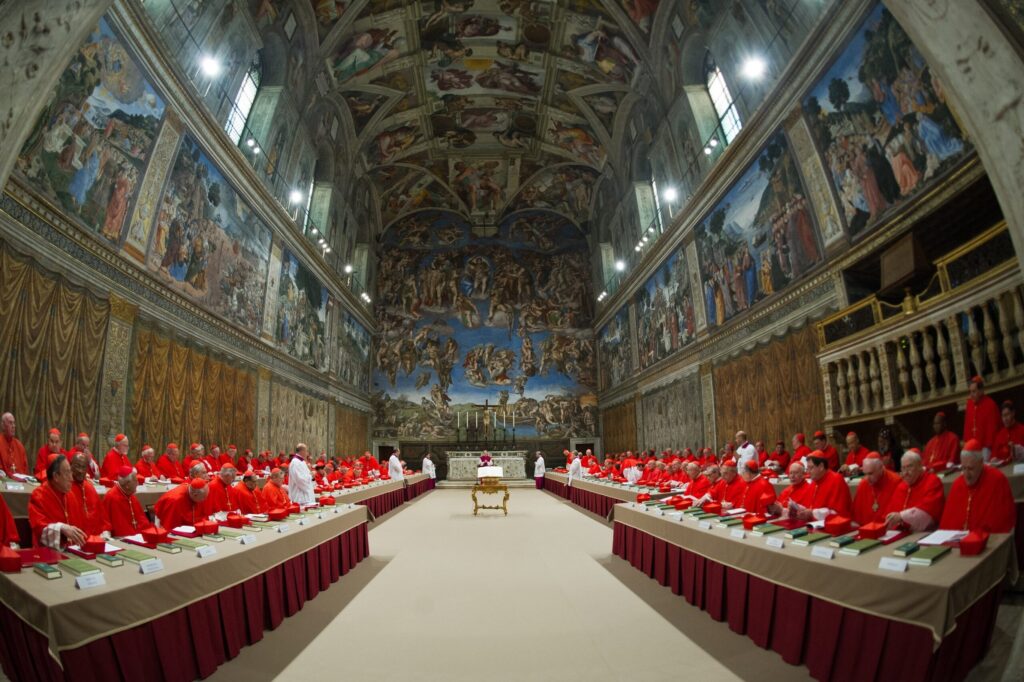
And during his twelve-year term of office, the Jesuit pope has thoroughly upgraded the number of religious in the College of Cardinals – because, as we all know, they will be electing his successor in May. Among the 135 or 133 voters – two have already cancelled – in the conclave are 34 men from religious orders, i.e. one in four.
A maximum of 30 “religious popes”
By way of comparison: when Francis was elected in March 2013, 17 of the 115 participants were religious, i.e. one in seven. And even this quota of 14.8 per cent of “religious cardinals” was already higher than the proportion of “religious popes” in church history: of the 266 regular successors to Peter to date, a maximum of 30 came from religious communities.
Most of the popes came from the oldest, the Benedictine order, which had a virtual monopoly on religious orders until 1119 and has a total of 10 to 15 pontificates. Of course, the historical sources are not very precise. However, the Benedictine popes include such notable figures as Gregory the Great (590-604; membership of the order not confirmed), Gregory VII (1073-1085) and Urban II (1088-1099). A German pope also originally followed the “Ora et labora” of St Benedict: Stephen IX (1057/58).
Lazarists and Scalabrinians
The greatest period of the popes of religious orders is also the greatest heyday of religious orders per se: in the eleventh and twelfth centuries, a total of 13 popes came from male religious orders. However, it is striking that hardly any of the orders that set the tone at that time are still represented in the College of Cardinals today: no Benedictines, no Augustinian canons (five popes after all), only one Cistercian – but several less “prominent” ones such as the Lazarists, the Scalabrinians or the Missionaries of the Sacred Heart.
The frontrunners – both before and after Francis – are the Salesians of Don Bosco with five papal electors. They are followed by the Jesuits, who currently have four electors, and the Franciscans, who have provided three popes in the history of the Church. If you add the one Capuchin and the three Franciscan Minorites, then the Franciscan religious family is represented in the upcoming conclave with a total of eight members. That seems worthy of a (Jesuit) Pope Francis.