Diocese of Bolzano-Bressanone demonstrates ‘courage to look, courage to act’
Sabine Kleyboldt (KNA)
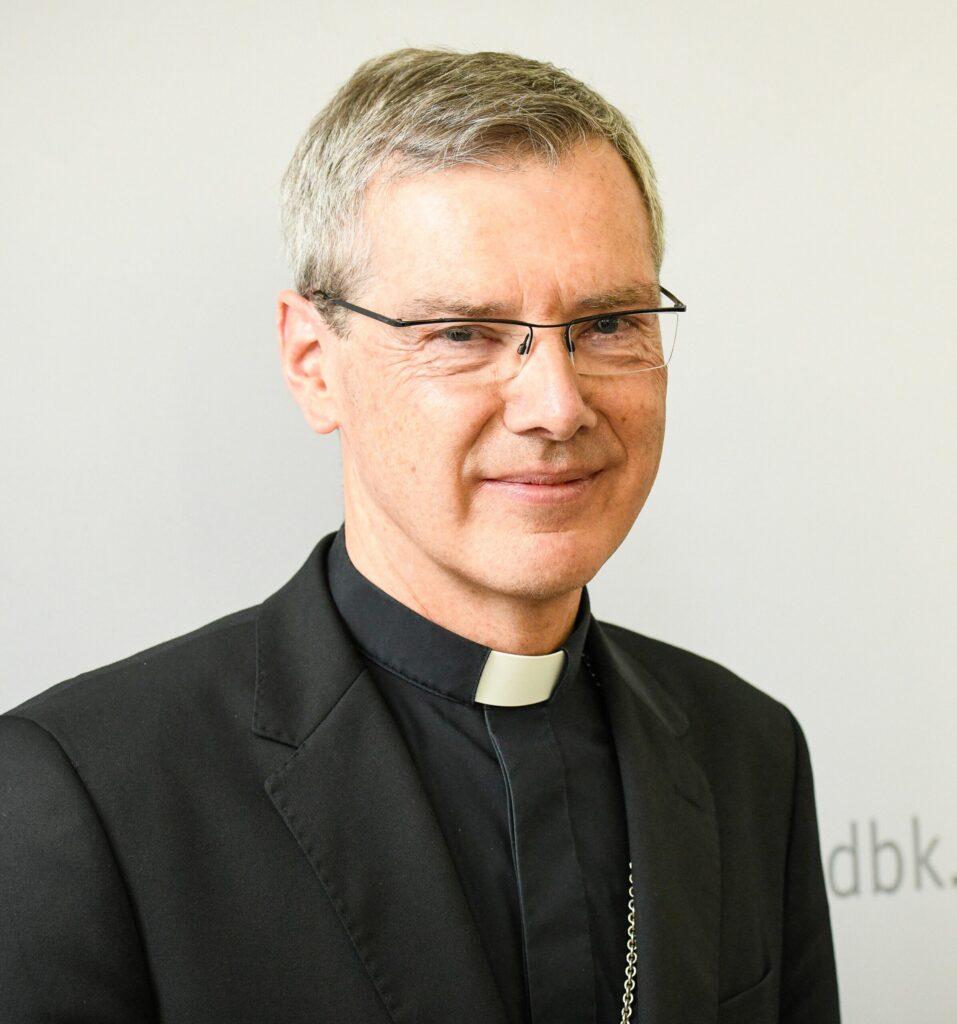
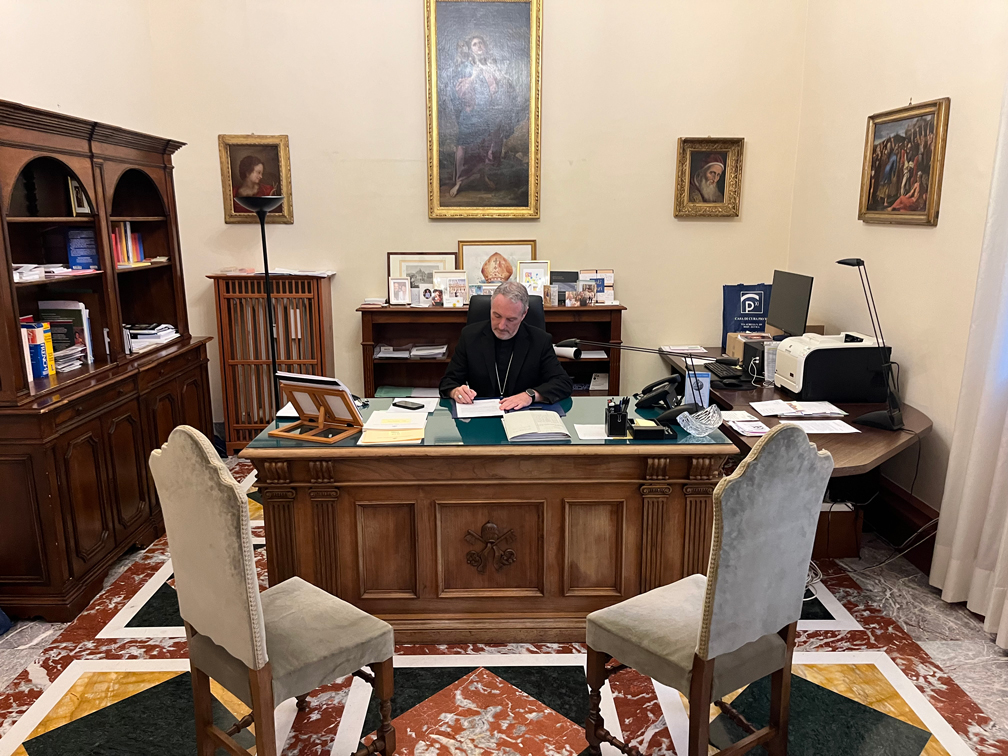
It was the first time that he had quoted a Pope when presenting a study on abuse, said lawyer Ulrich Wastl on Monday: Francis had said on sexualised violence that “every single case is one too many” for the Church. Words that were later repeated by Ivo Muser (62), Bishop of Bolzano-Bressanone since 2011.
Under his leadership, the diocese had commissioned the independent report from the Munich law firm Westpfahl-Spilker-Wastl – it was the first of the more than 200 dioceses in Italy to take “the painful path of clarification”, praised Wastl at the presentation. The law firm had already carried out investigations on behalf of the Archdiocese of Munich-Freising and other German dioceses.
Around 1,000 files were examined for the more than 600-page report “Sexual abuse of minors and adult charges by clerics in the Diocese of Bolzano-Bressanone from 1964 to 2023”. The research identified 67 cases of abuse and 59 victims between the ages of 8 and 14. Of the 41 accused priests, who were between 28 and 35, the allegations were proven with a high degree of probability or certainty in the case of 29; in the case of 12 clerics, they could not be sufficiently assessed.
Dark field study worthwhile
However, these figures only reflect the bright field, said lawyer Nata Gladstein. “We believe that the dark field is much larger.” There have not yet been any corresponding studies, but they would certainly be worthwhile.
According to the study, the number of cases has fallen sharply since the 1990s; however, many of the offences were already known to the diocese management before 2010. There had been massive mistakes by decision-makers at various levels, partly out of ignorance, refusal or even with the best of intentions, said Wastl. In 24 cases of abuse, those responsible in the diocese had acted incorrectly or at least inappropriately, in some cases for years.
The most surprising result for the reporters was that more than 51% of those affected were female, while only 18% could be clearly identified as male”
The team was left speechless by the case of a priest who had “groped” and abused little girls since the 1960s, but had been transferred from one parish to the next for decades. It was only after around 50 years that someone “had the courage” to remove him from pastoral care, according to the expert.
The most surprising result for the reporters was that more than 51% of those affected were female, while only 18% could be clearly identified as male. This is of particular interest from a German perspective, where the number of males far outweighed the females, as well as from a South Tyrolean and Italian perspective, Wastl continued. A separate scientific study would also be worthwhile here.
Systemic causes
According to the legal experts, the results of the “Courage to look” project hardly differed from findings from German dioceses in terms of the systemic causes. Wastl cited immature sexuality, the isolation of priests and the fatal concept of the “presumption of innocence”. This is carried around “like a monstrance” by those who do not want to come to terms with the past. During ongoing proceedings, a priest should not be removed from pastoral care. But what if there is never a conviction, for example if cases are time-barred?
Another problem is “lay clericalism”, where the parishes themselves want to protect their priests. Parishes should therefore be more involved in the prevention of abuse and “combat the evil (…) at grassroots level”. The rapporteurs also recommend setting up independent ombudsman offices and getting more women into positions of responsibility. With their study, which the Diocese of Bolzano-Bressanone has now completed at the third attempt, the “courage to look” could grow into the “courage to act”, said Wastl.
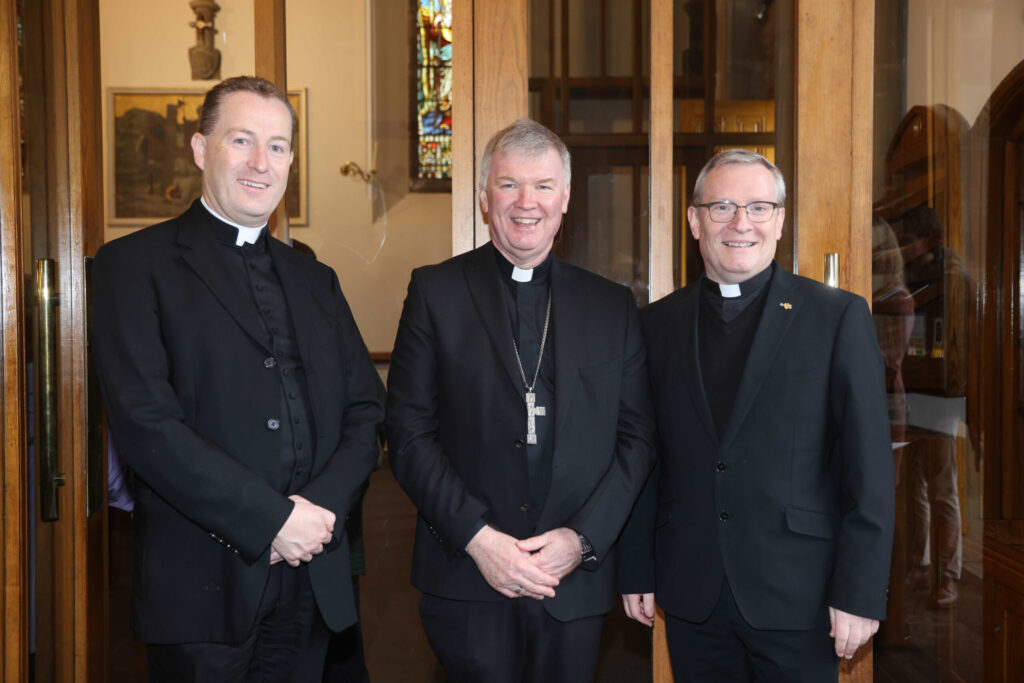
After the press conference, which lasted around 90 minutes, Bishop Muser and Vicar General Eugen Runggaldier accepted the two volumes bound in red in the South Tyrolean languages of German and Italian. Muser announced a statement for Friday. He expressly thanked those affected for their co-operation in the study. Their suffering is shameful for the church.
**
Church wants to prevent halving of religious education in Poland
Warsaw (KNA) In Poland, the dispute between the Catholic Church and the centre-left government over the subject of religion in state schools is escalating. Leszek Gesiak, spokesman for the Bishops’ Conference, told the TV channel Polsat News on Monday: “We will take further legal action depending on how the situation develops.” The bishops’ own lawyers are currently analysing the case, he added.
Despite considerable objections from the Church, Education Minister Barbara Nowacka had ordered on Friday that the amount of religious education lessons be halved to one hour per week from the coming school year. On Sunday, the Presidium of the Bishops’ Conference described the minister’s decree as an “unlawful act” because the required agreement with the Catholic Church and other affected religious communities had not been reached.
Church warns against confrontation
“We expect the Ministry of National Education to return to constitutional standards and refrain from confrontational measures against believers who are full citizens of the Republic of Poland,” explained the chairman of the Bishops’ Conference, Archbishop Tadeusz Wojda, and his deputy Archbishop Jozef Kupny on Sunday.
The reduction of religious education to one lesson per week and the new obligation to offer religion only in the first or last lesson of the day restrict the constitutionally guaranteed right of parents to educate their children in accordance with their own faith. The bishops also criticise an encroachment on the rights of pupils and religion teachers. Some of the latter now fear losing their jobs.
The Catholic Church had already appealed to Poland’s Supreme Court against another decree by Education Minister Nowacka in 2024 and was ruled in favour by the constitutional judges. This concerned the joint religious education of different year groups if fewer than seven pupils choose the subject in a class. The government did not recognise the Constitutional Court’s ruling.
Minister: Common sense
Nowacka justified her decision to cap religious education with “common sense”. Young people should not be taught more hours of religious education than biology, chemistry, physics and social studies put together, she said.
The subject of religion has only been back in Polish schools since 1990. It is voluntary. Parents can therefore withdraw their children from religious education. In 1961, the then communist rulers in Warsaw banned all religious education in all educational institutions.
***
Gaza pastor calls for reconstruction efforts
The ceasefire is causing a sigh of relief in Gaza. However, more efforts are needed for a lasting ceasefire and reconstruction, demands the Catholic priest of Gaza City.
Jerusalem (KNA) The ceasefire in the Gaza Strip is an important step, according to the Catholic priest of Gaza, Gabriel Romanelli. However, much more effort is needed to turn the temporary ceasefire into a permanent truce and to rebuild the completely destroyed Gaza Strip, said the Argentinian religious from the “Verbo encarnado” (Incarnate Word) community at a virtual meeting with an international group of bishops in Jerusalem.
The cessation of hostilities had led to a sigh of relief in Gaza. At the same time, freedom of movement is still restricted. Romanelli expressed hope that the ceasefire agreement reached between Hamas and Israel would be honoured. However, this does not equate to peace. He criticised the fact that the issue of reconstruction is not part of the first phase of the agreement.
Romanelli described the situation in the Gaza Strip as very bad. Most of the houses and infrastructure had been destroyed and the people were without shelter. In addition, the hospitals that still exist are completely overloaded, there is no electricity supply, fuel prices have risen dramatically, the water supply is inadequate and there are no jobs. Uncertainty is a major challenge for the people. Nobody knows whether the war will continue or not.
According to Romanelli, the Church continues to provide massive humanitarian aid. Last month, for example, around 60,000 people in the old town of Gaza City and other neighbourhoods were provided with food.
According to the religious, the Catholic parish in Gaza City is still home to almost 500 people, including almost 60 Muslims. Overall, the war has also hit the Christian minority in the Gaza Strip hard. From a total of 1,017 Christians before the war began in October 2023, the number has fallen to less than 700. According to the report, 20 Christians were killed by the Israeli army and a further 27 died as a result of a lack of medical care, among other things. Between 250 and 270 Christians had left the Gaza Strip for various countries such as the USA, Australia and Russia. Christian institutions such as schools were also affected by war damage.
Twelve Catholic bishops from nine countries are taking part in the solidarity meeting, which runs until Wednesday. The programme includes meetings with Church and diplomatic representatives as well as visits to parishes and Christian institutions. The bishops’ meeting has taken place every January since 1998 on behalf of the Holy See and at the invitation of the Catholic bishops of the Holy Land.