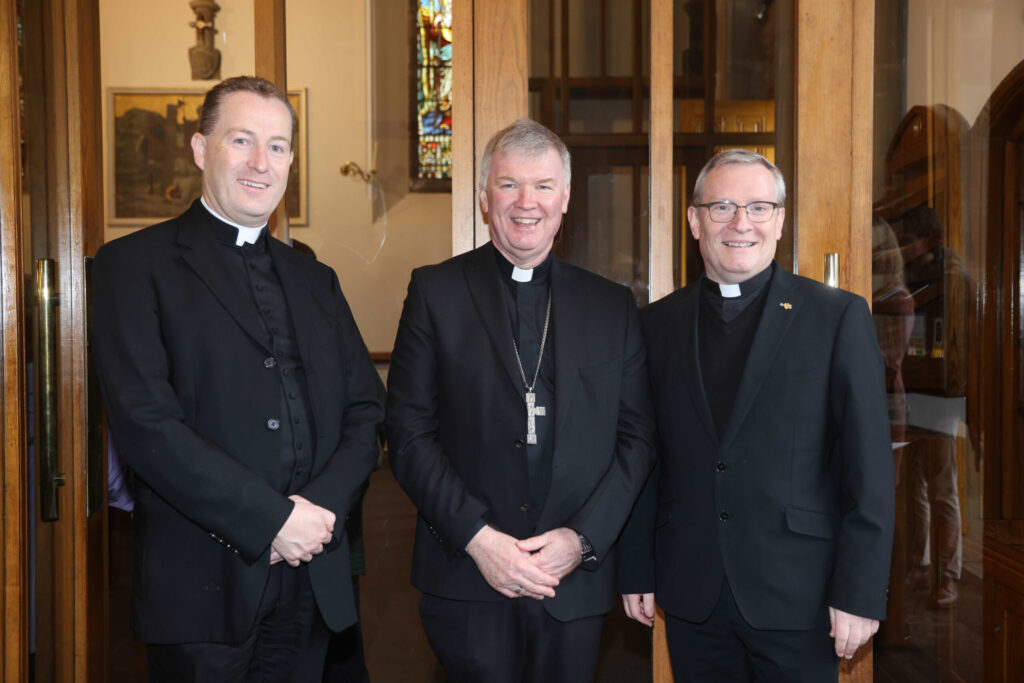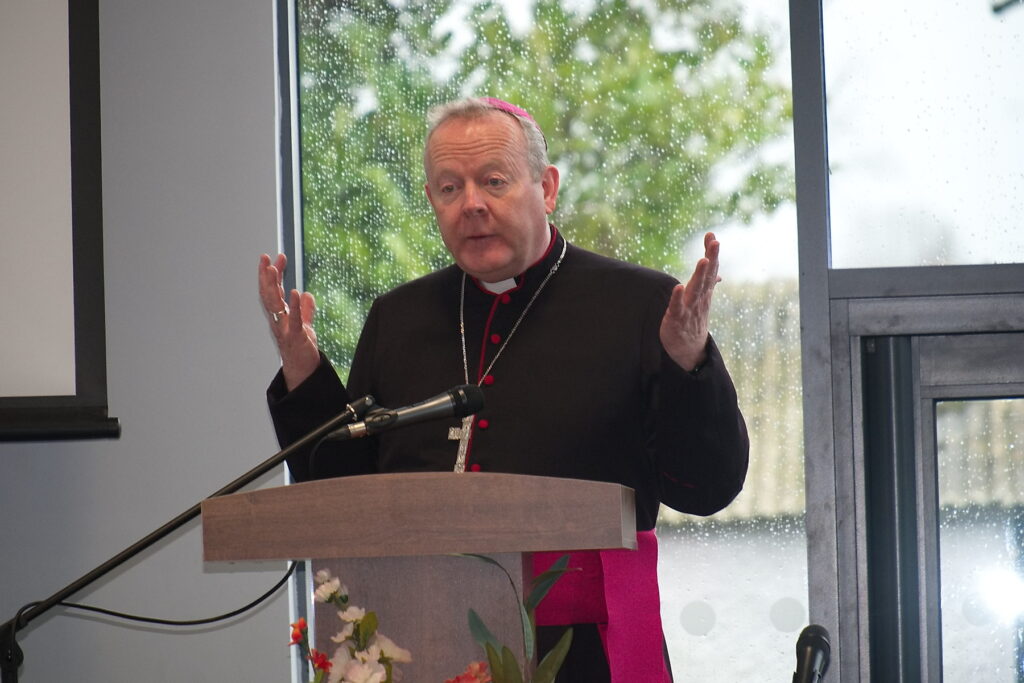
The Archbishop of Armagh, Eamon Martin, has said that “the days of the Catholic Church seeking to kind of dominate debate they’re over,” while insisting that churches and faith groups still have an important role to play in public life and in supporting the State on major policy issues.
Speaking with this paper, Archbishop Martin said the re-establishment of structured dialogue between Church and State is important, but only if it is meaningful. The State met with the Churches and faith groups in September last for the first time in years despite a legal obligation to do so under European law.
Archbishop Martin suggested that greater engagement with churches and other groups might have helped the State avoid mistakes.
“Take for example that referendum that took place about family and women,” he said. “I imagine that a good discussion with the Churches and non-confessional groups or other faith groups would have probably helped in that regard.” He said while a Citizens’ Assembly had taken place, “I think they the State went off in a different direction than the citizens assembly recommendations”.
He argued that churches and faith groups could assist the State on major policy challenges. “We have no doubt that this could be mutually beneficial; be good for the Churches and the Faith groups to be involved and we also think it would be good for Governments,” he said, pointing to issues such as “AI, climate… displacement of people/migrants”. He added: “I don’t think the state should always feel that the Church is always a body they have to be worried about….There are times when it’s helpful to have the Churches opening up discussions with you and for you.”
He said churches had played a constructive role in Northern Ireland during periods when the Assembly was suspended. “We’ve seen that north of the border when the Assembly has been down a number of times where the Church leadership has been able to facilitate the bringing together of different parties who don’t meet, who don’t talk,” he said.
Archbishop Martin said there was broad agreement that the current model was not working. “I think the consensus at the [September] meeting was we need to take a fresh look at the nature of Church-State dialogue and how we can have something that’s meaningful for the State and for the Church,” he said.
He said the Taoiseach appeared open to that approach and had commissioned the Centre for Religion, Human Values and International Relations in DCU to examine possible structures for dialogue. “It hasn’t been satisfactory to date, there’s no question and I think everybody agrees that,” he said.
Addressing perceptions of the Church’s role in public debate, Archbishop Martin said misunderstandings persist on all sides. “There are sometimes people in the Churches that have a perception that everybody’s against them and sometimes the State is worried about meeting the Church in case they get you know a kind of a lesson taught to them or they’re being preached at,” he said.
He said others remain hostile to any Church involvement. “There are still people out there who don’t want the Church anywhere near these discussions and they’re avowedly clear about that,” he said, describing some as “avowed secularists and maybe in some cases aggressively so”. At the same time, he said some Catholics still believe the Church should dictate to the State. “I will get a lot of letters from people from time to time saying ‘why are you not telling the government that that cannot happen’,” he said. “They’re working out of a sense that somehow the Churches have the right to dictate to the State.”
He cited Pope Benedict XVI’s address in Westminster Hall as a key statement on the relationship between faith and politics. “He gave a fantastic address which in my view encapsulates the idea that faith has no desire to usurp the authority of the State,” Archbishop Martin said. “In fact we’re on the same side, that faith and reason should interact and should inform each other.” Without meaningful engagement, he warned, society risks polarisation. “Otherwise people will tend to extremes and we see that in Ireland and indeed in other countries around Europe,” he said.
While acknowledging past tensions, Archbishop Martin concluded that churches remain committed to contributing to the common good. “When the churches and I presume other faiths and non-confessional groups meet the common good is what you’re talking about,” he said. “I think the days of the Catholic Church seeking to kind of dominate debate they’re over but at the same time we have an important contribution to make still.”