A human life is beautiful and complex. It is often like a jigsaw puzzle, where each new insight acts as a fresh piece, reshaping how the whole is seen. Yet there is a tendency to reduce people to one thing or another, to place them neatly in a box. What is often forgotten is that what lies inside is alive, changing, and never static.
Certain systems, of course, depend on this kind of reduction. Legislation, policy, and statistics must quantify the human person, sometimes reducing a life to a single digit or a line in a document. A line that may affect many lives without ever fully accounting for the complexity of the people behind it.
Scripture, however, unfolds differently. As St Gregory the Great observed, it grows with the one who reads it. It is living and dynamic, revealing new depth as the reader matures.
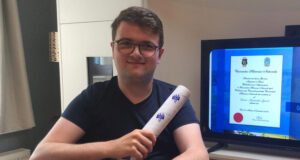
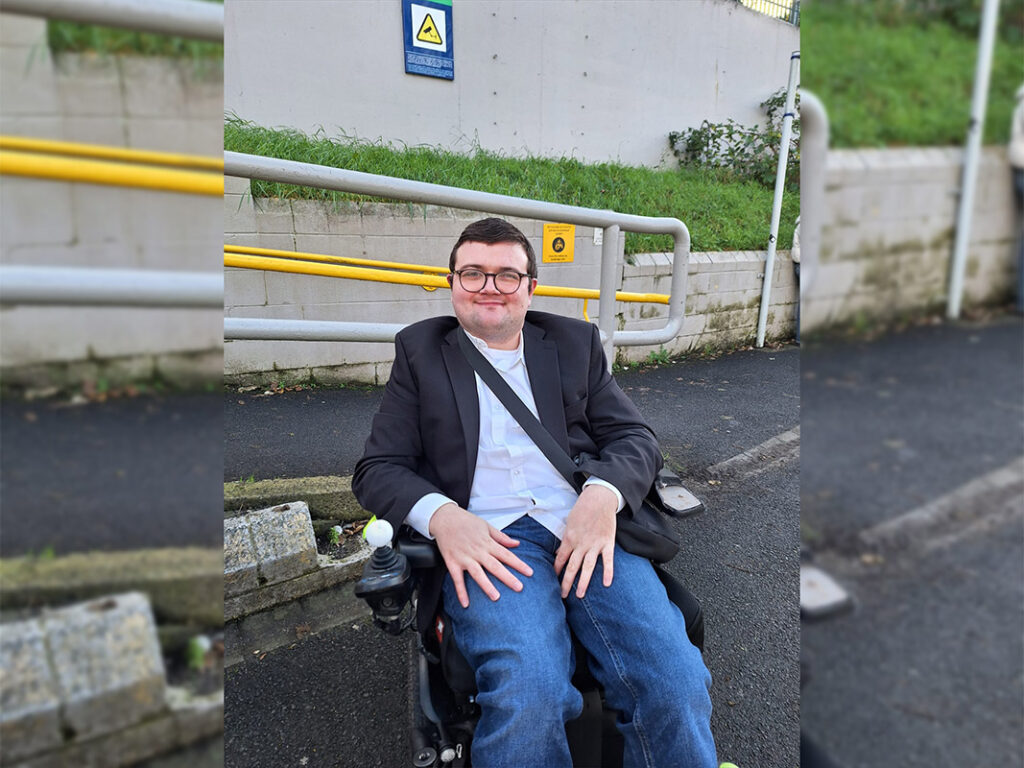
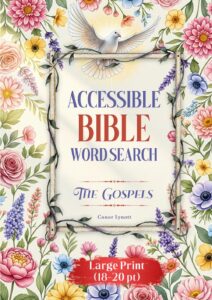
These two ideas, the reduction of the person and the living complexity of meaning, were present as I spoke with Conor Lynott, who lives with cerebral palsy and has advocated for disability issues for many years, about his new venture – a Gospel-based word-search puzzle book. Along the way, our conversation touched on many aspects of his life.
Searching the scriptures
While the Gospel word search may appear at first to be a simple devotional pastime, behind it lies a deeper story of faith.
For Mr Lynott, faith needed both intellectual grounding and practical expression, which brought him to the question of how he might share Scripture in a way that was both accessible and engaging, an idea which would eventually turn into this puzzle book.
“What I did was sit down and ask myself: what am I genuinely interested in? Because if I wrote something I wasn’t invested in, it would come across as inauthentic,” he said.
The result was a collection of word-search puzzles based on scenes and themes from the Gospels of Matthew, Mark, Luke and John featuring moments such as the Beatitudes, the Lord’s Prayer and the Crucifixion.
“The hope is that people engage with the puzzle and, through that, are led into a deeper encounter with Scripture and with God. What I wouldn’t like is for people to do the word searches and then forget about engaging with the Gospels themselves. If you’re using the book, have a Bible beside you,” he said.
A return to faith
Mr Lynott was raised Catholic but drifted away in his early teens, eventually identifying as an atheist. However, during a period of living in London in 2017 / 2018 something began to draw him back. At the time, he admits, he didn’t know what was happening.
“I’d be lying if I said I knew where it was coming from at the time. It was just a gut feeling,” he says now. “Looking back, I think it was some kind of prompting. A presence of God that I didn’t yet recognise.”
He began attending Mass again, though initially only as an observer. Internally, however, he felt divided. “I had this emotional desire for faith,” he recalls, “but I couldn’t make the intellectual side fit.”
But a priest he encountered at the time helped him bridge the gap, reminding him that Christianity doesn’t ask for blind belief. “He said to me, ‘You need a rational basis for belief. Christianity, especially Catholicism, doesn’t ask you to believe blindly. It invites you to examine the reasons.’”
Looking back, Mr Lynott now sees that period as a major turning point.
Mr Lynott returned to Ireland to study philosophy at UCD, where he began to explore these questions of belief, of reason, and meaning. Having at one point been an atheist, he found himself drawn to YouTube debates between believers and sceptics, wanting to see how the faith could be defended intellectually.
Apologetics then became an important part of sustaining his faith and understanding. “Apologetics reminds you that it’s not blind faith,” he says. “There are philosophical and rational foundations for what you believe. It’s not superstition or fairy tale.”
Developing that intellectual grounding, he says, helps believers both sustain their own faith and engage honestly with those who question it.
A person first
For Lynott, these questions of faith and meaning cannot be separated from his experience of disability.
Living with cerebral palsy, he says his return to faith was also bound up with trying to understand his own life and condition.
“Life without God, a complete rejection of Him, is incredibly lonely,” he says. Trying to make sense of disability while rejecting any sense of God or meaning left him feeling unequipped to deal with the deeper questions he faced. “I realised I wasn’t equipped to answer those questions on my own. I needed something to point me in the right direction.”
That personal experience now informs how he views wider debates about disability policy and care.
Asked how society understands disability without a reference point like the sacredness of human life, Mr Lynott says the starting point should be simple: recognising people with disabilities as people first.
“Framing disability services around that idea means policymakers need to build policy on the understanding that people with disabilities are human first and service recipients second,” he says.
Mr Lynott also worries that policy discussions sometimes reinforce the opposite message”
“There is a tendency to see people with disabilities as passive service recipients rather than active agents,” he says. “Seeing them as people first means giving them an active say in how they run their lives and in decisions that affect them.”
Mr Lynott also worries that policy discussions sometimes reinforce the opposite message. Governments, he argues, often defend their approach by pointing to funding levels alone.
“The government often defends policy by saying they’ve invested a record amount of money into disability services. That shows a service-first mentality,” he says.
What he would prefer to see, instead, is recognition of the person beyond the service.
“I’d prefer to see a shift toward recognising people as individuals with talents and abilities who can contribute to society,” he says. Policies that frame disability primarily around care, he argues “reinforce the idea of people with disabilities as passive participants rather than drivers of their own lives.”
For Mr Lynott, the question ultimately returns to the Gospel vision itself: a society in which everyone has a place at the table.