For years I’ve kept a little ‘prayer list’ close by me, sometimes just a slip of scrap paper with names jotted down haphazardly. There’s also a little book I keep, for ‘long term’ issues — a friend whose wife is enduring cancer treatment, a neurodivergent young man who has defied every dire prognosis. I’m sure family and therapy helped, but I believe faithful prayer has also contributed to his successes.
Often, I’ll add a word beside a name to recall the need. Lately ‘cancer’ shows up a lot. ‘Job search’ too, as friends in media become displaced thanks to AI’s ability to deliver basic information. Employers seem unable to resist the ‘found money’ from replacing human writers, people with real needs: food, shelter, health insurance.
Without that God-spark, what’s left is non-thinking: empty, sterile, dull”
But eliminating human beings means losing human brains with all their memory, passion, quirks and prejudices, the things that add nuance to a headline or change a conversation.
Only the human brain, coupled to human spirit and emotion, and aided by the God-spark that resides in all of us, can take information and send it careening into something altogether new and enlightening. Without that God-spark, what’s left is non-thinking: empty, sterile, dull.
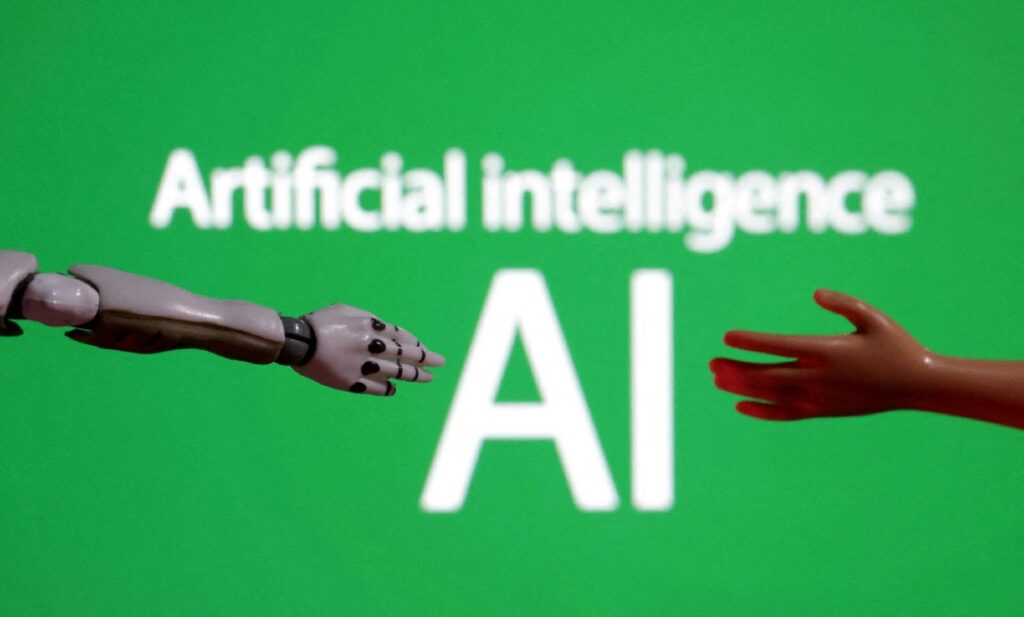
AI
Two years ago, my friends teased me for distrusting AI. I sounded, they joked, like Kathy Bates in Waterboy, crowing “AI is the devil!” But recently, one level-headed friend admitted she too was concerned. She wondered whether AI might be a sort of antichrist, or a forerunner, contributing to the kind of chaos that could usher one in.
That might sound extreme, but I didn’t shrug it off. While some advances in AI can benefit civilisation, it’s already begun to distort our understanding of human relationships — particularly love, especially when it is unconditional and not rooted in self-image.
AI cannot pray. It can compose, but it lacks the broken human element, and the God-spark”
Distortion at that level — personal and subtle — is what can break us. We are made in the image of the triune God, who is Love, and our brains are a kind of wholeism: body, mind, and spirit, rooted in that love. If we let our understanding of authentic love be warped, we participate in the shattering of our own foundations.
“Foundations once destroyed,” the psalmist asked, “what can the just do?” (Ps 11:3). Nothing will be left standing.
AI cannot pray. It can compose, but it lacks the broken human element, and the God-spark, which connects the words to the Word, in whom all things hang together.
So, this week I’ve added something new to the long-term prayer book: AI itself.
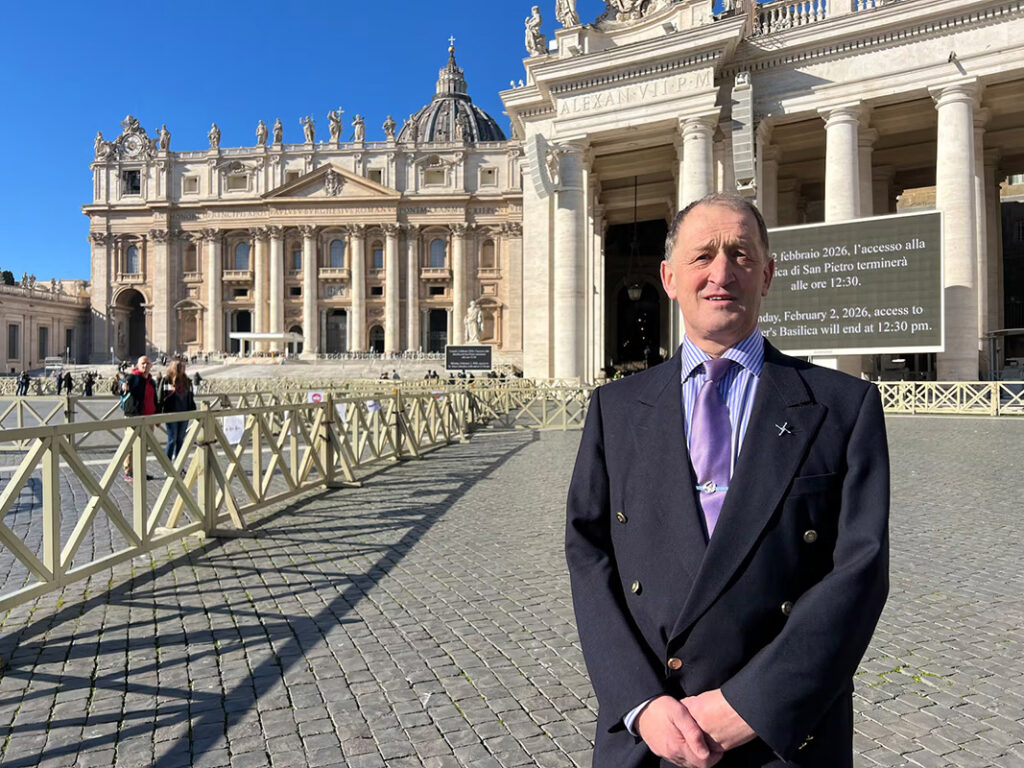
And I do hope Pope Leo gives us an encyclical on Artificial Intelligence. Soon.
Yes. Let us pray