KNA
Archbishop Scicluna of Malta has warned against using the methods of the World Synod’s spiritual dialogue – an alternation of speaking and meditation without direct discussion – everywhere in the Church: “If, for example, I have to deal with financial experts for the audit of the Archdiocese of Malta, I don’t need to have a spiritual dialogue with them.” Rather, it is about the clear word.
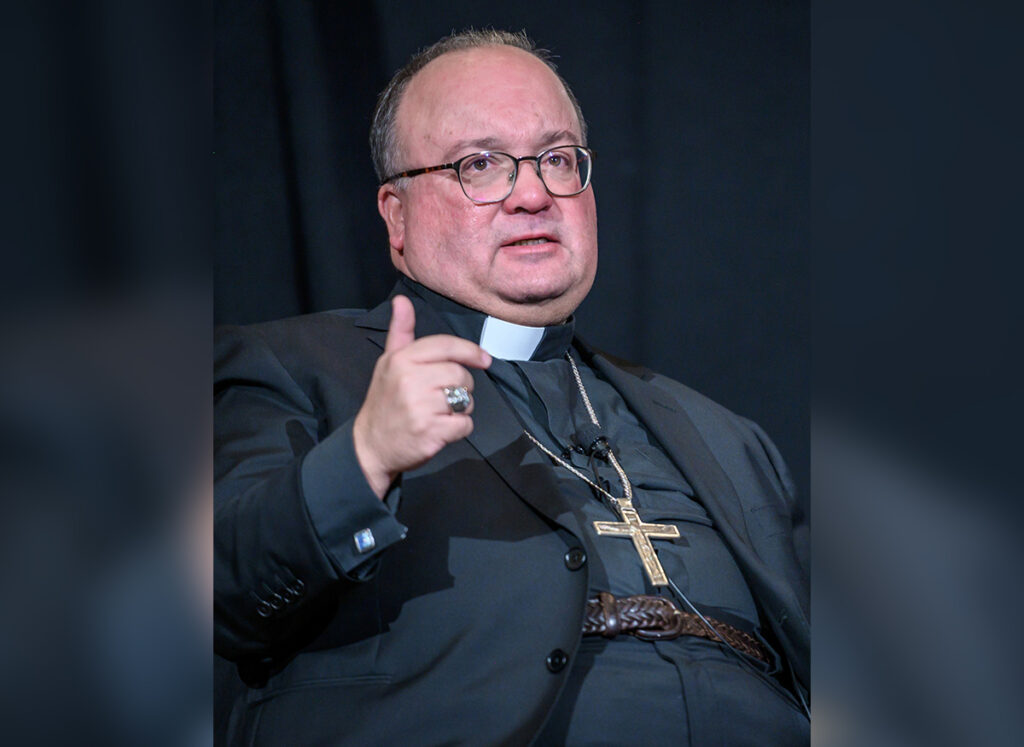
The 65-year-old archbishop and legal expert Charles Scicluna is Chairman of the Bishops’ Conference in Malta and Assistant Secretary in the Vatican Office for the Doctrine of the Faith. There he is responsible for dealing with cases of abuse.
What are the consequences of the World Synod for the Church? If the Pope’s confidant Archbishop Scicluna has his way, there will soon be checklists for the work of bishops and a new style of leadership in the Vatican.
The Archbishop of Malta and papal confidant Charles Scicluna has called for a new style of leadership in the Roman Curia. “We must create a culture of transparency and accountability at all levels,” Archbishop Scicluna told the Jesuit newspaper “America”.
After the World Synod, the Curia could no longer say: “The law is laid down here and it has to be followed out there,” said Archbishop Scicluna. He hopes for a new, more inclusive attitude. Laws should not only be laid down in the Vatican but also followed and modified in dialogue with the universal church. For example, the publication of a Vatican document must in future be preceded by a transparent process of consultation. Any other approach would be contrary to the ethos of synodality, said the Archbishop.
Scicluna also praised the final document of the World Synod. He particularly liked the call for binding accountability and control mechanisms in the church. “I liked the concept of checklists.” Ideals and guidelines are pointless if there is no system in place that allows them to be scrutinised. According to Scicluna, the work and leadership style of bishops should also be evaluated in a binding manner – as part of the regular ad limina visits – using checklists.
One of the challenges, of course, will be the conversion of the Roman Curia to this style of leadership because we bishops also need to be able to engage with the Roman Curia—especially the dicasteries—in this spirit. We need to instil a culture of transparency and accountability across all levels.
In some areas, this has improved, but there is still work to do. The Roman Curia can no longer say, “The law is set here, and it is to be obeyed out there.” Some interpret the posture of the hands of the statutes of St. Peter and St. Paul in front of the Vatican Basilica as saying just that. My hope is for a new more inclusive interpretation: “The law is set and obeyed here, and it also obeyed out there, having been set after hearing what the local churches out there have to say.”
Publishing a document that has not been through a transparent process of consultation and accountability goes against the very ethos of synodality, and one hopes that will no longer happen.
The document also gives due importance to spiritual conversation. This is a good thing, but we have to admit that spiritual conversation is not a panacea. For example, when I’m dealing with financial experts on the audit for the Archdiocese of Malta, I don’t need to have a spiritual conversation with them.
I need to know exactly where we stand. This also applies to safeguarding issues. Spiritual conversation is important when it comes to discerning policy, but it’s not the only way to engage in a synodal manner.
One of my favourite lines in the document is that “Synodality is not an end in itself”. I was surprised to see that in the final text but also very glad. If I may quote from No 32, it states: “Synodality is not an end in itself. Rather, it serves the mission that Christ entrusted to the Church, in the spirit. To evangelise is the essential mission of the Church. It is the grace and vocation proper to Church, her deepest identity”.