Ellmann’s Joyce: The Biography of a Masterpiece and its Maker, by Zachery Leader
(Harvard University Press, £29.95 / €34.50)
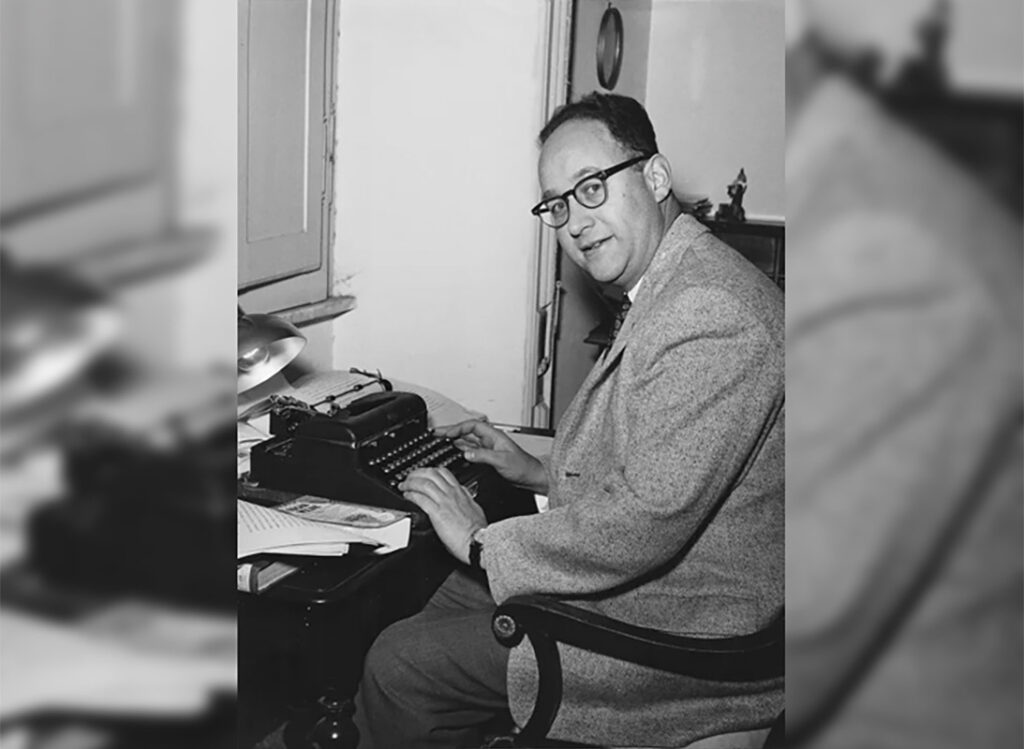
Richard Ellmann was the author of what is regarded as the definitive biography of James Joyce, published in 1959. In Ellmann’s Joyce, Zachary Leader explores not only how Ellmann went about composing that biography but also how Ellmann’s background and evolution as a scholar shaped his understanding of the genius that was Joyce. This is an unusual book, a study of a writer who was himself primarily the biographer of writers – a rare confluence. Ellmann also wrote biographical studies of Yeats and Wilde, but Leader’s focus here is on the Joyce biography
Leader’s book is in two parts. The first, amounting to almost 200 pages, is an exhaustive – and perhaps over-detailed – account of Ellmann’s life up to 1952 when he began his work on Joyce. The second comprises just 120 pages and covers the period from then up to the publication of the Joyce biography and the critical reception it attracted. It will be of enduring interest to Joyceans everywhere. It is followed by a coda of ten pages which outlines Ellmann’s life from c.1960 to his death in 1987. Ellmann’s great achievement in those years was his biography of Oscar Wilde, completed shortly before he died – but consideration of that is beyond the remit of this book.
Leader justifies his emphasis on Ellmann’s early life by drawing a parallel between his own approach and that of Ellmann’s in his Joyce biography. Just as, in Ellmann’s words, Joyce chose “to entangle himself and his works” in the experiences of his youth in Dublin, so Leader argues that the influence of Ellmann’s family on his life and writings is important. It was, to quote Leader, “a source of his own sympathy and humanity – perhaps, also, of his depictions of Joyce as family man and of Joyce’s Bloom as family man”.
Story
Ellmann was born in 1918 to comfortably middle-class, immigrant Jewish parents in a suburb of Detroit, Michigan – and graduated from Yale with a BA in English in 1939 and an MA in 1941. After service in US Navy Intelligence during the Second World War, he completed a doctorate at Yale on W.B. Yeats – and published two important studies of Yeats: Yeats: the Man and the Masks (1948) and The Identity of Yeats (1954). His work on Yeats was facilitated by Yeats’ widow, George. It seems that Ellmann was inspired to turn his attention to Joyce when he confirmed with Mrs Yeats that Joyce had indeed said to Yeats at their first meeting: “You are too old for me to help you.” According to Leader, the arrogance of the remark delighted Ellmann.
Ellmann gave us a good story, and Leader has done likewise with this book”
Ellmann’s research for and writing of Joyce’s biography is a fascinating tale of careful cultivation of sources and outwitting potential rivals in the field, and is told by Leader with the benefit of his own experience as a biographer; he has previously published biographies of Kingsley Amis and Saul Bellow. He praises the sheer readability of the Joyce biography, noting that one of the reasons for its success is that Ellmann “aims to attract general readers” as well as the specialists. Moreover, he suggests that a great strength of the biography is that it eschews tendentious literary theories so prevalent in much literary criticism.
Leader acknowledges that the so-called New Criticism, which was coming into fashion when Ellmann was working on the Joyce biography, emphasises “close reading over historical or biographical analysis”. Ellmann’s approach was thus out-of-date according to the tenets of the New Criticism – but Ellmann’s work has survived the test of time. Leader remarks that “what … academic Joyceans distrust about biographies is what most readers want from them: a narrative or story”. In contrast, much of the New Criticism is unintelligible except to its devotees. Ellmann gave us a good story, and Leader has done likewise with this book.
To conclude, a slight curiosity: Leader quotes from a somewhat critical review of the Joyce biography in the Irish Times of November 6, 1959, by one Andrew Cass. He fails, however, to identify Andrew Cass as the nom-de-plume of John Garvin, a well-respected Joycean scholar and secretary of the Department of Local Government from 1948 to 1966. In his entry on Garvin in the Dictionary of Irish Biography, Brendan O’Donoghue explains that the “pen-name ‘Andrew Cass’ [was] derived in typical Joycean fashion from an inversion of
Cassandra”.