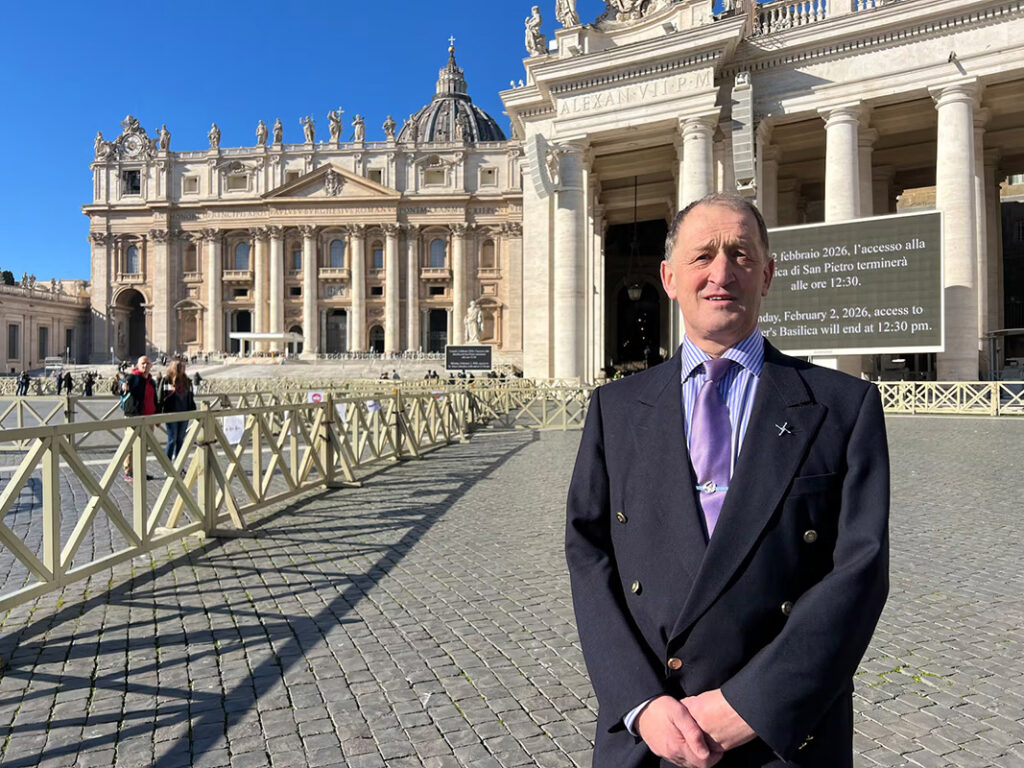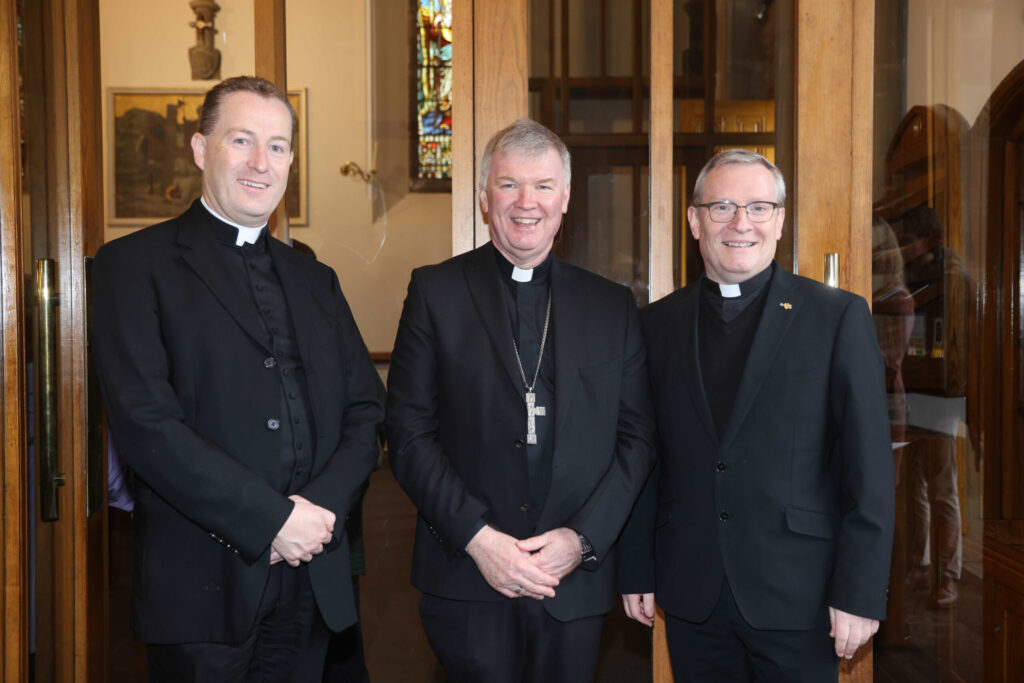
I remember exactly where I was on August 15, 2004. Sitting in my grandparents’ house, all I wanted was to watch Match of the Day. Chelsea had played, and I was eager to see the highlights. But there was no football that morning—RTÉ was broadcasting a Mass from Lourdes, celebrated by a very frail Pope John Paul II. At thirteen, I wasn’t impressed. My grandfather, however, watched with reverence. He would often bless himself at the sight of the Holy Father on the news. I didn’t fully understand it then, but something about that moment stayed with me.
Fast forward to April 2, 2005. Again, I was in my grandparents’ house. We had just finished watching Winning Streak, and then the RTÉ News came on. But there was no standard news bulletin. Instead, the screen was filled with images and clips of John Paul II—his life, his travels, his impact. He had died. My grandparents had fond memories of his visit to Ireland in 1979, speaking about how charismatic and youthful he was then. I, too, began to reflect on his legacy. I watched his funeral days later, presided over by Cardinal Joseph Ratzinger, and for the first time, I started paying attention to the deeper meaning of faith, tradition, and leadership in the Church.
Benedict XVI
On April 2005, Cardinal Ratzinger was elected Pope, taking the name Benedict XVI. He looked shy, reserved, intellectual. I wasn’t sure what to make of him; he was different.
My first real encounter with theology came through John Paul II’s book Memory and Identity. I was fascinated by the way he reflected on history, freedom, and the human person. When Benedict became pope, I picked up a book called Let God’s Light Shine Forth, a collection of his writings. It introduced me to his depth of thought—his reflections on faith, hope, love, eternal life, holiness and the Church.
That book sparked something in me. I discovered theology, a discipline that wove together faith, reason, and philosophy.
Benedict XVI grew on me. At World Youth Day in Cologne (2005), his homilies stood out—simple but profound. He wasn’t just an intellectual; he had a deep spirituality that resonated with me more and more, especially as I discerned my vocation to the priesthood.
By the time I attended World Youth Day in Sydney (2008), I was seriously considering seminary. Benedict’s reflections on the priesthood, his Christology, his ecclesiology, and his profound way of presenting the faith inspired me. His insights shaped my understanding of faith and reason, the role of the Church, and, ultimately, my own vocation.
In 2009, I entered the seminary. Benedict’s teachings became even more central to my formation. His reflections on liturgy, prayer, the nature of priesthood, and his beautiful series of books entitled Jesus of Nazareth deepened my love for theology. He was a teacher, a fatherly guide, a quiet but strong voice of wisdom.
Then, in 2013, he resigned. I was deeply saddened. I had come to love and respect him so much. His humility in stepping down, his quiet acceptance of suffering, and his trust in God’s will made a lasting impression on me.
The Pontificate of Pope Francis
On March 2013, a new face appeared on the balcony of St Peter’s – Jorge Mario Bergoglio, Pope Francis. Once again, I wasn’t sure what to make of him. He was different. He didn’t fit the mould of John Paul’s youthful dynamism or Benedict’s scholarly depth. But gradually, I was drawn in.
Pope Francis’ vision of the Church as a “poor Church for the poor” and as “a field hospital after battle” has profoundly shaped my faith, vocation, and ministry. His call to ‘go to the peripheries’ and to be ‘shepherds with the smell of the sheep’ challenges me to draw close to those on the margins. I am continually moved by his humble reminder: “Who am I to judge?” and consoled by his assurance that “God never tires of forgiving us”, “the name of God is mercy”, and “Jesus Christ is the face of the Father’s mercy”.
I was in Kraków for World Youth Day 2016, where the theme, ‘Blessed be the merciful, for they shall receive mercy’ echoed through every gathering. In choosing the name Francis, he aligned himself with the saint of humility and radical love.
By 2018, I found myself in Ethiopia, volunteering and working with young people in the northern part of the country. Francis’ encyclicals and exhortations—Christus Vivit, Gaudete et Exsultate, and especially Evangelii Gaudium—challenged me to see the face of Christ in the poor, to deepen my own pastoral approach, and to rediscover the joy of the Gospel.
His 2016 Year of Mercy, his teachings on confession, and his letter to priests in 2019 all have had a profound impact on my ministry. He spoke of the dangers of “spiritual schizophrenia”, rigidity, and spiritual amnesia—powerful words that challenged all of us as Christians and as ministers. In many ways, he felt like a wise Jesuit spiritual director, offering guidance, encouragement, and sometimes difficult but necessary challenges.
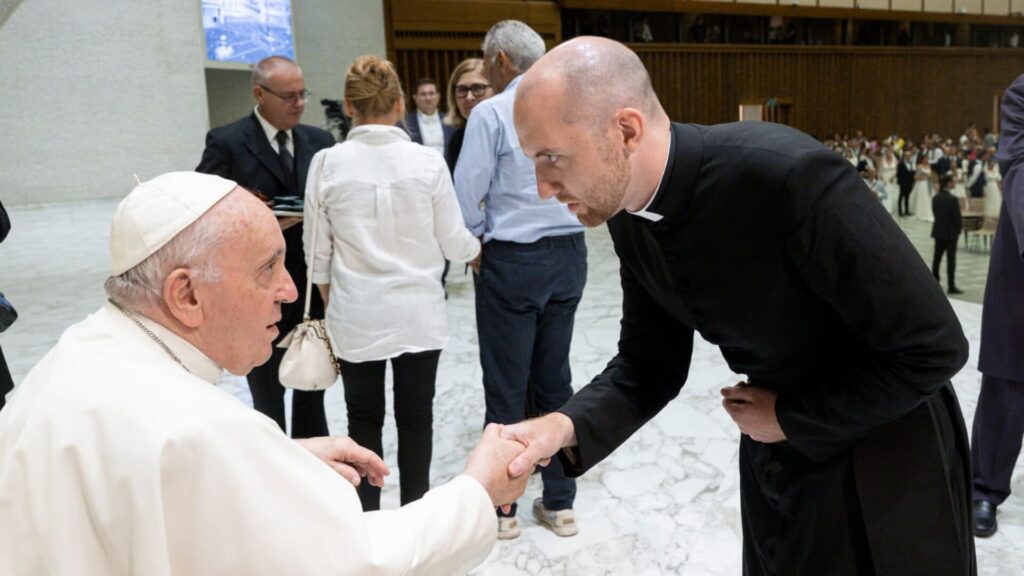
Today, as a priest, I regularly consult Francis’ Angelus messages and homilies when preparing my own. His pastoral heart, his focus on the lived Gospel, his deep sense of prayer and practical love for the vulnerable—all of it continues to shape my vision of priesthood and service. His encyclicals remind me that theology is not confined to books but must animate our love for creation, our relationships, and our world.
We awoke on Monday morning to the news that Pope Francis died peacefully at 7:35am. In this Jubilee Year of Hope, he himself became a pilgrim of hope—a servant who now, by God’s mercy, journeys home to the house of the Father.