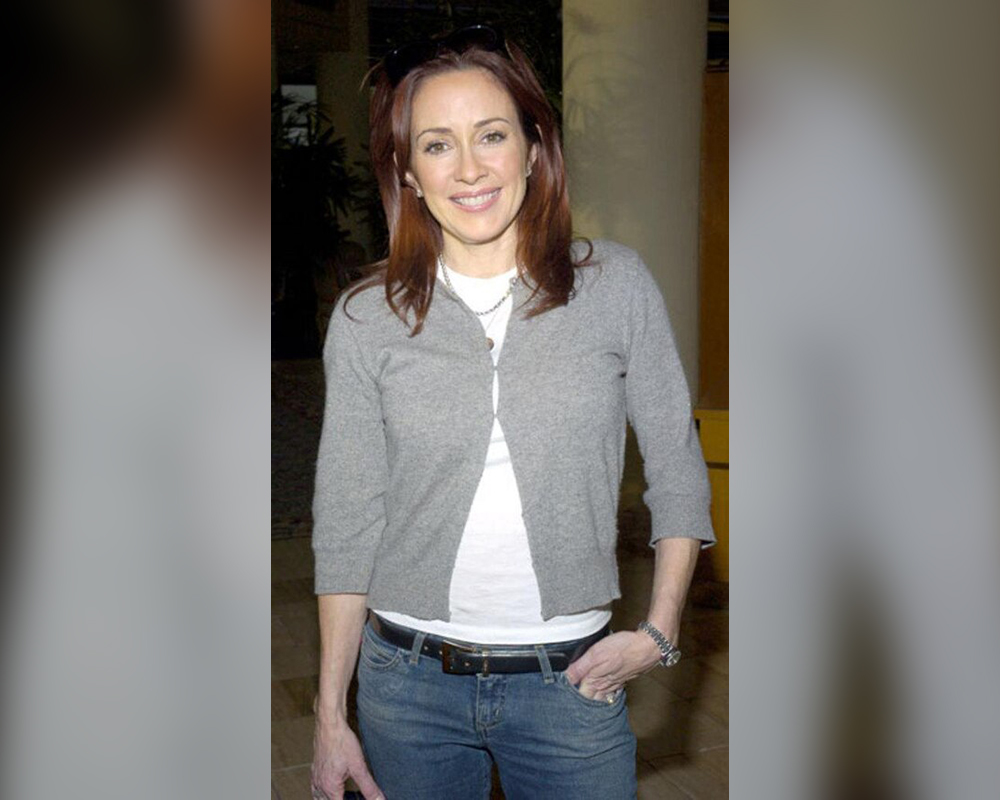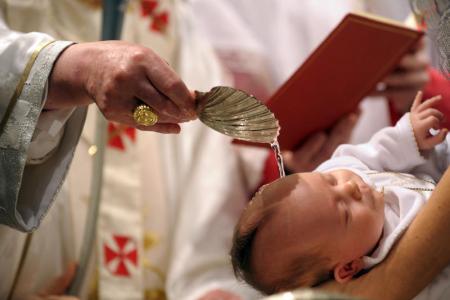
On January 11, 2026, Mary McAleese published in The Irish Times a strategically timed article (on the Sunday of the Feast of the Baptism of the Lord) accusing the Catholic Church of using the sacrament of baptism of little children as “long-standing, systemic and overlooked severe restriction on children’s rights with regard to religion”. It is not a new argument coming from McAleese and it is one of the fruits of her studies in canon law.
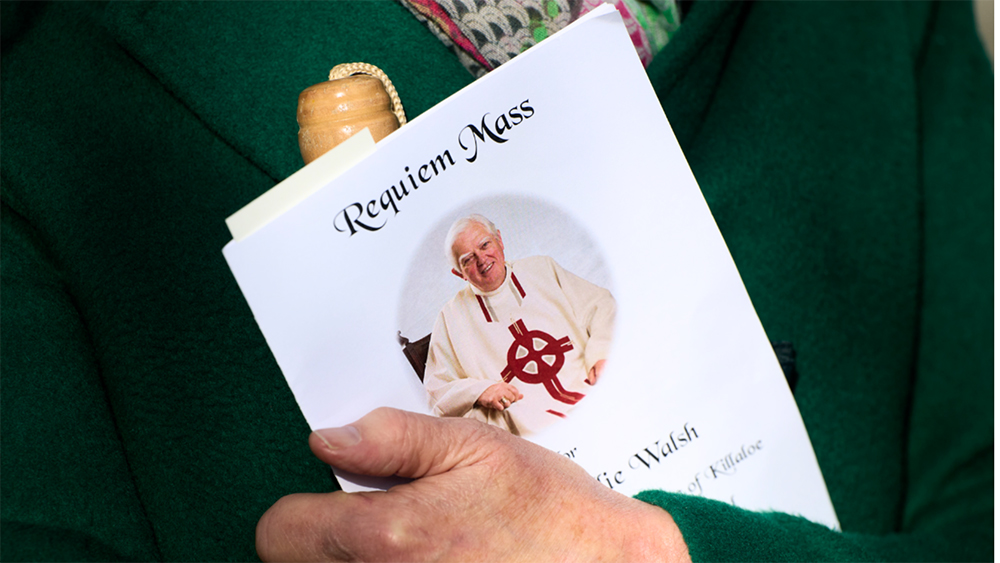
The article does not really try to engage with the theology of baptism. A good, short encyclopaedia article about baptism in the Catholic Church will suffice to see the difference between McAleese’s idea of baptism and the theological content and relevance of the sacrament in the Christian tradition (Catholic and non-Catholic, as the photo used for the article involuntarily suggested).
The article addressed the link between baptism of children and belonging in the Church or, in technical terms, the ecclesiological dimension of baptism. The text is a dismissive and contemptuous caricature of Catholicism. I wonder whether McAleese has ever heard from Catholic parents that they baptise their child in order to submit them to “submission to magisterial control (to the authority and teachings of the Pope and bishops) rather than to Christian love of neighbour”. My wife and I certainly did not choose to baptise our children for those reasons. It shows also a condescending view of the Catholic parents who baptise their children, as if they were still defenceless and inept “pay, pray, and obey” Catholics, captive of an institution against which they can do no other but surrender for fear of the consequences – on this earth and after.
Contrary to what McAleese wrote, those who are baptised as children will always be free to ‘decide for themselves their religious identity’”
The article is full of exaggerations that reveal a narrow legalistic view of the sacramental life of the Church: as if the last century, from Vatican II to Pope Francis, did not bring about any change. One might say that in the Church, canon law is a good servant but a bad master. It is unfortunate to see this view, not just of the Church and the sacrament, but also of canon law, misrepresented in this way and from such a prestigious platform. The article also misrepresents the link between baptism and freedom of religion: contrary to what McAleese wrote, those who are baptised as children will always be free to “decide for themselves their religious identity, to accept and embrace Church membership or to change religion if that is their choice”.
The Church is, for many understandable reasons, an ideal target for grievances of different kinds. But one would expect of influential voices in the public square something else than misleading the public into believing that the Catholic Church is (still) against – to quote from McAleese’s list – the intellectual human rights to freedom of thought, conscience and religion, including the right to change religion, freedom of expression, the right to be heard in all matters affecting the child, and the right to know one’s rights, and to the education that facilitates the exercise of one’s rights and freedom from physical violence. This is simply not true, and it betrays a desire to have an enemy worse than it actually is. McAleese paints the Catholic Church as a despotic system for which – even if it had these intentions (which is not true) – it would no longer have the capacity to enforce discipline. It’s a Church in which I would not want to be a member and even less my children.
Theological
The second point is more theological. In the opening of the article, McAleese was right, when she wrote that “contemporary circumstances make Ireland an ideal place to conduct that examination” on the meaning of baptism. Indeed. But when we try to look at the contemporary circumstances with a clear eye, the examination leads to conclusions exactly the opposite to the ones proposed by McAleese. If there is something that stands out today in the relevance or irrelevance of the Church is not its all-encompassing watchful social and cultural control – that is long gone and I certainly do not miss it. What will make or break the Church is the ability to offer to all its members, individuals and families, the opportunity to renew an incarnational-sacramental imagination in our age of emotional, social, and spiritual disconnect from others, from ourselves, and from God. The Church finds itself in a new phase in the aggiornamento of Vatican II, with an ethos that must continue to be critical when the Church is wrong but dares to be unapologetically ecclesial, to show that we are not afraid to say that we are members of the Church.
The article reveals also a misguided idea of freedom – not just theologically, but also anthropologically. Baptism gives the freedom to choose something. We are all born vulnerable and in need of care: there are so many things we need to survive that we never choose to receive or to refuse. And theologians today know well that the sacramental capacity of the Church extends well beyond the boundaries of those who are formal members of the Church: and it’s a capaciousness offered generously, without asking in return, to the one human family.
There is instead a liberating power in the sacramental life of the Church: one that we have no right to deny to others”
Many of us, in different ways, are dealing with the consequences of Christendom, the sin of clericalism, down to the abuse crisis. The wounds are real. But this should not be used cynically as an opportunity to misrepresent the Catholic Church, in its theological and social dimensions, and the spiritual resources that it can offer still today. The legal and institutional dimension of the Catholic Church is important and necessary, until and unless it becomes totalitarian and oppressive. We, the people of God, have learned and are still learning how to deal with that. One wrong and clichéd way to do it is to see everything in the Catholic tradition as inevitably at odds with the freedom of the human person. It is a totalitarian, neo-Christendom idea of the Church which does not do justice to its members – not just to its leaders. There is instead a liberating power in the sacramental life of the Church: one that we have no right to deny to others and to ourselves. I would welcome any opportunity to share with Mary McAleese a view and experience evidently very different from hers.
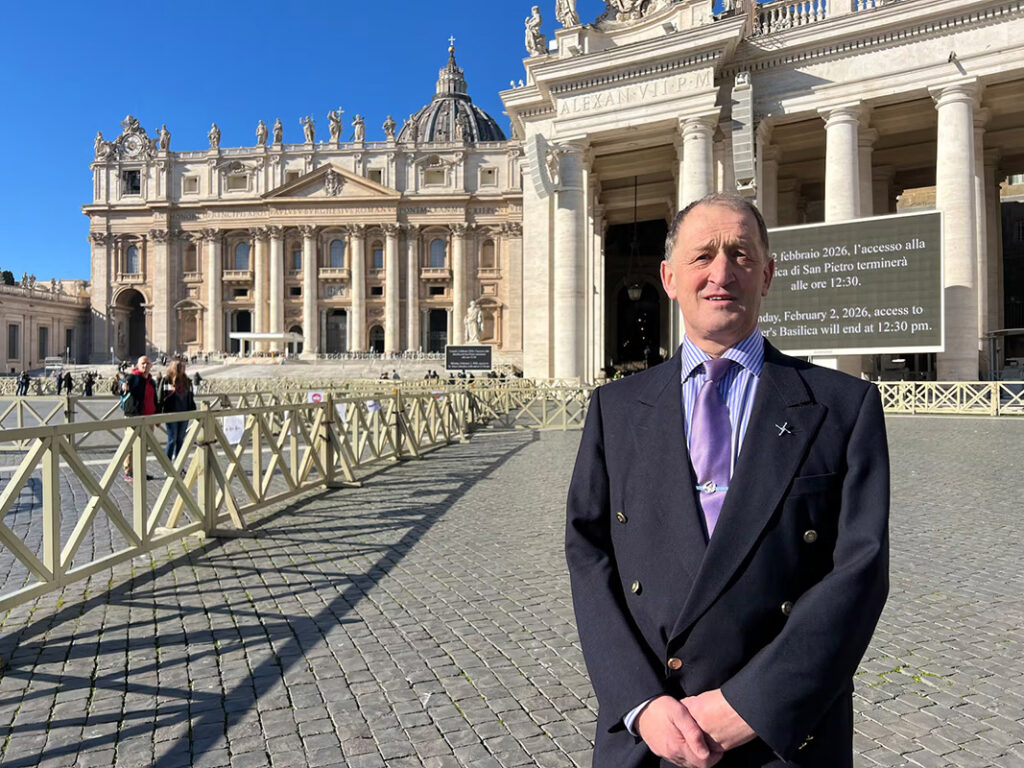
(i) Dr Massimo Faggioli is Professor in ecclesiology at The Loyola Institute, School of Religion, Theology and Peace Studies of Trinity College Dublin.