Broken But Holy: Becoming Human, by John O’Brien OFM
(St Pauls Publishing, €10.00; contact stpauls.ie)
The writings of John O’Brien, formerly of the Franciscan monastery in Athlone, and now at Multyfarnam, were recognised by the late Pope Francis in a personal letter of appreciation for his earlier book Winter Past: The Spirit of Hope.
In his new book, John O’Brien explores through the thoughts of a number of writers and philosophers the feeling across wide swathes of society that so many individuals “feel alone and isolated”. Though many may feel “broken and powerless,” yet O’Brien says, “this is not God’s view of us.”
The tone of the book is set by the epigraph from Franks Kafka that “A book must be an axe for the frozen sea within us,” an observation from a letter to his childhood friend, the art historian Oskar Pollak, in January 1904 – a truly bleak wintery time in Kafka’s native Old Town of Prague.
In his introduction, O’Brien writes that “we need an environment for [our spiritual life] to thrive. Sadly, this does not always exist. This book tries to create an atmosphere where we can allow our spiritual life to grow.”
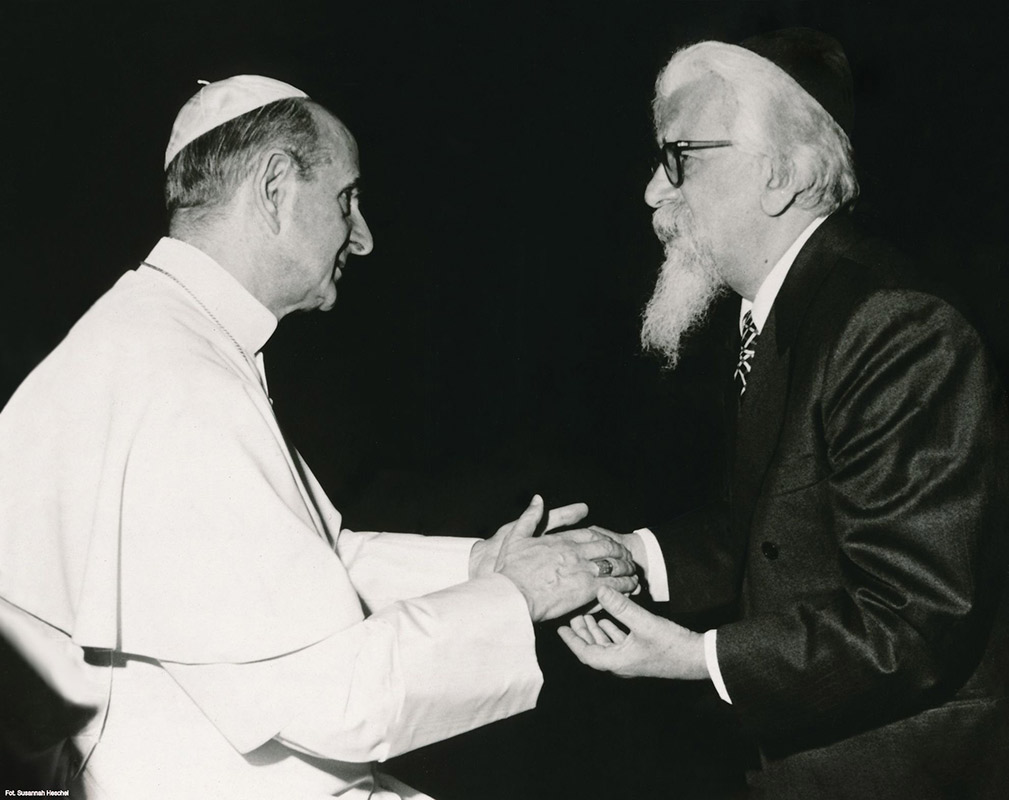
He refers specifically to the legacies of St Thérèse of Lisieux, Sts Francis and Clare, Rabbi Abraham Joshua Heschel, and Dante, all of whom “extend an invitation to enter into an authentic gospel-inspired way of life.”
Insights
The seven chapters of the book explore aspects of these eminent figures, among whom the unfamiliar one may well be for many readers Rabbi Heschel (1907-1972). He was influential in changing the attitude of the Catholic Church towards Jews and Judaism in the 1960s.
He believed that the religious experience was a human characteristic, not merely something that pertained to the Jewish or Christian traditions.
At this moment of time, when the policy actions of Israel have been confounded with the beliefs of the Jewish faith, an appreciation of Heschel’s views may well be helpful in dealing with the entanglements of faith, fear and hope that have arisen from the situation in Gaza, and where claims of authenticity are made for what seem to many to be extreme attitudes. His writings may well be a way of introducing many to the profundities of Jewish thought, so often neglected by Christians, and misapplied by some Israeli spokesmen.
This is a richly detailed book which finds room too for the very different insights of Eric Clapton, Charles Péguy and Audrey Hepburn”
I found this part of the book of great interest and relevance, not just for this moment, but in a central way.
(It is worth bearing in mind that in October 2022, the John Paul II Catholic University of Lublin, in eastern Poland, opened the Abraham J. Heschel Center for Catholic-Jewish Relations. This event was attended by notable Catholic and Jewish figures, and was specifically welcomed by Pope Francis.)
But this is a richly detailed book which finds room too for the very different insights of Eric Clapton, Charles Péguy and Audrey Hepburn, revealing not only several varieties of religious experiences, but always in the context of human experience, dependent on God, but not divorced from the world we have to live in.
If one wants a book for pre-Lenten preparations in these troubled days and nights, John O’Brien’s Broken but Holy will fill that role very well. Its range is wide, but its insights are well-focused and clearly expressed.