The Archbishop of Armagh, Eamon Martin, has said preparations for a diocesan congress have revealed a level of interest among young people that has been both encouraging and uplifting, challenging assumptions about disengagement from faith and church life.
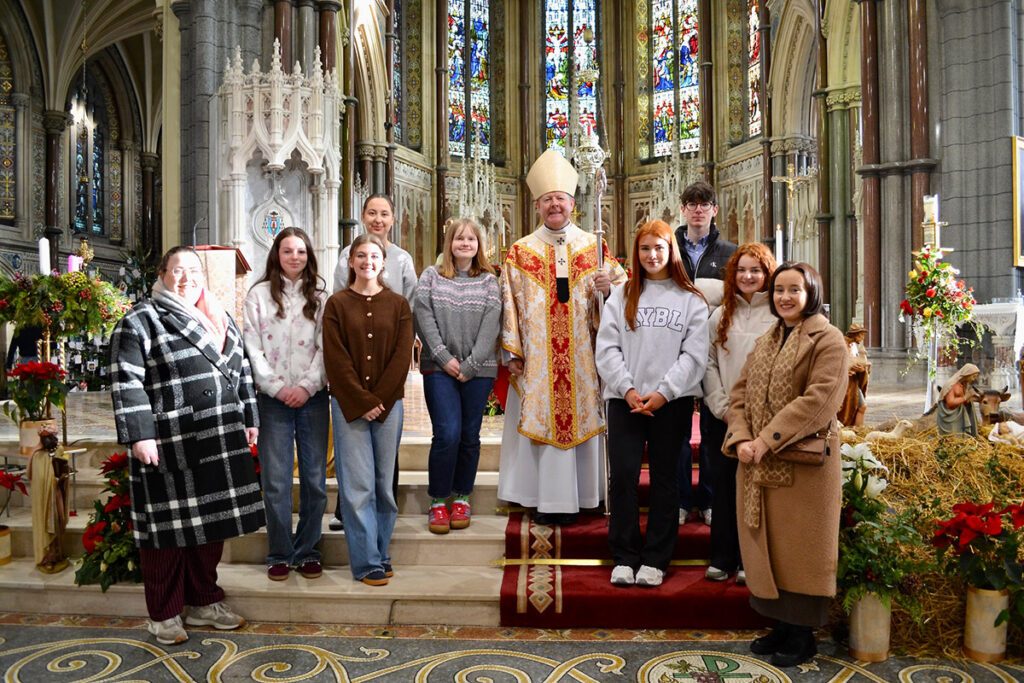
Speaking about the process of organising the Armagh diocesan congress, Archbishop Martin said deliberate efforts were made to ensure younger voices were included, particularly those who might not normally be selected for church gatherings.
“So the Congress [preparations] began a year ago but the actual Congress isn’t taking place until March 2026 so we’re trying a synodal approach- it doesn’t get everybody- with the vast majority of parishes we asked them to select one young adult under the age of 25; we asked them to select one family person with young children and then any other person. Because when you ask parishes to select people to go to things they tend to ask the people they see every Sunday but this means that when we have these meetings now, we have quite a spread of ages with the majority being under 35, about two-thirds of the delegates are under 35 and it has opened our eyes to these young people who seem to be very interested.”
The Archbishop said the presence and engagement of these young adults has been deeply reassuring.
“I shouldn’t say that with surprise but actually it’s deeply comforting and uplifting. They’re not massive in numbers but they are there, it’s a small but significant number of young people and young adults who want to be part of the present and the future of the church.”
The congress, which will take place in March 2026, follows a year of preparation including delegate gatherings and parish listening sessions. Its theme of youth, family and faith emerged as a priority during diocesan consultations and reflects a desire to place younger generations at the heart of conversations about the Church’s mission.
Archbishop Martin said the experience has challenged narratives of indifference among young people and highlighted the importance of creating spaces where they feel invited and heard, not only as the Church of tomorrow, but as an active part of its life today.
Asked about synodality and lack lustre clergy engagement, Archbishop Martin acknowledged that priests can be hesitant about the process. “I think it is it hasn’t just been a local or a national thing in Ireland, I think in the universal Church it has emerged even out of the synod in Rome last October how difficult it has been to get priests to engage in the
synodal method.”
He described synodality as being centred on participation, shared responsibility and mission within the Church. “Synodality for me is really about greater participation, greater co-responsibility, building more communion of course within the church family and a greater sense of mission. I think most priests would say ‘we should be doing that’, for some reason the synodality term did put priests off,” he said.
The Archbishop also pointed to the pressures facing an ageing
clergy in Ireland.
“The other thing is that we have to accept the reality particularly in Ireland that a lot of priests because they’ve gotten older, because we haven’t been able to refresh our numbers through new vocations, we’ve had to put more and more onto the shoulders of priests who are getting on and some of them are very very committed to continue even beyond what would be a reasonable retirement age and we’re asking these men to do a whole different approach,” he said.
Despite this reluctance, Archbishop Martin said priests often respond positively once they take part in synodal meetings. “The very interesting thing is that whenever we do have the meetings, priests enjoy them, they actually do enjoy the synodal meetings, if they can bring themselves to go to them, they enjoy them, they enjoy the interaction,” he said.
He cited a recent gathering in Armagh involving young people and clergy. “We had an amazing one here about a month back where we brought some young people from the schools here in Armagh to meet the clergy and have a synodal conversation. The priests were going out the door saying ‘when’s the next one’ and yet if you advertise that you’re going to have a synodal meeting they probably say ‘Oh I don’t do that sort of thing’.”