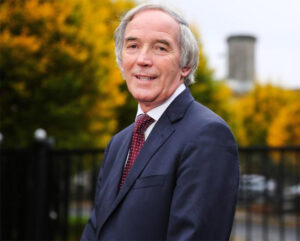
The former Governor of Mountjoy Prison, John Lonergan, has spent over four decades inside Ireland’s penal system. Yet, more than a decade into retirement, his focus has shifted from prison walls to family homes — and what he sees now worries him just as deeply.
These days, the Tipperary native travels the country giving talks about parenting, children’s wellbeing, and the challenges of modern life.
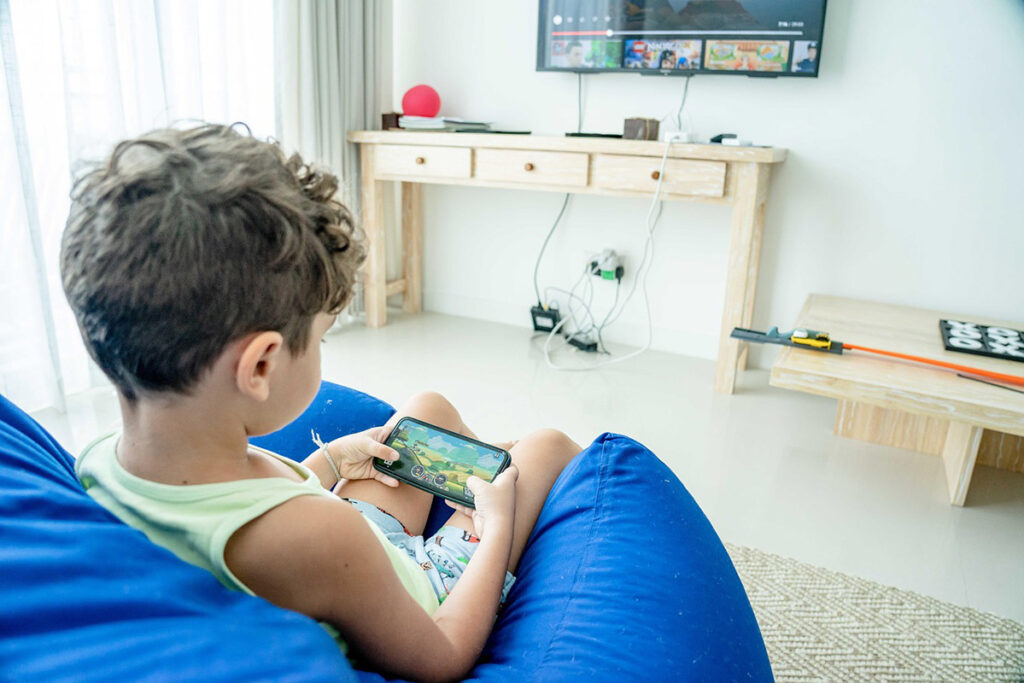
“The biggest concern that I think parents should have, is how to manage technology”, the former prison governor says.
“An awful lot of young children going to primary school now are very stressed and with a high level of anxiety. And there’s debate about where that anxiety and stress is coming from, but there are some indicators that a lot of it is coming from social media and spending too much time on it.”
Influence
He believes that screens are quietly reshaping childhood in ways that parents often underestimate – undermining children’s natural creativity and causing further problems as they get older.
“Parents don’t realise it, they hand them the iPhone at two years of age or 18 months. But what’s happening is that children are no longer able to be creative”, Mr Lonergan says.
“For little children when they’re playing their own games, they’re creating things – whether they’re at home talking to their doll or playing with toys. But all that creativity has been removed and it’s all now coming on a screen.
“And then as they get older, especially when you give them phones, the whole pattern of observing sleep — that’s a huge concern I have when they go to school. Lots of young fellas and girls, they’re falling asleep in the class because they’re up all night on.”
Down the road that’s going to have massive psychological and mental and physical consequences for young people”
“What I say to parents is, never mind the time they go to bed at. Your concern should be what time do they sleep at. And there’s often a huge gap between the time they go to bed at and the time they sleep at.”
However, Mr Lonergan believes the problem extends far beyond the home and that an unhealthy obsession with screens is emerging in the education system.
“This is a real societal issue that I think we haven’t even come near recognising yet. I think our education system is developing more and more dependency on technology, and our schoolbooks are now all put onto iPads.
“Young people in school are spending hours in school on technology. I’m absolutely convinced that down the road that’s going to have massive psychological and mental and physical consequences for young people.”
Impact
The former governor is also deeply worried about the broader cultural impact of social media and its obsession with image and peer approval.
“It’s all superficial”, he says. “People are getting more and more dependent on getting compliments from other people. You’re very vulnerable when you’re reaching out to people to compliment you, and what people say about you is becoming more and more significant.
“It causes depression and anxiety and all these things. I think we are going through a revolution almost unconsciously. But I think we will become aware of it over the next ten, fifteen, twenty years.
“A young mother I met said to me, ‘I’m under fierce pressure, I’m a single mum and I don’t have money. My daughter is now fifteen, but she wants the latest labelled runners. I don’t want her to be the odd person out’.
“I said, ‘Well listen, you have to explain to her that you can’t put yourself under stress and under financial pressure simply to try to keep up with the Joneses’, but I think there’s a sign of it happening now.”
So, what advice would Mr Lonergan give to parents who don’t know how navigate the challenge posed by digital devices?
Parents themselves need to lead by example, as it’s not only the children who are consumed by devices”
“When I give little parenting talks, I always encourage parents to insist that their children are involved in external activities – but to do it on the basis of giving the child the choice.
“Whether you want to play physical sport or non-contact sport, but you must be involved in some activities in terms of sport or recreation.”
However, Mr Lonergan also believes that parents themselves need to lead by example, as it’s not only the children who are consumed by devices.
“Parents themselves are all the time on the phone”, he says. “And when the child wants to talk or ask a question — and I keep saying it to parents — what happens very quickly is they’ll stop asking. So, it breaks down that connection as well and that bonding with their little child.”
Parents
The former governor also believes that parents should not shy always from being firm and should clearly communicate with their children, even when it’s difficult.
“What I say to parents a lot is that you explain to your children why you’re making decisions, because that’s one of the things we often don’t do. You have to hold the line as well. You are a parent, not their best friend.”
However, when conflict inevitably comes, parents should not despair.
“I always say to parents is that when your children tell you you’re the worst parent in Ireland, that you should take it as an accolade. You must be doing something right if they’re telling you that.”
Counteract technology and try to spend quality time with your children, especially when they’re young”
As parents consider what to put under the tree this Christmas, Mr Lonergan’s advice is to think beyond gadgets and screens. Talking, listening, and spending time together may not be high-tech — but they are perhaps the greatest gifts a child can receive
“Try to counteract technology and try to spend quality time with your children, especially when they’re young, and throw the phone away yourself.
“Disconnect it every night and spend time, quality time in the presence of your children. Play with them, talk with them, listen to them, be there,” he says.