Revelations on the state of Ireland from the State Files
Peter
Costello
and
Helen
Litton
Peter Costello is the Books Editor of The Irish Catholic and the author of many books about Irish culture. Helen Litton is a historian who has written two biographies and a popular series of books on Irish history.
The role of the National Archives in our lives
Peter
Costello
Every year at the end of December, the National Archives releases sets of state files from various government departments from thirty years or more ago.
This is attended by a small cohort of journalists intent on bearing to the public news of the past that their colleagues missed back in 1995. This makes for much media coverage and comment, and looks like an exercise in ‘freedom of information’.
What is never made clear by publicists is just how few departments of state release files every year. Many departments of state release no files: Agriculture, Health (though some files appeared this year), Defence, the Gaeltachts and Islands, Industry and Commerce . . .
What this means is that we know a great deal about the views and activities of the political elite (the very people who gorge on news media), and next to nothing about ordinary lives in Ireland. Or about departments whose expenditure each year is huge, and which affect the daily lives of all of us in important ways.
In the pieces that follow the file numbers have been added to enable readers to consult them in the National Archives.
Ireland’s connections with the Vatican
Peter
Costello
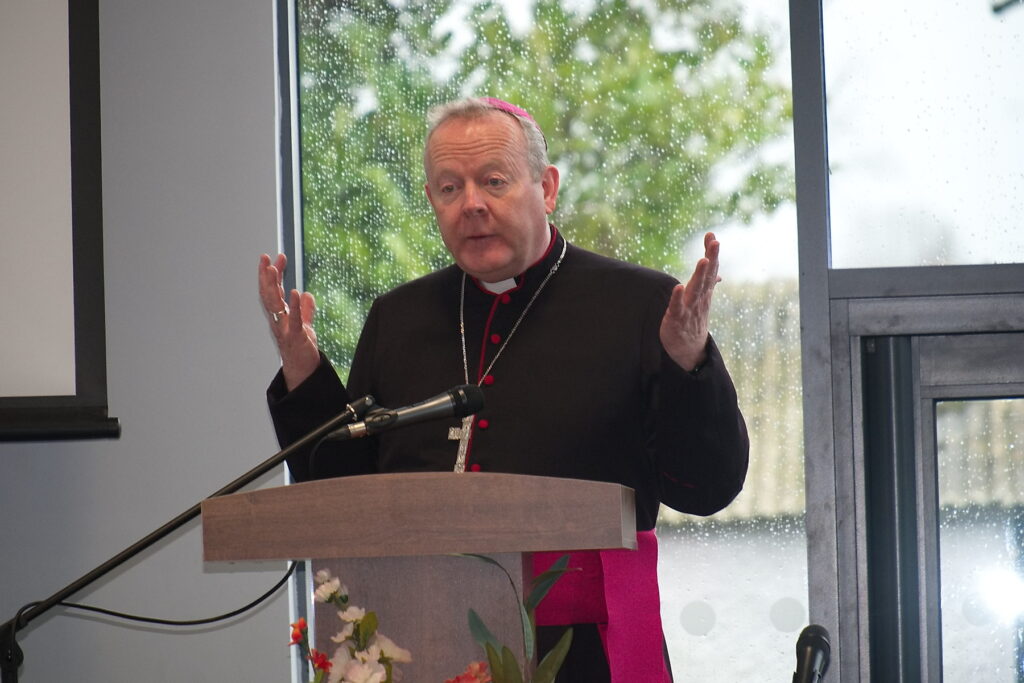
From the particular viewpoint of this paper, the most interesting release of this year is a large consignment of diplomatic files from Foreign Affairs relating to the interactions of the Irish government and the Vatican. These consist of 261 files from our Embassy to the Holy See dating from 1929, when the post was established down, to the 1980s.
That date, 1929, is significant. Back in 1861, most of the Papal States were taken by the new Kingdom of Italy. In 1870, the City of Rome itself was occupied. This was under the papacy of Pius IX. He was followed by Leo XIII, whom historians see as re-establishing the prestige of the Papacy.
These popes saw themselves as prisoners in the Vatican. It was not until the reign of Pius XI that the Vatican engaged with the Kingdom of Italy to agree through the Lateran Treaty in 1929 to the creation of the Holy See as a recognised state in its own right.
Ireland, then itself a new state, established diplomatic relations with the Holy See before it did with Italy. The sensitivities on both sides meant that the Italians would not deal with a diplomat accredited to the Vatican. This means that Ireland has an ambassador to both the Quirinal and the Holy See.
It is the Vatican Embassy whose papers are released – these will have to be read in the context of other files from the embassy in Rome, and with the departmental files back in Iveagh House in Dublin, which are not always available. In this complicated situation, however, the importance of “Our Man in the Vatican” is still clear.
The Vatican has diplomatic relations, not just with so-called “Catholic countries”, mainly in Europe and South America, but also with places like Thailand, Mongolia, or Saudi Arabia, where the Catholic population is insignificant. Irish Ambassadors to the Holy See are thus enabled to learn about events and personalities around the world in a way which would otherwise be impossible.
These files will provide another tranche of material to enlarge what we learned from Dermot Keogh’s pioneering work on the connections of the new Irish state and the Vatican. But there is still more to be learned when the actual discussions back in Dublin between the Ministers of Foreign Affairs and their Chief Secretaries, especially Noel Dorr, become available. The wider view would allow a conspectus of our global relations rather than just the local issues in Ireland.
As it is, the Embassy was to a certain extent caught up in the changing nature of Ireland itself: the tone of the files changes over time and in due course has to engage with matters relating to the referendums on contraception, divorce, abortion, issues that would have been unthinkable back in 1929.
Take, for instance, a file from 1973 (2001/20/15) in which the discussion of Dr Garrett Fitzgerald with Cardinal Agostini Casaroli, the Secretary of State, in which the Taoiseach discusses the difficulties of achieving a united Ireland while the Roman Catholic “social system” prevailed in the Republic.
The then Irish Ambassador, Thomas V. Commins, in a later letter to Dublin, “noted that Casaroli was ‘not very oncoming’”, and that the Vatican “may not be expected to take a soft line”. However, Dublin replied to Commins that Dr Fitzgerald “does not wish you to take any further initiative in this matter.” Ireland was ceasing to be a” Catholic country” in some ways.
Ireland’s Jewish Community
Peter
Costello
The search for further light on Northern Ireland and on Anglo-Irish affairs are themes that are always pursued by journalists at these file relapses. But there are other topical issues that are affected too. One such this year is the matter of Ireland’s Jewish community.
The recent controversies over the Gaza crisis, the West Bank, the future of Jerusalem, and what name should be given to what is now called Herzog Park in Dublin, have brought Ireland’s relations with Israel itself and the status of our Jewish citizens into focus.
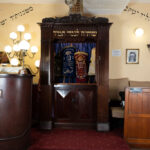
A file in the new releases is relevant to these questions (2025/115/932). It deals with the background to the creation and resourcing of the Irish Jewish Museum in Dublin’s Walworth Road, in Dublin’s Portobello, once part of what was called “Little Jerusalem”, from the numbers of Jewish emigrants who then lived there, largely from the Baltic region.
1917
The Walworth Road house had been used as a synagogue opened in 1917 with 28 members, led by a Rabbi Matlin. It functioned down to the 1970s. By that time many of the Portobello community had moved on to either the United States, South Africa, or to Israel itself. (There were also other synagogues in Dublin too, the chief one in Adelaide road, and later one in Terenure.)
A priority concern of the Irish government was to provide aid to the displaced Jews in Europe by way of food supplies to those who had survived Belsen and the other camps”
The scheme was initiated as a memorial to Albert and Edith Seiv. Those involved appealed widely for support. They noted that in 1945 that a priority concern of the Irish Government was to provide aid to the displaced Jews in Europe by way of food supplies to those who had survived Belsen and the other camps. Temporary entry was granted to Jewish Shochtim, the ritual butchers who killed and prepared meat for consumption according to Jewish observance. They were to help prepare these supplies in tinned form to be sent from Ireland.
Those interested in the museum created a Board of Honorary Patrons, which included many of the country’s most distinguished Jews and friends of Israel in Irish public life.
Materials
In advance of the opening, the directors began gathering materials what relative items and documents they could connected with the history of Jews in Ireland going back into the middle Ages.
They asked were there any relevant documents in the hands of the government, either in the State Paper Office in Dublin Castle or the Public Records Office beside the Four Courts (both of which were later united to create the National Archives). This was a difficult matter as any such documents would be diffluent to find and even more difficult to release for exhibition elsewhere. This was in May 1985.
The Board sought the support and interest of Dr Garrett Fitzgerald. The Keeper of the State Paper office and the PRO were also asked. The staff in Dublin Castle were able to find documents dating from 1938-1851 (then numbered 11007 / A and B/1), which dealt with Refugees from Europe and their reception and settlement.
To promote the aim of the museum the Jewish Historical Society was founded in 1971. The most active people were Asher Benson, the Dublin correspondent of the Jewish Chronicle, and Gerry Tolkin.
With the assistance of volunteers from ANCO who helped in the setting out of the rooms in Walworth Road – another indication of official aid – the museum was opened at the time of the visit to Ireland of President Chaim Herzog in June 1985. In its first year it was visited by 1,812 persons from some 28 different countries.
The Annals of Inisfallen, under the date 1079, noted that some Jews came over the sea to Ireland, but were sent back to Britain. Later in May 1492 – when the Jews were expelled from Spain by the Royal patrons of Columbus – parties of Jews landed on the south coast of Ireland. A Jew named William Annyas was Mayor of Youghal in 1555. A synagogue was opened in Dublin in 1660.
The present controversies cannot alter the fact of the importance and influence of the Jewish community in Irish life”
Since those days the Jewish community grew with further migrants from the Russian “Pale of Settlement”. Over the years Jews were involved in many areas of Irish life, from the garment trade to the law, and even politics.
The present controversies cannot alter the fact of the importance and influence of the Jewish community in Irish life, and it is a pity is has become the object of political controversy rather than cultural education.
The museum has plans for an extension before Dublin City Council that have proved controversial in their design, which a set of local people objecting last month to as the place might become a target for terrorism. The museum would be open more days, and hoped it could attract 10,000 thousand persons a year.
The fearful attack on the Hanukkah celebration at Bondi Beach has led the Garda in Ireland to take further security measures to protect the Jewish Community.
Mayo schoolkids campaign to ‘Save the West’
Peter
Costello
On February 3, 1994 the Gay Byrne radio programme talked about the content of a report on rural life by the Catholic Bishops entitled “A Crusade for Survival”.
This item inspired Ms Annin Groonell and children in her class at St Mary’s National School, Ballyheane, Co. Mayo to write to the Taoiseach Albert Reynolds over “the decline of the west” (2025 /166/ 170).
Many of the comments by the children went to the heart of ‘the drift from the West’ – which still goes on”
Some nineteen letters, all written out with great care and filled with real feeling from the children, all about 9 years old, their fears of having to move away from Mayo, from the land, farms, and people they knew so well and loved, to go to an uncertain destination elsewhere found serious expression.
Castlebar
Albert Reynolds had an address in nearby Castlebar. He knew the conditions of the West very well as a successful businessman. The school was losing children, and might soon have to lose a teacher, that loose Ms Groonell, herself.
In the file, a civil servant observed that she was attempting to save her own job. But this was unfair, as many of the comments by the children went to the heart of “the drift from the West” – which still goes on. Tourists were all very well in summer, but what would get people through the winters without pain and worry, was the direction of the Bishops’ report.
Albert Reynolds answered very positively to the children, about just what the government was doing and planned to do. But his days in office were numbered. He resigned as both Taoiseach and leader of Fianna Fáil on November 19, giving way to Fine Gael’s John Bruton. (2025/115/412)
Something seems to have been achieved in the end by those fervent children’s letters, as well perhaps by the Bishops’ Report”
The bishops’ initiative and the report generated significant discussion and political attention. This process ultimately led to several key developments. One was the setting up of the Council of West by the Hierarchy themselves, the creation of a government task force to tackle the issues they had raised, and in the long term the establishment of the Western Development Commission at the beginning of 1999, an organisation dedicated to the social and economic development of the region.
And at Ballyheane the school not only survived it has been enlarged, and has a thriving, lively body of students. So something seems to have been achieved in the end by those fervent children’s letters, as well perhaps by the Bishops’ Report. But yet this Christmas there were concerns across rural Ireland about the social effects of the “flight from the land”.
And as for Ms Annin Groonell, she moved later to The Quay National School in Westport and retired in June of this year after her many years of service to the children of Mayo.
An enquiry on a refusal of admission to a hospital in the West
Helen
Litton
The social deficit in the West had deep roots, as a released file reveals. It deals with an enquiry was established on foot of the death of Mrs A.M. Duffy, who died on February 27, 1941 in Castlebar Hospital, after the birth of a still-born child (2025/161/21).
Mrs Duffy had been married for ten months, so this child was her first; her husband was an unemployed labourer. She sought admission to her local hospital, St Joseph’s, Ballina, Co. Mayo, on the advice of her doctor, but was refused on the basis that there were no beds available.
There had in fact been two beds available in Ballina, one booked by a paying patient, and one kept for emergencies, for which Mrs Duffy undoubtedly qualified. The Head Nurse, Sr Michael, insisted that she could not be admitted, and should be sent to Castlebar. There was no petrol for the ambulance, because of wartime shortages, so she returned to her mother’s house, and was moved to Castlebar two days later.
Here it was found that her baby had died one or two days previously, and she died soon after. The causes of death listed by the hospital doctor (cardiac failure and haemorrhage) differed from those given by her own doctor (toxaemia and exhaustion).
The case seems to have caused local scandal, and her husband angrily sought an enquiry, which was granted. It was held in camera, against his objection. St Joseph’s was specifically for the use of poorer patients, who should have been given precedence, and its Medical Officer was found to have been taking fees from patients to which he was not entitled. The records were inadequate: there had been no entry in the Maternity Book since 1938. The head nurse was initially forbidden by her bishop from giving evidence, but had to attend.
The file contains an anonymous letter, dated February 1942 (signed “Anxious”), describing Sr Michael as “muzzled and defenseless, and she is made a scapegoat of in the interests of a faulty officialdom and a blundering local doctor.”
However, this nun was later said by the Medical Inspector who ran the enquiry, Charles Lysaght MD, to have “a cruelty and disregard for a woman in labour amounting in another woman to almost perversion”.
He was equally trenchant about other witnesses: “I consider Duffy and his sister-in-law…the two best witnesses at the enquiry… from whom clear lucid statements had not to be drawn by repeated questions with the effort of drawing a cork from a bottle”.
When a Medical Inspector had visited the hospital on May 15, 1941 to make enquiries into the matter, “the Head Nurse was unsatisfactory, and the Medical Officer did not volunteer much assistance”.
In the end, it could not be definitively said that either life would have been saved if Mrs Duffy had been admitted to St Joseph’s in a timely manner. Sister Michael resigned the post which she had held for 37 years. Dr Lysaght recommended that the Medical Officer be asked to resign as well, and Mrs Duffy’s doctor was criticised for the delay in getting his patient to Castlebar, pursuing “a course of masterly inactivity”.
The bereaved Mr Duffy subsequently moved to the UK, and in 1952 was still seeking a copy of the verdict and the transcript of the enquiry which he had been promised in 1942. At this point the Department, obviously irritated at the way he had been sent from pillar to post as no-one would accept the responsibility, sent him what he needed, and closed the file.
Dumping of WWII weapons at sea near Ireland in 1940s
Helen
Litton
On August 20, 1986, The Irish Times reported that a number of Scottish dockers had recently revealed that German nerve gas supplies had been dumped off the Donegal coast at the end of the Second World War. These were said to have been captured in Germany, brought to Wales and then by rail to Cairnryan.
Three decommissioned ships, packed with nerve gas and numerous other weapons confiscated in Germany, were scuttled 70 miles west of Bloody Foreland. It also emerged that seventy-six captured U-Boats had been taken to the same place, and sunk over time by British destroyers testing shells and torpedoes.
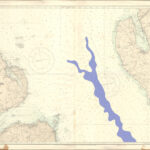
At around the same time, about two million tons of mines, bombs and ammunition had been dumped in the Beaufort Dyke, a deep trench between Northern Ireland and Scotland.
Leakage
Concerns were now being expressed about leakage and whether the ships had been scuttled in sufficiently deep water. The fishermen had hinted strongly that not all the material they remembered jettisoning had been brought as far as the designated area.
It could be disastrous if, for example, a nuclear submarine were struck by a mine floating loose. For some years, Donegal fishermen had occasionally been catching ammunition boxes and mines in their nets.
Their report indicated that it was impossible to say if everything remained intact, but in the case of, for example, nerve gas, release would be extremely slow”
In response to The Irish Times report, the Irish Government requested a probe into the dumping in September 1986 (2023/50/508). The British conducted preliminary tests, which apparently gave no cause for concern. Their report indicated that it was impossible to say if everything remained intact, but in the case of, for example, nerve gas, release would be extremely slow and therefore would produce “no hazard whatever”.
It was also considered “highly unlikely” that anything buried that deep (between 6,000 and 7,000 feet) could be dredged up by ordinary fishing vessels. The Irish response expressed concern that dumping of dangerous materials had only become known to them through media reports, and hoped that arrangements were in place to prevent this sort of thing in future.
Incidences
At the time (between 1945 and 1957), there had been no international obligation of information in place.
Attempts were made to link such dumping to incidences in Donegal of acidic burning of foliage and crops near coastlines, a slightly higher rate of Down Syndrome than the rest of the country, and several whale beachings and deaths (sixteen whales in two years).
A letter to the Department of Fisheries and Forestries says that the fact that few problems were reported over thirty or forty years was reassuring, but that ‘it would be more reassuring if we had more data about bottom current movements so that we could determine the long-term fate of insoluble materials remaining on the seabed’.
The file remained open, and in 1991 Thomas Kitt, TD, of Donegal, in a Dáil question accused the British of “using the Irish Sea as an international laundry basket for all sorts of toxic nuclear waste”. A new inquiry was sought, and the British finally admitted that there had been non-nuclear dumping 400 miles off Land’s End, 200 miles from Ireland. This was scheduled to end in 1993.
Christmas in prison in the 1920s
Helen
Litton
A letter from The MacDermot, a senior counsel and vice-chairman of the Prisons Board, to the Minister for Home Affairs, written in November 1923 in relation to a suggestion of entertainments at Borstals and Reformatories, stated: “I think that ‘educational entertainments’ in dramatic art could have no other effect than a wholly mischievous one at the Borstal Institute. There are very few fathers of families who would not be greatly perturbed if they thought their sons’ minds were turning to dramatic art between 18 and 21 years of age” (2024/6/1099).
Entertainment
Be that as it may, on December 10, 1928, the Prison Board wrote to all Prison Governors to encourage them to provide prisoners with entertainment over the Christmas period, “not less than an hour’s duration”. There should, of course, be “nothing of a sectarian or political nature”, and the aim should be “to induce a sense of regret for lost liberty, and at the same time help to turn the mind from the contemplation of prison surroundings and restrictions.
Mountjoy Prison was fortunate to have the services, free of charge, of such luminaries as Jimmy O’Dea, whose “Mrs Mulligan, the Pride of the Coombe”, routines were highly esteemed, and other stars of the Dublin stage.
Occasionally, a prisoner with a particular talent would be allowed to perform, such as a “music hall artiste” who did conjuring tricks.
The film showed several boxing scenes and some war scenes with the American Army. It was full of life and movement throughout”
A concert at Limerick Prison, on January 1, 1929, lists performances of such popular favourites as The Low-backed Car, The Hills of Donegal, My dark Rosaleen, and other songs lost in the mists of time, such as How Paddy got to Heaven. Most performers seem to have volunteered their services.
Films (then silent) were occasionally shown, and a letter from the Borstal Institution, Clonmel, December 19, 1928, expresses the difficulty of finding suitable material, but avers that The Patent Leather Kid suited all tastes: “The film showed several boxing scenes and some war scenes with the American Army. It was full of life and movement throughout and was thoroughly enjoyed by the inmates.
The prison authorities, who always read letters before they were sent, were interested in how the entertainments were received, and were gratified if they seemed to go down well.
Tell Jim all his old favourites were sung including the ‘Moon’ duet…it was really a change for me after three years’ monotony”
One from Portlaoise prison, January 2, 1929, said the entertainment was “better than any of the others since I came here … a highly appreciated feature of the event was the presence of a very good dance band, so the monotony of prison life was brightened for a while.” A note added by the Governor reveals that this prisoner was undergoing 7 years’ penal servitude for a serious sex offence.
Other letters from Portlaoise also expressed satisfaction: “Tell Jim all his old favourites were sung including the ‘Moon’ duet…it was really a change for me after three years’ monotony” (15 years for robbery under arms); “It was the spirit of the thing I enjoyed more than anything else. It was the first time for several years that I was able to forget my own troubles completely…” (Life, for murder); “On the piano and violin, ‘O Solo Mio’ was rendered admirably…suffice to say that it caused a tear to trickle” (3 years, fraudulent conversion).
Perhaps the concerts did work to arouse “regret for lost liberty” and a change of heart.
The treasures of Ireland go abroad
Helen
Litton
This file contains a typewritten list, dated 1961, of “first-class” objects in the National Museum of Ireland which the Minister for Education, Patrick Hillery, “would not be prepared to agree to make available for exhibition outside the country” (2025/115/191).
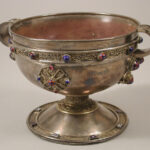
The list includes such treasures as the Ardagh Chalice, the Tara Brooch, St Patrick’s Bell, the Cross of Cong, the Broighter hoard, various shrines, hanging bowls, torcs, brooches, shields and a cauldron, 38 items in all.
Twenty-four years later, in November 1985, any objections had apparently been overcome, and arrangements were being made for these artefacts to be sent for exhibition in the United States of America.
Starting in the Metropolitan Museum, New York, the exhibition was to continue to four other American museums. It was valued in total at $14,294,000. The Royal Irish Academy was sending the Stowe Missal, and Trinity College Dublin was sending the Book of Kells.
The exhibition would last for twenty months, and would consist of 60 to 70 items. The Metropolitan Museum was to be responsible for security. Moulds would be provided for replicas, but all moulds, replicas, photographs, etc, were licensed for ten years only, and would then have to be destroyed.
For insurance purposes, each object had to be given a value. Most of them were in fact priceless, and utterly irreplaceable, but someone had to do the maths. Torcs are listed at £2-3,000 each (with the Broighter torc at £100,000), St Patrick’s iron bell at £750,000, and the Roscrea silver brooch at £200,000.
The big money was of course in the really first-class objects – the Ardagh Chalice (£3 million), the Tara Brooch (£2 million), the Cross of Cong (£1,500,000) and the Book of Kells (£1 million). Chances are that these numbers were plucked out of the air.
Could this kind of exhibition be repeated? Much more is now known about how objects can be damaged, even microscopically, in transit, and insurance costs would be astronomical. However, there was obviously a lot of money to be made. Besides, in 1985 the state was probably anxious to counter the bad image Ireland had been acquiring throughout the NI troubles, and to show off its unmatched cultural heritage.