In the modern GAA, few names evoke such power and presence as Hegarty. Immediately, images of the towering figure of Limerick’s six-foot-six giant in the half-forward line spring to mind.
With colossal strength and the finesse of a craftsman, Gearóid Hegarty has combined wristwork, skill, and agility with raw athleticism to become one of the defining hurlers of his generation.
His career speaks for itself: five All-Ireland titles, six Munster championships, four All-Stars, three National Hurling Leagues, and a Hurler of the Year award. But perhaps what makes his story even more remarkable is the lineage he carries. His father, Ger, was a giant of his own time, a Limerick legend in his own right, though ultimate honours agonisingly eluded him.
Ger Hegarty lined out for Old Christians, a proud inner-city club, and was himself regarded as a generational talent. Yet he played in an era remembered more for heartbreak than glory. Of all the barren years, none cut as deeply for Limerick supporters as the 1994 All-Ireland final defeat to Offaly, a day often recalled simply as the “Five Minute Final”.
That September afternoon, Limerick led 2-13 to 1-11 with just minutes remaining. The wait for Liam McCarthy had already stretched 21 long years, and belief was swelling that the famine was about to end.
Collapse
Then came the collapse. In a stunning closing spell, Offaly struck 2-5 without reply, turning triumph into despair for all on Shannonside. For Limerick, it meant another 24 years of waiting until Declan Hannon climbed the Hogan Stand in 2018, lifting the Liam McCarthy Cup and unleashing an outpouring of emotion that had been bottled for a generation.
“When I came home after losing the All-Ireland in 1994, Gearóid had just been born a month. There was great excitement in our house. I had my first child to come home to. I don’t pine that I never won one, but we have been blessed that this great Limerick team has washed away all the disappointment of the last forty years.”
In 2022 as Limerick secured a historic 3-in-a-row Gearoid put in a man of the match display as they edged past Brian Cody’s Kilkenny. For Gearóid to one day stride onto the biggest stage and deliver glory makes the Hegarty story all the more remarkable, his formative days on earth being in the shadow of the disappointment of that 94 heartbreak.
For his father, Ger, however, the joy of coming home to his firstborn and the pain of that day were only deepened by a cruel twist of fate robbing him of the entire 1995 season and most of another due to a cruciate injury in a pre-season challenge game cutting short his prime when he longed for redemption.
I remember after the ’94 final, the feeling in the dressing room. I thought, ‘We’ll bottle this, and come back stronger’”
“I have no regrets with Limerick other than not bringing home the McCarthy Cup in ’94 or ’96. It was, of course, disappointing, but part of the journey of sport is failure and that only makes you stronger.”
“I remember after the ’94 final, the feeling in the dressing room. I thought, ‘We’ll bottle this, and come back stronger.’ We came back in ’95, and I did my cruciate in a practice match against Clare, and I was more disappointed about that than I was about losing the All-Ireland.”
Gearóid’s career mirrors his father’s in many ways. Power, size, and skill have long been his trademarks, qualities that have made him one of the first names on a Limerick team sheet for close to a decade. So too does the familiar out-ball: from a Quaid in goals to a Hegarty in the half-forward line. Nicky to Gearóid in the modern day, Joe to Ger in the 1990s.
Family
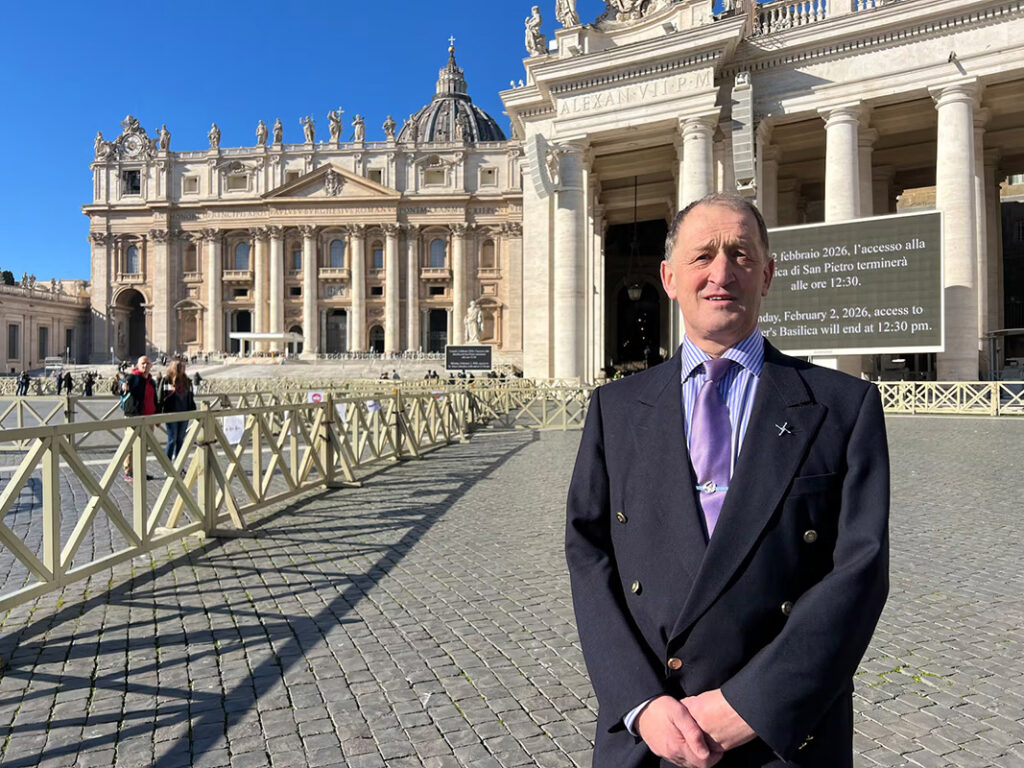
Ger raised his family at the opposite end of Childers Road from where he himself grew up, staying within the inner city in an area called Rhebogue. Despite his father’s legendary status with Old Christians, Gearóid and his siblings opted to play for another small inner-city club, St Patrick’s, just down the street from their home place.
With the talent of the young Hegartys, St Patrick’s have become a force to be reckoned with. Yet still, they remain in Limerick Premier Junior hurling, the fifth tier of the county’s pyramid.
Meanwhile, Old Christians have dropped to Junior A, the sixth tier, despite having been a senior club in Ger’s playing days. Both clubs now face similar challenges, on and off the pitch.
Old Christians were formed as an offshoot of the famed hurling nursery of Limerick CBS, once one of Munster’s premier hurling schools. But the decline of the CBS in recent years has contributed to the club’s own struggles, highlighting the wider issues facing inner-city teams across Ireland.
It’s a story repeated in urban areas across the country. A lack of housing construction within city limits has left many traditional neighbourhoods with ageing populations, and GAA clubs are feeling the pinch.
Young families, meanwhile, gravitate towards new suburban developments, where populations are swelling as urban sprawl pushes ever outward. Even clubs on the very periphery once considered rural clubs are seeing a huge bounce in numbers.
Historic
For St Patrick’s, Old Christians, and Claughaun, three historic and storied Limerick city clubs in their own right clustered along Childers Road, once the boundary between city and suburb, each face major challenges as these demographic pressures intensify.
In contrast, newer suburban clubs such as Na Piarsaigh, Monaleen, and Mungret now dominate the hurling landscape, benefiting from booming populations, massive new housing estates, and extensive underage structures.
Look at Claughaun, they were the golden boy of Limerick hurling for fifty years. Now it’s been almost forty years since they last won a championship, which I find very hard to believe”
“A lot of the areas we draw from have aged, and a lot of people have moved to the suburbs. We don’t have as many kids feeding into us as before. Ourselves, Claughaun, and St Patrick’s are all inner-city clubs with massive potential. You cannot allow them to be forgotten.”
“Look at Claughaun, they were the golden boy of Limerick hurling for fifty years. Now it’s been almost forty years since they last won a championship, which I find very hard to believe.”
“Back in my day, you went to CBS because you wanted to play Harty Cup hurling. That’s changed now, and so too has the sporting profile of the school. If you’re a kid now from the city with serious ambitions of playing top-class hurling, you’re probably looking at the suburban schools like Ardscoil or Castletroy College; they’re pushing hurling a lot more.”
“You don’t want the inner city to be forgotten. I come from the inner city. I understand it. It’s about harnessing that potential, and the only way to do that is to have a presence in the school. When the Brothers were there, they put in a phenomenal amount of their own spare time to develop us as people and as players. That’s been lost with the decline of the school’s presence.”
Solution
“If we can come up with a solution that gets coaches in front of those youngsters, there’s a great chance that little nuggets will come out of it. But if you don’t go searching for the nuggets, then they’ll never turn up.”
Despite the challenges facing the clubs nowadays, Ger can watch on with pride as his eldest son pulls on the emerald green of Limerick and takes to the field as one of the game’s most recognisable figures. Yet, for all of Limerick’s unprecedented success in recent years, it hasn’t come without a dark side.
Social media has the potential to devastate lives, whether it’s online bullying or negative comments”
A much uglier aspect has crept into the GAA in recent years. Abuse from the stands has become commonplace in what is still an amateur game, while social media has only served to amplify that noise in the online arena.
“Social media has the potential to devastate lives, whether it’s online bullying or negative comments. It’s all over the world in 60 seconds. Back in our time we didn’t have mobile phones; life was much simpler and slower,” he said.
“Nowadays it’s completely changed, and nobody gets it more than Gearóid. He was hit really hard at one point, and it badly affected him. There’s been so much negative stuff over the last few years; it’s definitely taken its toll. But as they get older, I suppose they learn to deal with it a bit better.”
Abuse
While the roars and insults from the stands were part of the game in Ger’s time, the personal nature of abuse over social media is a different beast entirely. That is not to condone anything said with venom in the cauldron of a matchday, but abuse directed at amateur players is something Hegarty believes runs counter to the true spirit of the GAA.
“In the full-blooded hub of a match, you probably wouldn’t even pick up on it on the field because it’s lost in the noise. But on social media, it can be very personal, and it screams louder because it’s directed straight at you.”
“Gearóid has got it everywhere, to be honest. We probably got it in our own time and didn’t notice it. It doesn’t really bother me too much, but it would definitely bother his mother and his sisters hearing people roar at him. Knowing Gearóid, though, I know it would drive him on as well.”
“I think genuine hurling people always admire good players. Their view of the world is an awful lot different from those who come along purely for the big days. Those who give players abuse are just there for those big days; if you ask me, they are not hurling people at all.”
There’s an incredible rivalry between Cork and Limerick. If I have any gripe about this year, it’s that the Munster final wasn’t replayed down in Cork a week later”
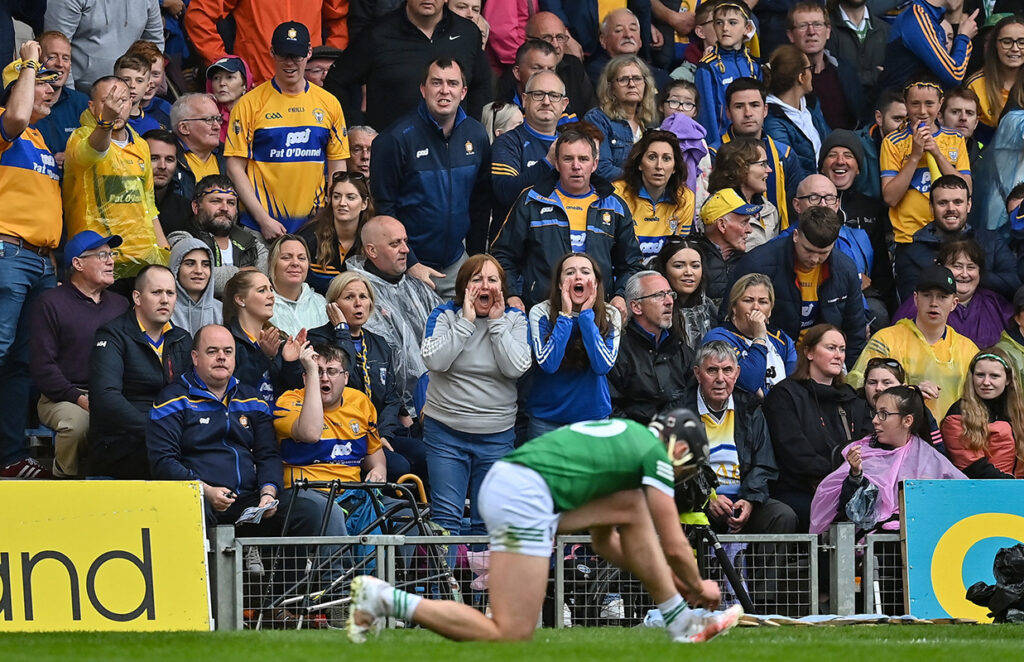
Whilst the people of Limerick have enjoyed magnificent glory days since this juggernaut of a team burst onto the scene with their 2018 All-Ireland victory, 2025 will go down as a year of disappointment. The Treaty County were knocked out in the All-Ireland quarter-final in a shock defeat to Dublin, following an energy-sapping Munster final loss to Cork.
Yet, for Hegarty, the greatest disappointment was not simply Limerick’s early exit, but that the people of Ireland were denied the chance to witness two old Munster foes wage war once more in another titanic battle, robbed instead by the most untraditional of endings, a penalty shoot-out after extra time on a Saturday evening under floodlights.
“There’s an incredible rivalry between Cork and Limerick. If I have any gripe about this year, it’s that the Munster final wasn’t replayed down in Cork a week later. To rob people of the chance to see that spectacle again in a packed out Páirc Uí Chaoimh, nobody would have complained. It would have sold out in ten minutes.”
“Forget about the All-Ireland. If the GAA wanted to find another week, they could have found it. Whatever about Limerick not winning the Munster final or an All-Ireland, my biggest regret of 2025 is not seeing Limerick and Cork go at it again after that famous Munster final. It would have been a glorious occasion.”