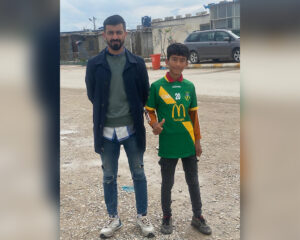
In January 17, 1991, the world witnessed the beginning of a devastating bombardment of Iraq with the start of the combat phase of the Gulf War. A NATO-led coalition launched its attack in response to Saddam Hussein’s annexation and invasion of Kuwait.
Just twenty-four hours earlier, however, a new pair of lungs had drawn in the harsh desert air for the very first time. Zak Moradi was born in the Al-Tash refugee camp, near the city of Ramadi in central Iraq.
The camp had been established to shelter displaced Kurds who were forced to flee following the outbreak of the Iran–Iraq War in the early 1980s. At its peak, it was home to more than 20,000 people.
Life there was tough. Zak spent the first eleven years of his life in the camp, where families lived in desperate conditions and freedom of movement was tightly restricted. The Kurdish people are among the largest ethnic groups in the world without a sovereign state of their own. Instead, they are spread across Turkey, Syria, Iraq, and Iran.
It is estimated that up to 45 million Kurds live without a homeland. To this day, none of the four states where they form significant minorities have shown any willingness to cede territory for a Kurdish nation.
War
Before the war, the Moradi family had lived a comfortable, middle-class life in Iranian Occupied Kurdistan. Then conflict uprooted them, and they found themselves in Al-Tash, where they would remain for almost twenty years.
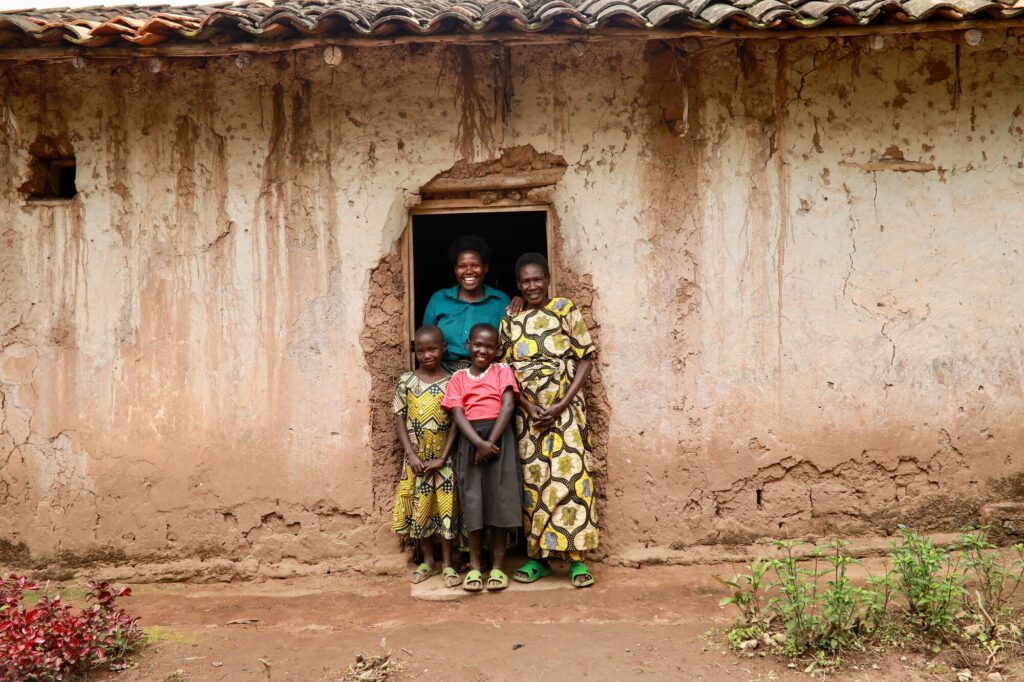
Eleven children grew up in a small mud-constructed house surrounded by arid land, enduring scorching summers and dry, bitterly cold winters. The camp was the only home their children had ever known.
After eleven long years, the Moradis were finally selected for a refugee relocation programme. Their new destination was a faraway place called Ireland, and their first safe haven was the town of Carrick-on-Shannon in Co. Leitrim.
“Originally I am from the occupied Kurdistan of Iran, but I was born in Iraq in a refugee camp,” Zak recalls. “The Iran–Iraq War started in the late 1980s, and at the time Iraqi Kurdistan was under the control of Saddam Hussein’s government.”
I was born in a tent and spent the first eleven years of my life in that refugee camp in Ramadi”
“Around 150,000 people were displaced by the fighting. Twelve to fourteen thousand from our area ended up in a place called Ramadi, about a fifteen-hour drive from where we lived. It was in the middle of nowhere, out in the desert.”
“I was born in a tent and spent the first eleven years of my life in that refugee camp in Ramadi,” he continues. “Then, on July 1, 2002, I moved to Ireland.”
It’s a long way from Kurdistan to Leitrim, but the Moradis were welcomed with open arms. As an eleven-year-old who didn’t speak a word of English, Zak quickly found a place for himself in his new home through the GAA. Two years after arriving, the family relocated to Tallaght, where Zak joined the Thomas Davis GAA Club.
At intercounty level, he has represented his adopted home of Leitrim, becoming one of the county’s most recognisable gaels. In 2019, he won a Lory Meagher Cup medal with Leitrim and had earlier been selected for the Ireland Under-21 International Rules shinty squad in 2012.
“I didn’t speak a word of English when we arrived,” Zak says, “but I started playing hurling and Gaelic football in primary school. I ended up joining St Mary’s in Carrick, and that’s where I really got into the game.”
Journey
“It was an amazing journey. The language was a big challenge for me, but through Gaelic sports my English got better, and it was through the GAA that I got to hang around with Irish lads. The lads you play with are the same ones you stay friends with when you’re older. In the GAA, you’re always welcome; they’ll always find something for you.”
“People were very kind and helpful when we arrived,” he adds. “The people who were good to us back then, I’m still best friends with them to this day. It’s been a long journey, but so much of the good in my life has come through the GAA.”
Since the height of the Celtic Tiger, when the Moradis first arrived on Irish shores, the island they now call home has changed enormously. The crash of 2011 left deep scars; on the landscape and in countless Irish lives. The recent cost-of-living crisis has driven many to emigrate once again, even as others arrive seeking safety and opportunity in Ireland.
In recent years, the immigration debate has reached boiling point. Societal unrest is at a level not seen in decades, and Moradi believes social media has played a major role in fuelling division and anger.
‘reland has changed a lot,’ he continues. ‘A lot of people don’t care about their families or communities anymore; it’s only about themselves’”
“It’s mad how the world has changed,” he says. “This young generation nowadays seem to be all about themselves. When we came to Ireland, everyone was so kind and helpful, but people now only seem to care more about themselves.”
“Ireland has changed a lot,” he continues. “A lot of people don’t care about their families or communities anymore; it’s only about themselves. I think they spend too much time on social media; it’s kind of destroyed the world. At the minute, our world is a bit of a mess.”
“Where I grew up was very multicultural,” Zak recalls. “Our next-door neighbour was an Arab; further along there was a Persian or a Christian family. We grew up alongside people from all sorts of backgrounds. Everyone got on well; people even married into each other’s cultures, and there were no issues until the wars came and divided us.”
“We are all just people at the end of the day. We all have the same colour blood in our veins. Everyone just wants the same things out of life.”