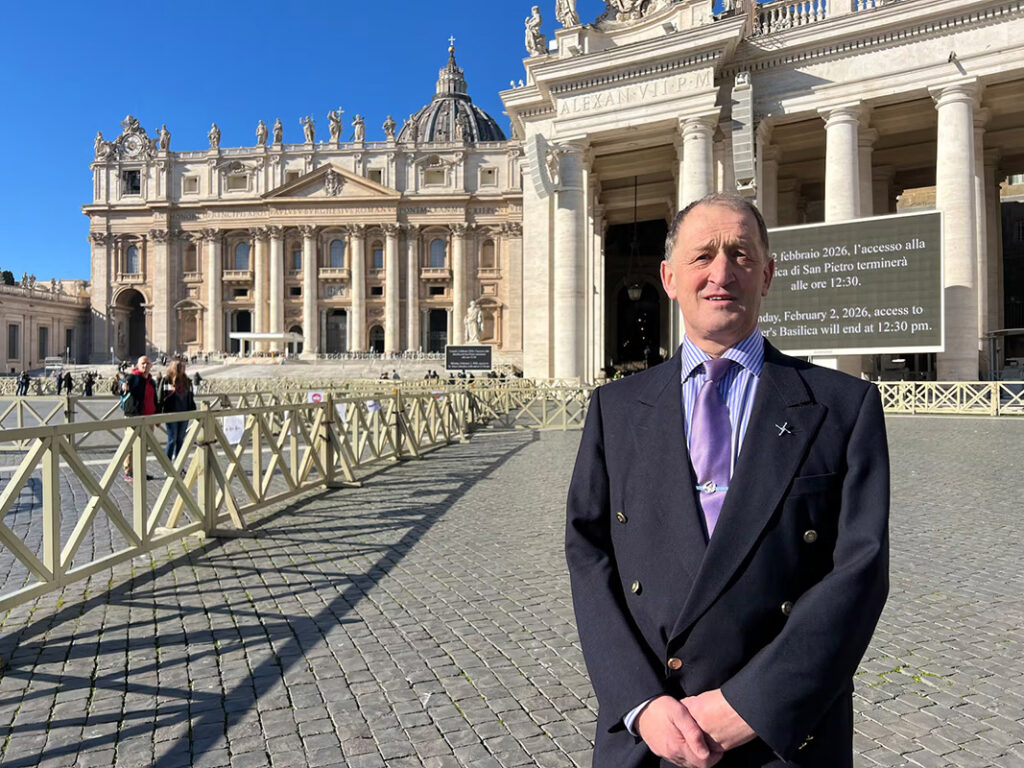
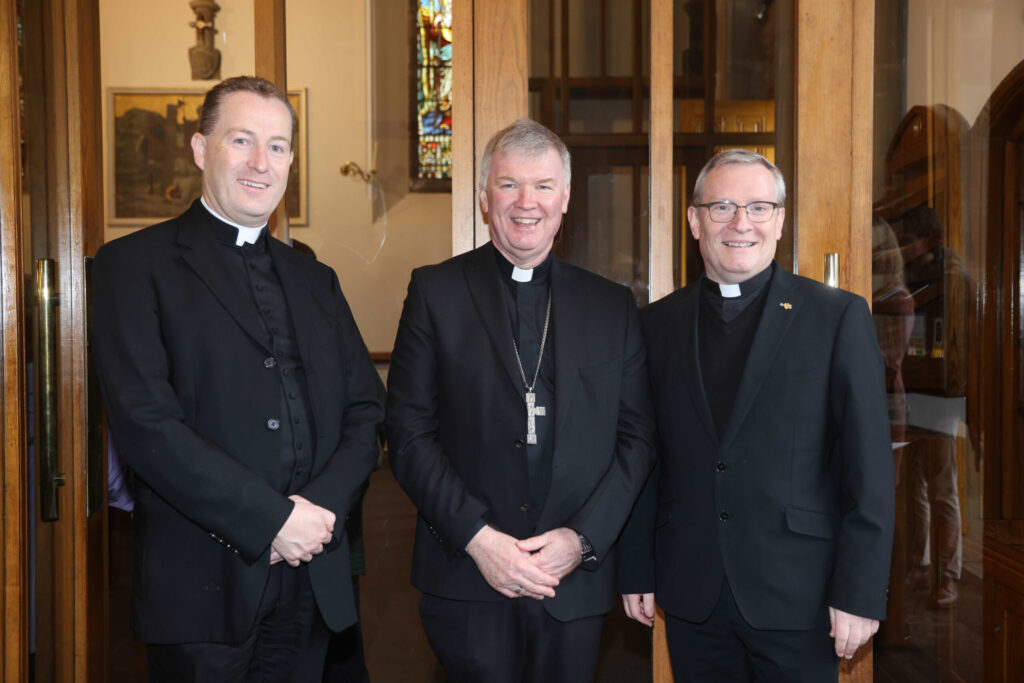
When Belfast priest and board member of the pontifical charity Aid to the Church in Need (ACN) Fr Tim Bartlett recently suggested that BBC Northern Ireland shows a subconscious bias against Catholics, (and should be investigated) and when Aid to the Church in Need Director Harry Casey speaks of “polite persecution” in Ireland, many Catholics instinctively nod. Many know the feeling of being patronised, or written off, often silently, the moment our faith becomes visible.
But is that really what’s happening – persecution – or is that too simple a label for a much more complicated story?
Ireland has changed at dizzying speed. Within two generations we’ve moved from a culture where the Church was the unchallenged moral reference point to one where Catholic belief is just one voice among many. The divorce and abortion referendums made that painfully clear: on issue after issue, the majority of the Catholic school educated population politely declined to follow the bishops.
Perspective
At the same time, we can’t pretend the Church is simply the innocent victim of secularisation. The relentless abuse scandals, the mother-and-baby homes, the industrial schools, the culture of secrecy and deference – all of that was a moral earthquake. Trust was not chipped away; it was shattered. Many of the same people who now find themselves on the ‘back foot’ as practising Catholics have clung on by their fingernails because of faith while angry that their church let them down so badly and that includes priests, religious and bishops who have to bear an opprobrium they don’t deserve.
Against that background, talk of ‘polite persecution’ captures something real – but not everything.
It does describe some ordinary Catholic experience today. It’s there when a priest or practising lay person is invited onto a panel and treated as a curiosity rather than a citizen. It’s there when any attempt to articulate a Catholic vision of marriage, life or family is immediately collapsed into “you hate X group”. It’s there when abuse is brought up, as Fr Bartlett recalled, not to honestly reckon with it, but as a reflex to shut down any conversation about what the Church might still have to say.
There is also the subtler problem of ‘groupthink’ in media and cultural institutions. Many journalists and decisionmakers simply don’t know serious believers personally. The default assumptions are liberal and secular. That can lead to story choices, imagery and tones of voice that treat Catholicism as, at best, a private hobby and, at worst, a lurking danger. Sometimes it’s treated as a joke. Nobody needs to sit in a boardroom and say, “Let’s be anti-Catholic” for that to happen.
Whatever we are suffering, it is not comparable to Christians hiding in cellars in parts of the Middle East or Africa”
In that sense, ‘soft’ or ‘polite’ persecution is not a fantasy. There are real costs to being publicly and unapologetically Catholic in Ireland today. Some will quietly lose opportunities, friendships, social standing. Some will bite their tongue at work out of fear of being labelled bigots.
But if we make that the whole story, we risk blinding ourselves to two other truths.
First, Irish Catholics are not an oppressed minority in law or structure. We are still the largest religious group. Catholic patronage still dominates education. The Church still owns land, institutions and a national voice. The Primate of All Ireland met the Government in September. Whatever we are suffering, it is not comparable to Christians hiding in cellars in parts of the Middle East or Africa. Or the profound persecution in Pakistan that ACN Executive President Regina Lynch spoke so eloquently about in this paper recently. We need to keep a sense of proportion, not just for politeness, but for justice to others.
Second, many Irish people feel their main experience of the Church has in the past been oppressive or wounding. Survivors of abuse, unmarried mothers, LGBT people, and some who simply grew up in a climate of fear and shame associate Catholicism with control and humiliation. If we speak only of our own wounds, and not of theirs, we will never earn a hearing.
And yet – the picture is not simply dark.
Look at how the country responds to figures like Sr Stanislaus Kennedy or Bro. Kevin Crowley. These were deeply Catholic people, shaped by prayer, the sacraments and the Gospel. When they died, tributes poured in from right across the spectrum, from those who have long left the Church as well as weekly Massgoers. People may reject some Catholic doctrines, but they recognise holiness when they see it.
Even when it comes to more controversial voices – someone like Maria Steen, for example – plenty of people said when she sought a nomination for President, “I don’t agree with her, but she’s thoughtful and sincere, and she should be heard.” That’s not persecution language. That’s a society that is sometimes suspicious of Catholicism, sometimes unfair, but still capable of recognising integrity and ability.
Mission
What does all of this mean for a Church that talks constantly about ‘mission’?
If we are serious about mission, we cannot be content to sit in our sacristies and parish halls, talking mainly to people who already agree with us, swapping stories about how unfair ‘the media’ is. That might make us feel better in the moment, but it leaves us vexed and frustrated – and, crucially, unheard.
Mission means going out. That includes going out to journalists, editors, producers and commentators. Not to flatter them, and not to control them, but to build relationships, to offer good guests and good stories, to explain our own vision instead of waiting to be caricatured. It means training priests, religious and lay people to speak about the faith clearly and calmly in public. It means recognising that most people working in Irish media are not enemies to be defeated, but neighbours whose worldview is different from ours – and who might actually be open to a respectful, intelligent Catholic presence if we bother to turn up. Media often complain of the lack of Catholic spokespeople available.
If that becomes our main story, we will miss the deeper invitation of this moment”
If we truly believe that the Gospel is good news for everyone, then our task is not to retreat into a defensive Catholic bubble and complain about hostility. Our task is to build bridges and alliances wherever we can: around homelessness, mental health, migration, care for the elderly, dignity at the beginning and end of life, the value of Catholic ethos in schools. When people see the Church shouldertoshoulder with others in serving the common good, some of their suspicion melts.
‘Polite persecution’ may sometimes describe how it feels to be Catholic in today’s Ireland. But if that becomes our main story, we will miss the deeper invitation of this moment: to let the hurts of the past make us humbler, the loss of privilege make us more missionary, and the tension with secular Ireland push us not into a sulk, but out the door – to meet, listen, and witness.
Otherwise we will simply end up preaching to ourselves, increasingly angry and increasingly ignored. And that is not persecution. That is a refusal of mission.