Patrick Pearse once declared, “Tír gan teanga, tír gan anam,” meaning “A country without a language is a country without a soul.” Ireland could therefore be described as a nation without a soul. While most European countries enjoy their native tongue, Ireland has adopted English as its dominant language. Irish remains a vital part of our heritage, yet, sadly, only about 2.5% of the population use it daily.
Between 500 and 1200 AD, Gaeilge was spoken throughout the island and served as the common language of the people. Regrettably, that unity began to unravel after the Norman invasion of 1169, which introduced English to Ireland.
The decline deepened during English colonisation from the 1500s onward, as the Tudor conquest and Plantation policies made English the language of the land. By 1800, Irish had lost about half its native speakers and survived mainly in rural western areas.
The Famine and the death of a language
The Great Famine of 1845 dealt a devastating blow. About one million people died and another million emigrated, many from the Irish-speaking west. The loss of these communities destroyed the demographic base of the language.
By the early 20th century, Irish was confined to the Gaeltacht regions of Donegal, Mayo, Galway, Kerry, Cork, Waterford, and the western islands. Fluent speakers then equated to about 15% of the population.
The fight to revive a silenced tongue
Yet the story did not end in extinction. The 20th Century saw a determined revival, led by groups such as Conradh & Foras na Gaeilge, Gael Linn, Oideas Gael and national figures who viewed Irish as central to Ireland’s identity and independence.
Since the founding of the Irish Free State in 1922, Irish has been recognised as the first official language, taught in all schools, and promoted through broadcasting and legislation. Despite these efforts, daily spoken use remains limited. Census data from 2022 show about 2.5% of the population use Irish daily outside education.
Whether the language flourishes again depend not only on policy but on whether future generations choose to live through it rather than merely learn it”
Despite these stark numbers, the endurance of Irish remains one of Ireland’s quiet triumphs. The decline of Irish was the result of conquest, famine, and social pressure, but its survival is testimony to resilience. Whether the language flourishes again depends not only on policy but on whether future generations choose to live through it rather than merely learn it.
A childhood shaped by Gaeilge
I grew up in the Donegal Gaeltacht of Gaoth Dobhair during the 1960s to 1980s. I was twelve before I was fluent in English, and even then, spoke it poorly. People often now suggest that surely, I learned English at school. I explain that I did, and that I was also taught French, but I could not speak French either. I obtained all of my education, up to the 1982 Leaving Certificate, as Gaeilge. I grew up in a large Irish-speaking community. Many in the parish did not speak English at all, as there was no need to do so.
The peasants’ language
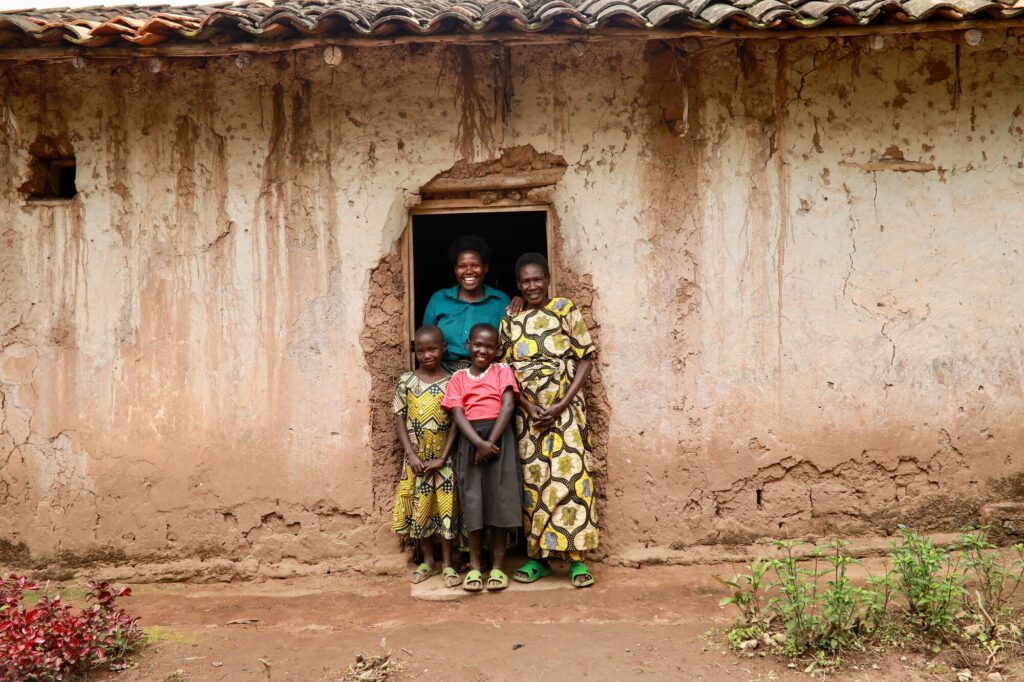
The west of Ireland has long been associated with poverty and hardship. Even Cromwell gave his enemies the stark choice of “Hell or Connacht.” For those with ambition, or simply the need to survive, emigration was often the only path forward. Many who left, including my aunts, uncles and father, could not speak English. On arrival in America, England, or Scotland, they were mocked, ridiculed, and branded as stupid. Their response often, though wrongly, blamed the Irish language for their misfortune, when in truth it was their lack of English that disadvantaged them. That false perception further accelerated the decline of the language.
An Ghaeilge also became associated with peasantry. I have known many emigrants who, upon returning to the Gaeltacht, refused ever to speak Irish again, a sad pattern that persists today. Over the years, I have met many raised in the west of Ireland who now claim they “lost the language” because they still regard it as the peasants’ tongue.
A new initiative towards revival
Over the years, the government has invested heavily in reviving the Irish language. It has supported the establishment of TG4, and Gaelscoileanna have flourished across urban areas.
Social media has energised younger speakers through content as Gaeilge. Irish-language podcasts and streaming content now reach global audiences, breaking the geographic isolation that once threatened the language’s survival.
A renewed interest in Irish identity has emerged in recent years, with many showing pride in their heritage”
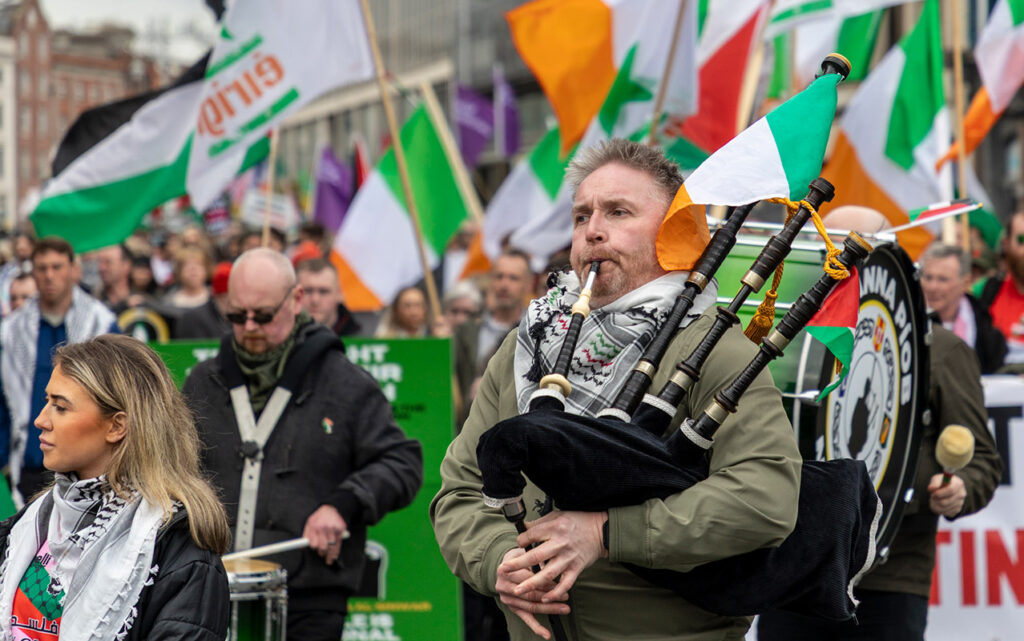
However, the revival of Irish cannot depend on government effort alone. In his 1961 inaugural address, President John F. Kennedy spoke the famous words, “Ask not what your country can do for you, but what you can do for your country.” In that spirit, learning Irish is a personal choice that requires commitment and effort. Irish classes are now widely available, including online courses offered every evening. A renewed interest in Irish identity has emerged in recent years, with many showing pride in their heritage. I too am a proud Irishman, and my pride is grounded in the fact that I am a fluent Irish speaker. I also voluntarily produce an annual Irish language calendar, which I distribute worldwide. True pride in being Irish, I believe, is best shown not merely through symbols such as flags, but through the living use of our native language.
Seán Ó Ríordáin – “The life of a language is to speak it.”